
In this article, we will go over the Legal AI Tools That Law Firms Are Using in 2026 for research, drafting, compliance, contract management and client communication.
Due to competitive legal environments, modern law firms are now using advanced AI platforms (i.e. Harvey AI, Lexis+ AI, and Thomson Reuters CoCounsel) to automate repeatable legal tasks while saving time and increasing productivity.go
Key Points & Legal AI Tools Law Firms Are Using In 2026
- Harvey AI — Automates legal research, contract analysis, drafting, and case preparation workflows for modern law firms efficiently.
- Lexis+ AI — Provides AI-powered legal research, case summaries, citations, and drafting support for attorneys and paralegals daily.
- Clio Duo — Enhances law firm productivity through AI scheduling, document management, client communication, and workflow automation tools.
- Everlaw — Simplifies eDiscovery, litigation preparation, document review, and collaboration using advanced artificial intelligence capabilities for lawyers.
- Ironclad — Streamlines contract creation, approvals, negotiations, and compliance management for corporate legal departments and firms globally.
- Spellbook — Uses generative AI inside Microsoft Word to draft, review, and suggest legal contract improvements instantly.
- Clearbrief — Assists lawyers with citation verification, evidence organization, and persuasive legal brief drafting using artificial intelligence.
- vLex Vincent AI — Combines global legal databases with AI-driven insights, case analysis, and legal research recommendations for professionals.
- Otter.ai — Records, transcribes, summarizes, and organizes legal meetings, interviews, and courtroom discussions automatically with searchable notes.
- Thomson Reuters CoCounsel– An AI legal assistant that grounds its answers in the robust Westlaw database, ensuring high-quality, verified legal research.
Key Points & Legal AI Tools Law Firms Are Using In 2026
1. Harvey AI
Harvey AI, now up in 2026, is one of the most powerful legal AIs used by top law firms on the planet.
The platform now hosts advanced AI agents able to quickly automate due diligence, legal drafting at scale, compliance reviews, and complex litigation analysis.
Harvey has been more widely used by large firms enterprise-wide rather than just as an AI tool for isolated tasks.
The latest addition is its Agent Builder, which allows firms to build bespoke legal automation systems without requiring any coding.
Harvey continues to solidify its place in the fast-moving legal AI market with partnerships that include several prominent global law firms.
| Pros | Cons |
|---|---|
| Automates due diligence and legal drafting extremely fast. | Expensive solution mainly suitable for enterprise firms. |
| Advanced AI agents handle multi-step legal workflows efficiently. | Requires lawyer supervision for sensitive legal decisions. |
| Agent Builder enables no-code legal workflow customization. | Smaller firms may struggle with implementation complexity. |
| Excellent for large-scale litigation and compliance analysis. | AI-generated outputs may occasionally contain inaccuracies. |
| Trusted by elite global law firms in 2026. | Heavy automation may reduce junior lawyer training opportunities. |
2. Lexis+ AI
Lexis+ AI is also still legitimately one of the most dependable AI-driven legal research tools you can work with in 2026, as we saw how it paired generative AI with vetted databases & citation systems in law.
It is used for faster drafting of briefs, summarising judgments, and locating precedents than traditional legal research capabilities.
It more confidently pairs with Shepard’s citation analysis to give attorneys confidence in the accuracy of their research.
The most recent updates included predictive analytics and improved case recommendations. Legal AI hallucinations continue to be a concern- hence, whilst other industry studies still have lawyers checking outputs carefully.
| Pros | Cons |
|---|---|
| Uses verified legal databases and trusted citation systems. | Subscription pricing can become costly for smaller practices. |
| Generates fast case summaries and precedent research. | AI hallucinations still require manual legal verification. |
| Shepard’s integration improves citation reliability significantly. | Advanced tools may require additional staff training. |
| Predictive analytics strengthen legal strategy preparation. | Primarily focused on research rather than workflow management. |
| Saves lawyers extensive manual research time daily. | Saves lawyers’ extensive manual research time daily. |
3. Clio Duo
In 2026, Clio Duo is changing the way a law firm operates by introducing AI to scheduling, billing, communication and client management workflows.
Clio Duo is particularly attractive for small and mid-sized firms that want to minimize the administrative burden while increasing client responsiveness.
It helps you to organize legal matters, summarize conversations, and automate busy office work thanks to predictive AI.
Demonstrating deeper integrations with third-party legal intelligence platforms such as vLex, Clio is not aiming to position itself as an entire
AI ecosystem within the firm, but instead combining an enhanced version of every capability that modern firms are looking for productivity improvements out of technology, without investing in massive infrastructure.
| Pros | Cons |
|---|---|
| Simplifies billing, scheduling, and client communication tasks. | Premium features may increase operational costs over time. |
| Excellent for small and mid-sized law firms. | Limited advanced litigation-focused AI capabilities currently. |
| AI-generated summaries improve office productivity significantly. | Cloud-based storage raises data privacy concerns. |
| Integrates with accounting and legal workflow systems smoothly. | Setup customization may require technical assistance initially. |
| Reduces repetitive administrative work for attorneys. | Not ideal for highly specialized enterprise legal operations. |
4. Everlaw
Everlaw 2026 | Continuing to Dominate AI-Powered eDiscovery and Litigation Management Everlaw is the tool litigation teams turn to for reviewing documents, analyzing depositions, running privilege detection, and preparing cases together from different locations.

Its AI-assisted analytics can identify hidden evidence patterns and relationships fast, considering it works faster than manual review methods.
Visual case mapping and cloud collaboration tools have improved in recent months, making Everlaw an ever more attractive choice for complex litigation cases with hundreds of thousands or millions of potentially relevant legal documents or multi-jurisdiction investigation matters led by global law firms.
| Pros | Cons |
|---|---|
| Powerful AI-driven eDiscovery and evidence analysis platform. | Expensive for firms handling smaller litigation cases. |
| Detects hidden evidence patterns rapidly through analytics. | Complex interface can overwhelm first-time users. |
| Supports secure cloud collaboration across legal teams. | Requires stable internet for optimal performance. |
| Excellent for multi-jurisdiction litigation investigations globally. | Large onboarding processes may take significant time. |
| Handles millions of legal documents efficiently. | A complex interface can overwhelm first-time users. |
5. Ironclad
In the year 2026, Ironclad continues to be recognized as one of the top-rated AI contract lifecycle management systems for enterprises and their corporate legal teams.
Companies today trust Ironclad to automate contract drafting, approval workflows, negotiation tracking, and compliance monitoring departmentally.
The AI engine of this solution can detect risky clauses, forecast potential negotiation bottlenecks and even approve vendor agreements by naturalization.
Given Ironclad can help businesses execute on large procurement operations without the legal slowdown while remaining compliant, it has become a preferred option among more companies.
FreshSales or any such platforms have now turned into enterprise contract management to greater efficiency due to their workflow automation.
| Pros | Cons |
|---|---|
| Automates contract drafting and approval workflows effectively. | The initial implementation process can be resource-intensive. |
| AI predicts risky clauses and negotiation bottlenecks. | Initial implementation process can be resource-intensive. |
| Improves compliance management across multiple departments. | Custom workflow configuration requires planning and training. |
| Accelerates procurement and vendor agreement approvals quickly. | Higher pricing may challenge budget-conscious firms. |
| Reduces legal delays in enterprise contract management. | An enterprise-focused platform may overwhelm smaller businesses. |
6. Spellbook
Spellbook is an instant favourite with solo practitioners and small practice law firms alike because it runs right inside Microsoft Word and doesn’t change up existing workflows.
It drafts contracts, reviews clauses, proposes negotiation changes, and automates specific redlining needs within the same legal environment where you are already familiar.
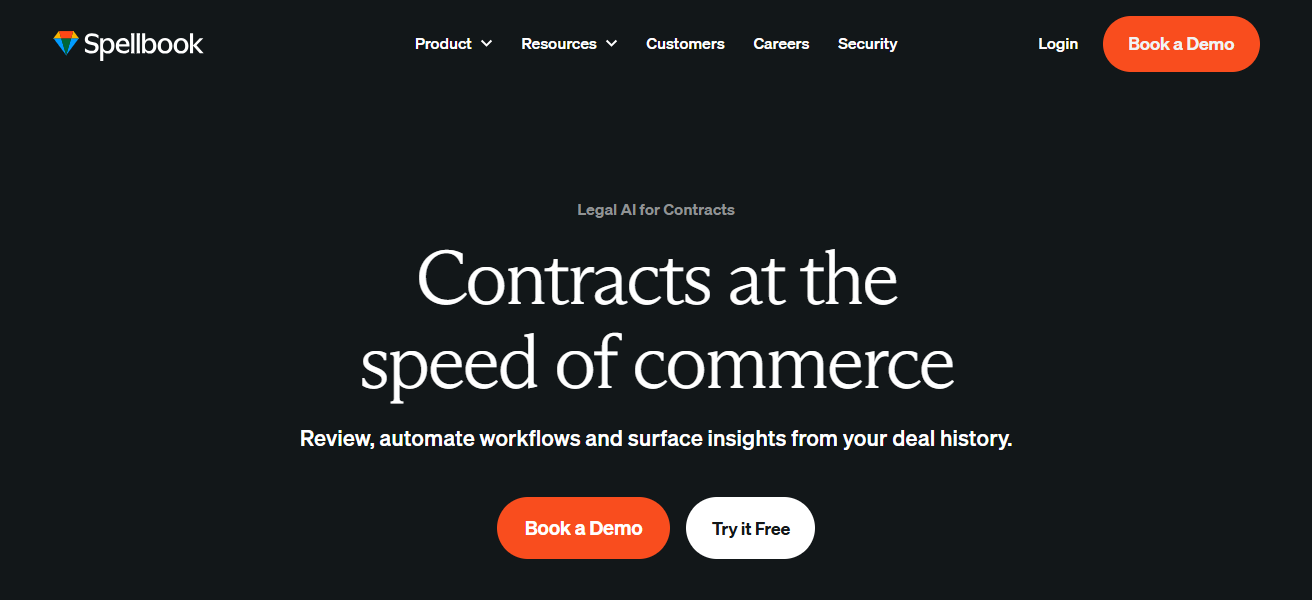
Would you believe, recent updates improved how accurate clause comparison is & have added powerful contract risk analysis features too — speeding up negotiations whilst keeping them organized!
Spellbook is an affordable AI-powered drafting platform that many smaller practices love because it doesn’t require automatic enterprise software systems, allowing your firm to modernize old operations without the burdens of costly implementations and extensive training.
| Pros | Cons |
|---|---|
| Works directly inside Microsoft Word conveniently. | Mainly focused on contract drafting tasks only. |
| Affordable AI tool for smaller law firms globally. | Requires Microsoft Word compatibility for full functionality. |
| Automates redlining and clause comparison efficiently. | Limited advanced enterprise workflow capabilities available. |
| Improves contract negotiation speed and organization. | AI recommendations still require attorney verification carefully. |
| Easy integration without disrupting legal workflows. | AI recommendations still require careful attorney verification. |
7. Clearbrief
Clearbrief, which provides AI-enabled drafting assistance to litigators who need a better way to ship evidence-filled legal briefs, picked up major traction in 2026
The platform takes arguments and matches them with supporting evidence, validates citations, organizes exhibits, and creates persuasive legal documents.

ClearBrief, which runs an evidence-based workflow that identifies the most relevant passages in documents and proposes ways to summarize or quote them in a filing, can help lawyers find corroborating evidence as courts are scrutinizing AI-generated filings more.
A full suite of its latest innovations includes real-time citation verification and exhibit mapping to allow litigation teams to make more compelling filings faster, with professional-level legal precision in mission-critical disputes.
| Pros | Cons |
|---|---|
| Connects legal arguments directly with supporting evidence. | Primarily designed for litigation and brief drafting. |
| Real-time citation verification improves filing accuracy. | Limited usefulness outside courtroom-related legal work. |
| Reduces hallucination risks in AI-generated filings. | Requires high-quality uploaded documents for best performance. |
| Organizes exhibits and case evidence efficiently. | Some advanced features may require user training. |
| Strengthens professional credibility in court submissions. | Integration ecosystem is smaller than that of larger competitors. |
8. vLex Vincent AI
vLex Vincent AI has grown up as a global legal intelligence platform capable of supporting international disputes and cross-border compliance matters in 2026
The project integrates multilingual legal research, AI-foodbrake, the case analysis and jurisdiction comparison tool in a single system.
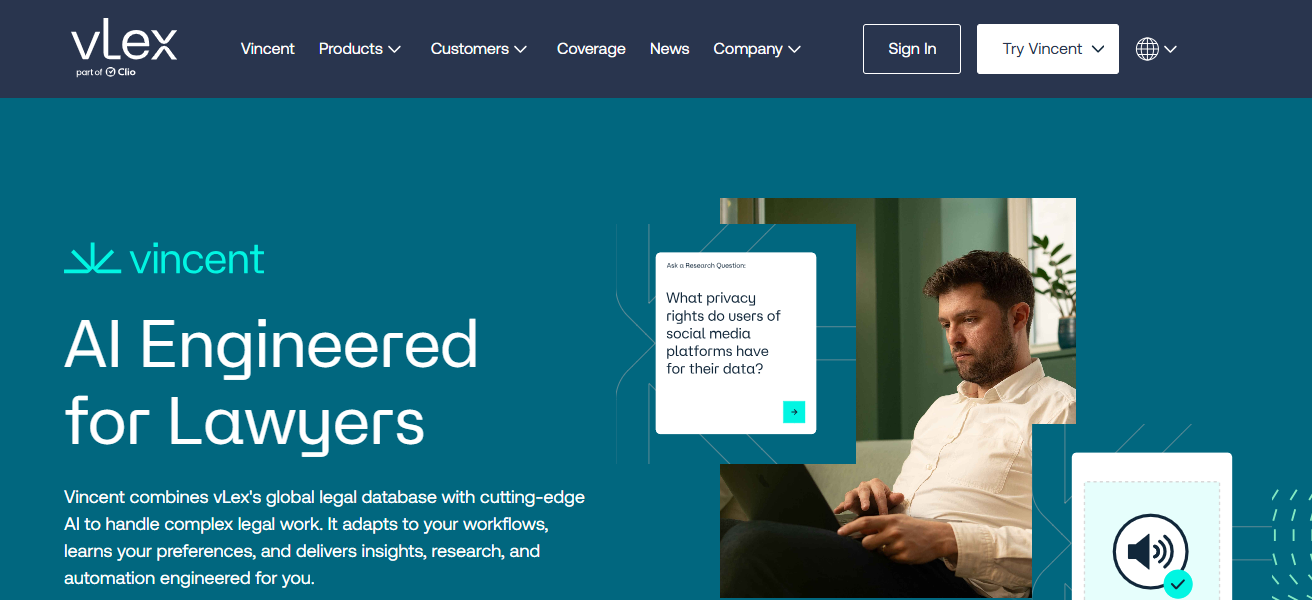
After we went deep with several practice management ecosystems, firms are now using Vincent AI for research and ops workflows at the same time.
International firms appreciate its ability to do fast comparisons of laws in different jurisdictions, making it a key tool for multinational litigation and arbitration and global corporate advisory work.
| Pros | Cons |
|---|---|
| Excellent multilingual legal research and analysis platform. | International database subscriptions may become expensive. |
| Ideal for multinational disputes and compliance matters. | Complex global search features require learning time. |
| Compares laws across jurisdictions rapidly and accurately. | Smaller domestic firms may not need advanced tools. |
| Integrates research with operational legal workflows seamlessly. | Coverage quality may vary across different countries. |
| Valuable for arbitration and international advisory services. | Interface complexity may challenge new users initially. |
9. Otter.ai
Otter. The ai has become an important productivity tool for legal professionals by automatically recording, transcribing and summarizing meetings, depositions, and virtual hearings.
Law firms increasingly integrate Otter. AI integrated with video conferencing platforms to keep searchable records and transcripts of legal conversations.
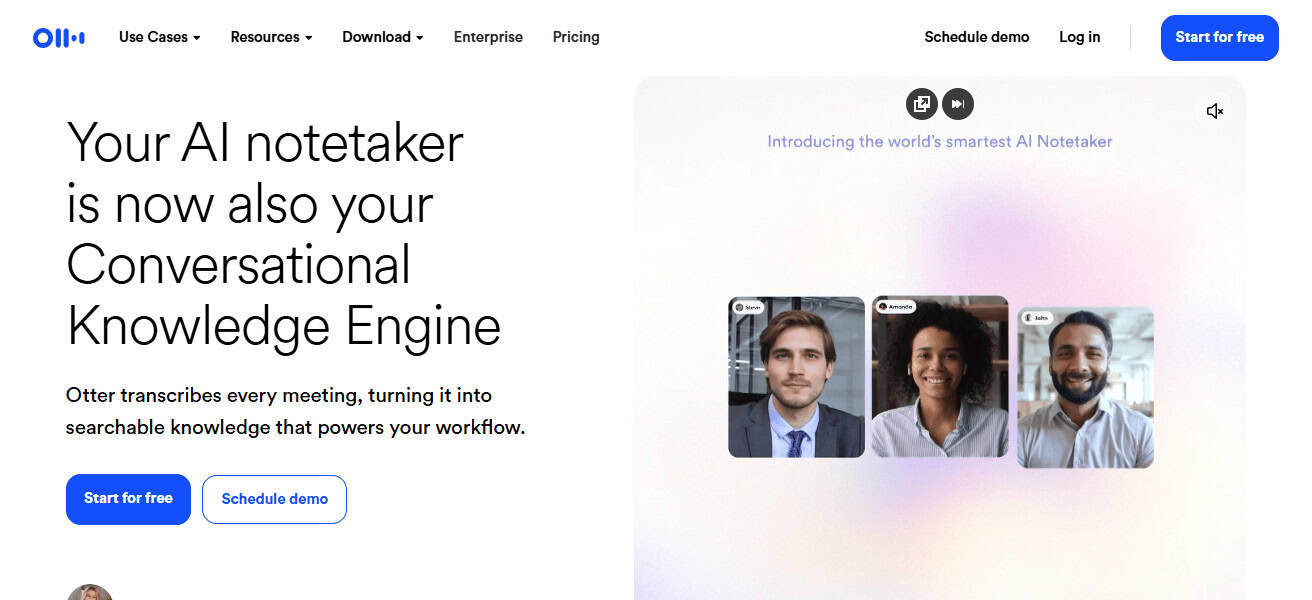
New AI features such as speaker identification, action-item summary and smart keyword search. As a result, attorneys are now spending much less time writing notes by hand during
Consultations and strategy sessions — devoting more hours to case preparation, negotiation, and communicating with clients.
| Pros | Cons |
|---|---|
| Automatically records and transcribes legal conversations accurately. | Accuracy may decrease in noisy meeting environments. |
| Searchable transcripts save hours of manual note-taking. | Confidential legal discussions raise privacy concerns sometimes. |
| Provides speaker recognition and action-item summaries instantly. | Requires internet access for real-time transcription services. |
| Integrates smoothly with video conferencing platforms. | Speaker identification may occasionally produce mistakes. |
| Helps lawyers focus more on legal strategy discussions. | Limited legal-specific customization compared to specialized tools. |
10. Thomson Reuters CoCounsel
In the year 2026, CoCounsel Legal is one of the most trusted, professional-grade legal AIs available.
CoCounsel recently announced reaching one million professional users across 107 countries, marking a transition for the legal industry from AI experimentation to operational adoption at scale, according to Thomson Reuters.

The new features include workflows for “agentic AI,” which can complete multi-step legal research, writing and document analysis on its own.
Based on Westlaw and Practical Law data, CoCounsel prioritizes citation-backed accuracy, enterprise security and workflow integration to allow firms to easily automate complex legal tasks.
| Pros | Cons |
|---|---|
| Built on trusted Westlaw and Practical Law databases. | Premium enterprise pricing may limit smaller firm adoption. |
| Agentic AI automates complex legal research workflows. | Advanced AI outputs still require legal review carefully. |
| Strong focus on enterprise-grade security and compliance. | Implementation may require staff training and onboarding. |
| Widely adopted across global legal and regulated industries. | Advanced AI outputs still require careful legal review. |
| Citation-backed accuracy improves professional legal confidence. | Heavy feature set may feel overwhelming initially. |
Cocnlsuion
Conclusion: Legal AI tools have transformed the legal industry of 2026 by helping law firms to automate research, drafting, contract management and litigation workflows as no other tool has up until now.
Harvey AI, Lexis+ AI and Thomson Reuters CoCounsel are just a few of the examples of technology that are enhancing productivity, accuracy, and operational efficiency in legal practices around the world.
With the continuous advancement of AI technology, law firms will experience stronger competitive advantages through these powerful tools, resulting in accelerated case preparation and smarter legal decision-making as rapid technological changes continue to disrupt the legal industry.
FAQ
What are legal AI tools?
Legal AI tools are software platforms that automate legal research, drafting, contract review, and case management tasks.
Why are law firms adopting AI tools in 2026?
Law firms use AI to reduce workload, improve efficiency, save time, and increase legal research accuracy.
Which legal AI tool is best for legal research?
Lexis+ AI and Thomson Reuters CoCounsel are leading legal research platforms in 2026.
What is Harvey AI mainly used for?
Harvey AI helps automate litigation analysis, due diligence, compliance reviews, and legal drafting workflows.