In this article, I will analyze Cryptocurrency vs. Traditional Investments: What You Should Know, highlighting the main differences, the associated risks, and the potential opportunities for investors.
Whichever path you choose, whether high-growth digital assets or stable traditional investments, it is critical you understand how each option functions. I will also discuss the Best Italy Stock Brokers and how they can help you make these decisions.
Overview
Cryptocurrencies have caused a huge shift in the way businesses operate with money. New forms of finance using tools such as Bitcoin and Ethereum and a multitude of other coins, have decentralized and transformed wealth storage and transfer.
These new forms of finance have attracted institutional as well as retail investors. The hype surrounding digital currencies
However, has caused many investors to disregard traditional forms of investing in stocks, bonds, mutual funds, and real estate.
Investors need to understand the variations, risks, and prospect of both new and traditional forms of investing to grow and diversify a portfolio.
Understanding the Basics
Traditional investments: Equities (stocks), bonds (fixed-income instruments), mutual funds, ETFs (exchange-traded funds), and real estate comprise traditional investments.
With a long-standing history, traditional investments are transparent, regulated, and backed by financial institutions. Investors analyze corporate earnings, economic indicators, and market trends, resulting in a sense of predictability and security.
Cryptocurrency investments: Contrastingly, investments in cryptocurrency are decentralized and digital. With no central authority (e.g., no banks), Bitcoin is a peer-to-peer network and is considered “digital gold.”
Ethereum is more complex, as it incorporates peer-to-peer transactions and facilitates decentralized applications (dApps) alongside being a cryptocurrency. Other cryptocurrencies, referred to as altcoins, include Monero (privacy), Litecoin (fast transactions), and DeFi (decentralized finance) solutions.
What Are Traditional Investments?
Traditional investments are those that are widely known and have been legally regulated for a considerable period of time. The most common of them are:
Stocks: Shares represent a portion of ownership in a company and allow shareholders to receive a part of the profits in the form of dividends or due to the appreciation of stocks.
Bonds: These are investment instruments that governments or large companies issue as a means of borrowing. They pay interest for a specified period of time and then pay back the principal.
Mutual Funds and ETFs: These are investment funds that pull together the money of investors so that they can invest in a wider range of assets than the individual investor would be able to afford.
Real Estate: Physical properties that an investor can use to earn rental income but may also appreciate.
The assets listed above have developed a rich and predictable history thanks to the considerable research that has been conducted and the prevalent well-documented regulations.
What Are Cryptocurrencies?
Cryptocurrencies are digital currencies that use blockchain technology to conduct transactions in a distributed manner. The main examples are:
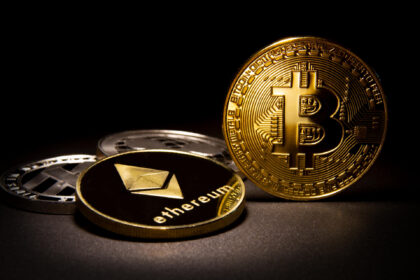
Bitcoin (BTC): First cryptocurrency. Also known as ‘digital gold’ as it was created to function as a store of value.
Ethereum (ETH): A cryptocurrency that goes beyond simple currency because it can also power smart contracts and other decentralized applications.
Altcoins: Specific-use cryptocurrencies such as Ripple (XRP), Cardano (ADA), and Solana (SOL) that are designed to facilitate rapid transactions, or to serve specific decentralized finance (DeFi) functions.
Unlike conventional investments, cryptocurrencies can be accessed, and traded from anywhere in the world, exchange regulations are still working to catch up to them, and their value can change drastically from one moment to the next, meaning their value is extremely volatile.
Volatility and Risk
Cryptocurrency: The most apparent difference between cryptos and other investments is their volatility. Price changes happen very frequently and often unpredictably when it comes to crypto.
For example, Bitcoin’s price changes can happen in the range of over 50% in just a few months due to changes in regulations, technologies and even investor sentiments.
Such price changes can lead to massive gains or massive losses which is why crypto is a very risky investment.
Traditional investments: Compared to cryptos, other traditional investments can be considered to be a lot less volatile.
Although traditional investments also come with volatility, stocks are backed by strong companies and bonds offer a fixed payment each period in the form of interest.
Other traditional investments like mutual and exchange-traded funds also invest in a basket of securities which, in turn, minimizes the individual’s risk.
Although other traditional investments do not offer the potential of extreme gains in the short run, they also greatly minimize the risk of extreme losses.
Key Differences Between Cryptocurrency and Traditional Investments

| Feature | Cryptocurrency | Traditional Investments |
|---|---|---|
| Volatility | Extremely high; price swings of 30-50% in days are common | Moderate; stocks fluctuate, bonds are stable, real estate is long-term |
| Regulation | Limited and evolving; varies by country | Highly regulated by entities like the SEC and FINRA |
| Liquidity | High for major coins; can trade 24/7 on exchanges | High for stocks and ETFs during trading hours; low for real estate and private equity |
| Transparency | Blockchain provides public ledger, but project credibility varies | Company reports, audits, and financial statements ensure transparency |
| Return Potential | High, often speculative; early adopters of BTC/ETH saw thousands of % gains | Moderate but steady; S&P 500 historically returns ~10% annually |
| Risk | High; subject to hacks, scams, and regulatory bans | Lower; backed by institutions and government oversight |
| Accessibility | Anyone with internet access can invest; no minimums | Often requires brokerage accounts or significant capital for certain assets |
| Technological Impact | Supports decentralized finance, smart contracts, NFTs | Less direct; mostly financial and industrial innovation |
| Taxation | Complicated; capital gains apply, but reporting varies by jurisdiction | Standardized; clear rules for dividends, interest, and capital gains |
| Investment Horizon | Short to medium-term speculative gains | Medium to long-term wealth building |
Regulatory Landscape
Regulations have set boundaries for where traditional investments can go. Institutions which back traditional investments provide investor protection, reporting, and legal investments.
On the other hand, cryptocurrencies in some regions are legal, and other regions illegal. Bitcoin, for example, is legal in El Salvador, but in China, investors cannot do any form of crypto trading.
These legal and illegal boundaries on crypto can impact its price and increase the risk of investments.
Accessibility and Global Reach
Investing in crypto can be done by anyone, at anytime, and anywhere, as long as there is an internet connection. In some cases, even with phone apps, crypto investment can be done with little to no fee.
For people living in places where banking is hard due to their regions, banking can be made much more easier by using cryptocurrencies.
In traditional investments, more cash is needed, in addition to using a brokerage account, where banking laws must be followed to do the trading.
Potential Returns and Investment Strategy
There are massive risks in crypto trading, but there are also historically massive risks in the trading of those currencies.
Investments that are more traditional and also more stable have a defined growth that is slower than traditional investments.
To adequately safeguard potential volatile investments, most investors choose to do steady investments and offset those with a small portion of a crypto investment.
Technological Innovation
In addition to being a potential investment asset, cryptocurrency is a means to foster innovation in technology.
The blockchain is the basis for decentralized finance (DeFi) and non-fungible tokens (NFTs) as well as programmable smart contracts.
While traditional investments such as tech-targeted ETFs benefit from innovation at a much slower rate than what is offered by cryptocurrency, they do not provide the same level of potential disruption.
Tax and Compliance Considerations
Tax implications for cryptocurrency investors should be approached with caution because they can often be a subject of capital gains taxes and the reporting requirements can be confusing and burdensome.
Traditional investments have more reporting transparency, and the taxes on dividends and interests are more predictable, making the tax planning process more straightforward in traditional finance.
Though the process can be more complex, crypto investors can optimize tax structures through staking, yield farming, and specific holding periods.
Which is more accessible for beginners?
Due to the ability to invest with a tiny amount of money and a very short time commitment to opening a position
Virtually anyone with a working internet connection has the opportunity to participate in a cryptocurrency market with extremely high accessibility.
In contrast to this, participation in traditional investing vehicles (stocks, bonds, mutual funds, etc.) involves a series of time-consuming and accessibility restrictive acts
Including opening a brokerage account, a minimum deposit requirement, and a complicated regulatory framework that varies based on the investor’s country of residence.
Which is better for long-term wealth building?
While established markets give way to predictable long-term growth and reliable financial security from traditional investments like real estate, bonds, and stocks, cryptocurrencies seem to have the opposite effect due to their volatility and unpredictability.

The long-term investment strategy may be used to help slowly integrate cryptocurrencies to hopefully drive returns, but due to the volatility, there should be aggressive weight put on / to buffer volatility on the total value.
Conclsuion
To sum up, digital currencies are still fairly new, and while they are innovative and have global reach, their very steep and unpredictable prices, and still developing regulations about their use create risks.
On the other hand, traditional investments are very predictable and stable and are very tightly regulated.
The best way to take advatage of new opportunities while also keeping your money safe in the end is to use a mix of traditional and emerging investments. This is a result of the current investment ecosystem.
FAQ
Can I invest in both?
Yes, combining them can balance risk and growth.
Which offers higher returns?
Cryptocurrencies can provide higher short-term returns.
Are cryptocurrencies regulated?
Regulations vary widely by country and are evolving.
Are traditional investments regulated?
Yes, heavily regulated by agencies like the SEC.