
This article, however, is about the New Broker Technologies Retail Traders Haven’t Noticed Yet that are slowly changing our modern trading platforms.
Brokers are adopting AI-driven execution systems, blockchain settlement layers, and other capabilities that improve speed, accuracy, and risk management.
Many of these innovations are redefining the way that retail traders experience markets, with such a low awareness of the technology behind them.
Key Points & New Broker Technologies Retail Traders Haven’t Noticed Yet
| New Broker Technology | Key Point (What It Does) |
|---|---|
| AI-Powered Trade Routing | Automatically finds the best price and fastest execution across multiple liquidity pools. |
| Zero-Latency Matching Engines | Reduces order execution delay to microseconds for high-speed trading accuracy. |
| Fractional Order Execution Systems | Allows brokers to split large orders into smaller intelligent micro-orders for better pricing. |
| Smart Order Flow Analytics | Uses real-time data to detect institutional vs retail flow patterns. |
| Predictive Margin Engines | Adjusts margin requirements dynamically based on volatility forecasts. |
| Blockchain-Based Settlement Layers | Enables near-instant trade settlement with improved transparency. |
| Sentiment-Driven Execution Tools | Integrates social media and news sentiment into trade timing decisions. |
| Cloud-Native Trading Infrastructure | Scales broker systems instantly during high market volatility or spikes. |
| AI Risk Guard Systems | Automatically blocks or adjusts risky trades based on user behavior patterns. |
| Multi-Exchange Aggregation APIs | Combines prices and liquidity from multiple exchanges into a single unified interface. |
10 New Broker Technologies Retail Traders Haven’t Noticed Yet
1. AI-Powered Trade Routing
In particular, AI-powered trade routing is automating the execution of orders for traders by automatically scanning hundreds of liquidity pools, exchanges, and dark pools to determine the best price location at which to execute a trade and then determine the fastest path through which the order can be completed.
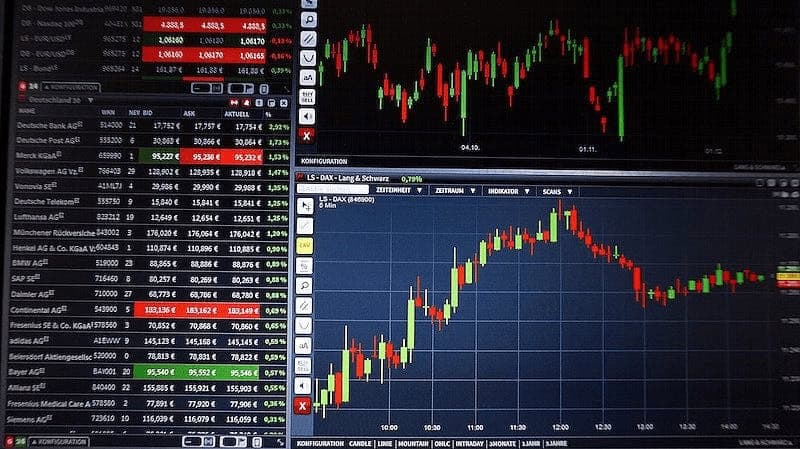
This technology allows you to use a machine learning algorithm that improves execution quality over time, taking into account historical data and market volatility – something traditional routing systems can not do. It lowers slippage and makes sure you order smarter.
Many retail traders, sometimes unknowingly, are able to get an institutional-grade speed of execution with the associated latency sealed in its box in order for AI to optimize trades on the fly.
AI-Powered Trade Routing Features
- Instantly finds the best price among numerous liquidity sources
- Improves the quality of execution with machine learning
- Decreases slippage during volatile market conditions
- Optimises the placing of orders without manual intervention
| Pros | Cons |
|---|---|
| Finds best execution price automatically | Depends heavily on data quality |
| Reduces slippage in volatile markets | Can be complex for beginners to understand |
| Improves overall trade efficiency | May increase hidden infrastructure costs |
| Works across multiple liquidity sources | Not fully transparent to retail users |
2. Zero-Latency Matching Engines
Unlike current exchanges, which can take milliseconds to execute trades, Zero Latency matching engines are built to design orders for microsecond execution (essentially no latency between placing an order and executing the trade).
These systems are deployed by colocation servers and ultra-low-latency network infrastructure that is situated close to exchange data-center facilities.

Such kind of technology is particularly needed in the case of a high-speed and algorithmic trading environment. Retail traders indirectly benefit from tighter spreads and fill execution.
This allows price movement to be captured in real-time and reduces any potential missed opportunities during periods of heightened volatility.
Zero-Latency Matching Engines
- Ultra-High-Speed Execution — Executes trades in microseconds
- Near exchange data center co-location servers
- Reduction of gap between ordering and executing
- Improves price accuracy in volatile markets
| Pros | Cons |
|---|---|
| Extremely fast trade execution | Requires expensive infrastructure |
| Reduces order delay to microseconds | Benefits high-frequency traders more |
| Improves price accuracy | Can create unfair speed advantage |
| Enhances liquidity matching | Sensitive to network disruptions |
3. Fractional Order Execution Systems
Fractional order execution systems split a larger trade order into smaller micro-orders and execute them in a smart manner over time.
This alleviates market impact and enhances average entry prices. Rather than putting in one order big enough to move the market, it quickly distributes trades over multiple timelines and liquidity zones.
Brokers are adopting this technology to provide retail traders with better execution on volatile assets like those found in crypto and forex markets.
Fractional Order Execution Systems Features
- Splits big orders into smaller deals
- Reduces market impact for large trades
- Average entry and exit pricing is improved
- Paces orders over multiple time intervals
| Pros | Cons |
|---|---|
| Lowers the risk of price manipulation | Execution timing may vary |
| Improves average entry price | Not suitable for all trading styles |
| Better liquidity distribution | Slight delay in full order completion |
| Lowers risk of price manipulation | Complex order tracking for users |
4. Smart Order Flow Analytics
Real-time data analysis to know who’s the price maker or mover in order flow analytics. To predict price movements in the short-term, it tracks volume clusters, liquidity gaps, and order book imbalances.
This technology assists brokers in refining execution strategies while also providing traders with more data on where the market may be heading.

This feature has become one of the most common, integrating into modern trading platforms to gain deeper insights and transparency into market behavior, thereby revealing hidden liquidity flows.
Smart Order Flow Analytics Features
- Tracks buying and selling pressure in the moment
- Determines both institutional and retail trading activity
- Identifies Liquidity Gaps and Order Book Imbalances
- Helps predict short-term price movements
| Pros | Cons |
|---|---|
| Shows real-time market pressure | Requires advanced interpretation skills |
| Identifies institutional activity | Data may be overwhelming for beginners |
| Improves trade decision-making | Can lead to over-reliance on indicators |
| Detects liquidity gaps early | Not always 100% predictive |
5. Predictive Margin Engines
These engines predict margins dynamically by forecasting volatility in real-time. These systems, however, do not have fixed margin rules, but instead use A.I. models to determine possible risk exposure and automatically raise or lower leverage limits.

Thus, it helps to reduce the liquidation risks of brokers during harsh movements in either direction.
This enables safer trading conditions for retail traders and minimizes the risk of unpleasant margin calls at times of extreme volatility in trading sessions.
Predictive Margin Engines Features
- Modifies margin requirements according to expected volatility
- Lower the likelihood of sudden liquidation events
- AI-Driven to Evaluate Trader Exposure Levels
- Improves overall capital safety management
| Pros | Cons |
|---|---|
| Reduces sudden liquidation risk | Margin changes can confuse traders |
| Dynamically adjusts leverage | May limit trading flexibility |
| Improves risk management | AI predictions are not always accurate |
| Enhances account safety | Can restrict aggressive strategies |
6. Blockchain-Based Settlement Layers
Blockchain settlement layers allow for almost instant trade settlements, eliminating the traditional clearing delays.
Through the use of distributed ledger technology, trades can be validated and settled almost instantaneously rather than waiting for T+1 or T+2 settlement cycles.

It enhances transparency, mitigates counterparty risk, and increases the efficiency of capital. Brokers using this technology can provide faster withdrawals and more secure transaction verification, particularly in crypto and tokenised asset markets.
Blockchain-Based Settlement Layers Features
- Enables near-instant trade settlement processing
- Eliminates traditional clearing delays
- Increases transparency in transaction history
- Reduces counterparty risk significantly
| Pros | Cons |
|---|---|
| Near-instant trade settlement | Limited adoption across all brokers |
| High transparency in transactions | Network congestion can delay processing |
| Reduces counterparty risk | Regulatory uncertainty in some regions |
| Improves capital efficiency | Integration costs are high |
7. Sentiment-Driven Execution Tools
Execution tools based on sentiment analyze social media trends, news sentiment, and discussions in the market to make trades at the most optimal times.
The algorithms are trained on historical data and use natural language processing to identify any movement of sentiment towards bullish or bearish before responding with price action.

Brokers use this technology to facilitate algorithmic trading decisions while mitigating emotional bias.
Stock market traders will indirectly benefit as trades are executed with an understanding of the psychology of financial markets, improving entry and exit timing in fast-moving stocks.
Sentiment-Driven Execution Tools Features
- This drives real-time social media and news sentiment analysis
- Employs Natural Language Processing to identify bullish or bearish sentiments
- Alters when to trade — according to the psychology of a market
- Improves entry and exit accuracy
| Pros | Cons |
|---|---|
| Captures market mood in real time | Social data can be noisy |
| Helps predict short-term moves | False signals during hype events |
| Enhances timing of entries/exits | Requires large data processing power |
| Uses AI for emotional analysis | Not always reliable in stable markets |
8. Cloud-Native Trading Infrastructure
Cloud-native trading infrastructure helps brokers scale trading systems instantly in high-volatility periods.
Rather than depend on static servers, the trading platforms switched to a distributed cloud environment, automatically allocating resources according to traffic demand.

That means even during big events in the market, performance is stable. It also adds higher uptime, lower latency as well enables brokers to roll out updates quickly.
No Platform Crashes or delays: For retail traders, they have streamlined trading performance without any platform crashing delays.
Cloud-Native Trading Infrastructure Features
- Scales as the market and price volatility increase
- Improves platform uptime and stability
- Distributed cloud servers to minimize latency
- Provides the ability to update and upgrade systems more quickly
| Pros | Cons |
|---|---|
| High scalability during volatility | Depends on internet connectivity |
| Reduces platform downtime | Cloud outages can affect trading |
| Faster updates and upgrades | Ongoing operational costs |
| Better system performance | Security risks if poorly managed |
9. AI Risk Guard Systems
AI risk guard systems are constantly evaluating trader, portfolio, and market conditions to avoid large losses.
When abnormal trading patterns are detected, these systems will automatically lock out high-risk trades or alter leverage.

Essentially, they serve as a layer of real-time risk management that is integrated within brokerage platforms.
It will prove especially beneficial in protecting new traders from making irrational or over-leveraged decisions while trading, thus enhancing account safety and increasing sustainability over time.
AI Risk Guard Systems Features
- Tracks traders’ behaviour in real time
- Automatically blocks high-risk trading actions
- Change Leverage based on the level of exposure
- Prevents emotional trading decisions
| Pros | Cons |
|---|---|
| Prevents excessive losses | May block legitimate trades |
| Monitors trader behavior in real time | Reduces trading freedom |
| Adjusts leverage automatically | Can feel restrictive to experienced traders |
| Protects against emotional trading | AI decisions may lack context |
10. Multi-Exchange Aggregation APIs
With multi-exchange aggregation APIs, you pull liquidity and pricing data from all exchanges into a single unified portfolio.
This enables brokers to provide tighter spreads and more liquidity to the trader. The system does not connect to a single exchange to fill orders and instead determines the best venue for order execution, routing them across multiple platforms.

The Order Routing feature operates behind the scenes, delivering optimal pricing to users on all trades and is particularly important in the crypto and forex markets, which can have wide price discrepancies between exchanges.
Multi-Exchange Aggregation APIs Features
- Combines liquidity from multiple exchanges
- Provides the lowest available price through all platforms
- Improves order execution efficiency
| Pros | Cons |
|---|---|
| Provides best price across exchanges | System complexity is high |
| Improves liquidity access | Dependent on multiple exchange uptime |
| Reduces spreads for traders | Possible delays in synchronization |
| Enhances execution quality | Integration challenges for brokers |
Conclusion
Today, they are moving beyond traditional trading systems with modern brokerage technology, and integrating new technologies such as AI & blockchain, and cloud computing into their day-to-day trade infrastructure.
These innovations of decentralized exchanges (DEXs) offer retail traders faster and less risky execution while also providing transparency.
Most traders never come into contact with these systems and methods, but they make the most difference when it comes to trading results behind the scenes.
By understanding these technologies, at least traders can better understand the mechanics by which modern markets are run, and brokers operate for performance.
FAQ
What is AI-powered trade routing?
It is a system that uses artificial intelligence to find the best execution price and liquidity source for trades.
How do zero-latency engines help traders?
They reduce execution delays to microseconds, improving speed and reducing slippage.
What is fractional order execution?
It splits large orders into smaller trades to minimize market impact.
Are these technologies available to retail traders?
Yes, most are integrated into modern brokerage platforms without direct user interaction.