
In this article, I will discuss the Top AI Crypto Trends shaping the future of digital finance in 2026. These trends include decentralized AI networks, on-chain utility focus, AI-powered market predictions, and tokenized AI services.
You will also learn about cross-chain integration, enhanced security protocols, and metaverse synergy, showing how AI is transforming the crypto ecosystem rapidly and globally.
Key Poinst & Top AI Crypto Trends In 2026
Decentralized AI Networks AI models run on blockchain, enabling distributed intelligence without centralized control or corporate dominance.
On-Chain Utility Focus Projects emphasize genuine AI-driven blockchain applications instead of superficial branding or hype.
AI-Powered Market Predictions Crypto platforms integrate AI to forecast price movements, improving trading strategies and investor confidence.
Tokenized AI Services Users purchase AI computing, analytics, or automation directly through blockchain-based tokens and smart contracts.
Cross-Chain AI Integration AI projects increasingly support interoperability, linking multiple blockchains for seamless decentralized intelligence sharing.
AI-Enhanced Security Protocols Machine learning strengthens fraud detection, transaction monitoring, and smart contract vulnerability assessments.
Decentralized Cloud Computing Platforms like Render and Akash provide AI-driven distributed computing power for blockchain ecosystems.
AI Governance Models Blockchain communities adopt AI-assisted decision-making for voting, resource allocation, and project management.
Personalized Crypto Experiences AI tailors DeFi, NFT, and trading platforms to individual user preferences and risk profiles.
AI + Metaverse Synergy Virtual worlds integrate AI-driven avatars, economies, and decentralized intelligence for immersive digital experiences.
Top AI Crypto Trends In 2026
1. Decentralized AI Networks
The new trend we can see in crypto is Decentralized AI Networks, which are possibly one of the most transformative trends to show themselves.
By distributing AI models over blockchain-based networks rather than relying on centralized tech giants, data and computing power, even intelligence can become shared between network participants.

Works on the principle of decentralization from previous layers, enhancing transparency and minimizing censorship risks while maintaining accessibility for developers and users.
The system is self-serving as token incentives reward any contributors who provide data or computational power.
Such networks improve the training of AI models utilizing datasets collected all over the world while keeping privacy.
This is why the decentralized AI networks are establishing a groundwork for a more transparent, equitable, and community-driven Artificial Intelligence ecosystem.
Decentralized AI Networks – Features
- Consolidating computational power to nodes around the world rather than central servers
- Incentives through token designs for data contributors and application developers
- Improved privacy with processing of encrypted and shared data
- Open and transparent AI models training and open access infrastructure
| Pros | Cons |
|---|---|
| Higher transparency and reduced central control | Slower performance compared to centralized AI systems |
| Improved data privacy through distributed processing | Complex infrastructure setup and maintenance |
| Token incentives encourage global participation | Risk of low-quality or malicious data input |
| More censorship-resistant AI ecosystem | Difficult coordination between multiple nodes |
2. On-Chain Utility Focus
The move from tokens purely based on speculation to real on-chain utility is going making significant strides as projects increasingly integrate AI and its tools.
Whereas on-chain utility is about running computations from AI models directly onto the blockchain for verification of output and transparency in model outputs.

This guarantees that each AI-led action is traceable and provable in the blockchain. Use cases that can be put to practical use such as automated trading, smart contract optimization, and decentralized data analytics are now taking precedence over theoretical applications.
The trend minimizes the hype around tokens, and increases the demand for things that create measurable value. With utility as the core driver of value, investors are prioritizing sustainable AI crypto ecosystems over speculative products.
On-Chain Utility Focus – Features
- Execution of real AI operation and task on blockchain
- On-chain verifiable transparency of AI outputs
- Real use cases such as analytics and trading bots
- Lower amounts of speculative tokens, greater on-the-ground credentials
| Pros | Cons |
|---|---|
| Real-world use cases increase project value | Higher transaction costs on some blockchains |
| Transparent and verifiable AI operations | Scalability issues during high network congestion |
| Reduces speculative token hype | Requires strong technical development |
| Builds long-term sustainable ecosystems | Limited adoption in early-stage projects |
3. AI-Powered Market Predictions
Crypto trading strategies are being rapidly transformed by AI-powered tools that predict market movements.
Such systems aggregate large amounts of datasets like price action history, social sentiment, on-chain activity and macroeconomic signals to predict the movements of the market more accurately.
Traders make data-driven decisions in these volatile markets with the help of machine learning models which constantly adapt to new market patterns.
Unlike classical indicators, AI systems can identify latent correlations and emerging trends in actual time.

This also allows effective risk management and reduces emotional trading. It has led many platforms to integrate predictive AI bots for the execution of trades.
With the increased adoption, AI-driven predictions are now becoming critical resources for retail and even institutional crypto investors looking to employbolster their strategies in an era where working smarter is key.
AI-Powered Market Predictions – Features
- At DataBlox, we provide real-time analysis and insight into price, sentiment and on-chain data
- Models that learn from changes in the market on an ongoing basis
- Identifying obscured trading patterns and relationships
- Get better insights & decision through automated trade signals
| Pros | Cons |
|---|---|
| Faster and data-driven trading decisions | Models can still misinterpret sudden market events |
| Detects hidden patterns in large datasets | Requires continuous updates and training |
| Reduces emotional trading errors | Over-reliance can reduce trader judgment skills |
| Improves risk management strategies | High computational resource requirements |
4. Tokenized AI Services
Tokenized AI services enable users to avail themselves of artificial intelligence tools via tokens that are powered by the blockchain.
Instead of subscription fees, users pay for AI services consumed with utility tokens (typically denoting computing power
API access or model usage). This enables a peer-to-peer marketplace that allows developers to rent the use of any AI models of their choice (with no intermediaries)

It also enhances price transparency and usage tracking. The tokenization will facilitate innovation because anyone can deploy AI models and get paid according to demand.
This trend is scaling into sectors such as trading bots, data analytics, content generation, etc. In the end, tokenized AI services are democratizing advanced tools and making them more accessible, affordable and globally available than ever before.
Tokenized AI Services – Features
- Utility tokens, not subscriptions to access AI tools
- Everyone make money with the usage of Ai Models and Apis in decentralize marketplace
- Geneticists receive rewards on demand and usage
- Clear pricing with a pay-per-use framework for AI services
| Pros | Cons |
|---|---|
| Pay-per-use model increases affordability | Token price volatility affects service cost |
| Global access to advanced AI tools | Regulatory uncertainty in token usage |
| Removes middlemen and reduces costs | Complex onboarding for non-crypto users |
| Encourages innovation in AI development | Network congestion can slow service access |
5. Cross-Chain AI Integration
Simply put, cross-chain AI integration is the method by which artificial intelligence systems work together across different blockchain networks.
It means that rather than being locked to a single ecosystem, AI models are able to engage with data and smart contracts from Ethereum, Solana, BNB Chain and beyond in parallel.
This enhances the features of liquidity analysis, arbitrage detection, and usability of decentralized applications.

Interoperability protocols allow AI algorithms to access an ensemble of datasets—different datasets leading to the adoption of better sampling theories.
The second thing is it helps mitigate fragmentation in the crypto ecosystem, enabling unified AI-powered tools to operate across chains.
For developers, this means a wider reach; for users, more powerful and connected services. The need for cross-chain AI to cut down on bloatware in getting web3-AI solutions is imperative as various blockchain systems contribute to its expansion.
Cross-Chain AI Integration – Features
- AI systems are multi-chain, operating across numerous blockchain networks
- Interacting seamlessly with Ethereum, Solana, and BNB Chain
- Better liquidity monitoring and arbitrage detection
- AI decision making — via unified data access
| Pros | Cons |
|---|---|
| Seamless interaction across multiple blockchains | High technical complexity in integration |
| Better liquidity and market efficiency | Security risks during cross-chain bridges |
| Improved data sharing for AI models | Potential interoperability failures |
| Unified user experience across ecosystems | Slower adoption due to fragmented standards |
6. AI-Enhanced Security Protocols
AI security protocols are fortifying blockchain integrity against hacks, fraud and malicious activity.
Real-time gold triangle fraud detection machine learning, constantly monitoring network behavior to identify anomalous transactions, identify vulnerabilities in smart contracts and phishing attempts.
These systems can automatically flag or block suspicious actions before harm is done. AI in your wallet security also helps with behavioral biometrics and anomaly detection.
For example, in decentralized finance (DeFi), AI conducts smart contract audits to minimize the chances of exploits.

With cyber threats evolving and becoming increasingly sophisticated, traditional security measures are insufficient by themselves.
These defense layers, driven by artificial intelligence (AI), feature adaptive and self-learning protection that makes crypto ecosystems much more secure and resilient against increasingly sophisticated attacks.
AI-Enhanced Security Protocols – Features
- Instant notification of fraud, hacks, and suspicious activity
- AI model-based detection of smart contract vulnerabilities
- Wallet & User Security through Behavioral analysis
- Block or flag risky transactions automatically
| Pros | Cons |
|---|---|
| Real-time fraud and hack detection | False positives may block legitimate transactions |
| Stronger smart contract auditing | High cost of AI security implementation |
| Adaptive learning against new threats | Attackers may also evolve AI-based strategies |
| Improved wallet and user protection | Requires continuous system updates |
7. Decentralized Cloud Computing
Blockchain and AI are enabling decentralized cloud computing, changing the way you share data and processing power globally.
Rather than using centralized services like AWS or Google Cloud, contributors offer their spare compute capacity to a distributed network.
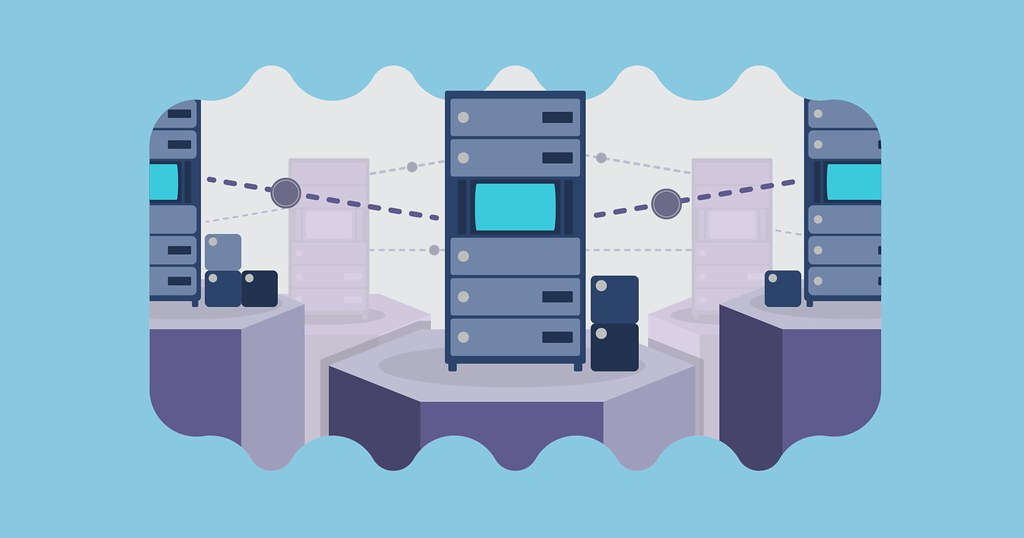
With AI, the tasks can be done efficiently and at a reduced cost by distributing them correctly. This approach also improves scalability, minimizes downtime, and bolsters data privacy as control over the infrastructure is not in the hands of a single entity.
Participation incentivized by token rewards leads to a self-sustaining system. Developers get inexpensive, flexible computing resources for the training and deployment of AI models.
This phenomena is critical for providing support to large scale AI use cases within decentralized crypto ecosystems.
Decentralized Cloud Computing – Features
- Sharing of unused computing resources around the world
- Task allocation to optimize processing in AI
- Decentralization optimizes local markets, at a fraction of the cost of centralized cloud providers.
- Token incentives for resource contributors
| Pros | Cons |
|---|---|
| Lower computing costs than traditional clouds | Network reliability depends on participants |
| Scalable global resource sharing | Performance inconsistency across nodes |
| Token rewards for contributors | Security concerns in distributed environments |
| Supports large AI workloads efficiently | Latency issues in real-time applications |
8. AI Governance Models
Crypto-based AI governance models enable equitable, transparent, and decentralized decision-making processes for AI systems.
Using decentralized autonomous organizations (DAO), token holders can vote on updates to AI models, data usage policies, and algorithm improvements.
This decentralizes control and empowers the community. This prevents any misuse of an intelligent system which seeks to bias and uses it for his own needs.

Smart contracts ensure the enforcement of governance rules, making it tamper-proof. Governance frameworks are important for accountability as AI systems increasingly operate in financial systems.
In doing so, the trend guarantees that AI development within crypto stays open-source, democratic and user-centric.
AI Governance Models – Features
- Decentralised Autonomous Organisation (DAO) voting for AI model updates and policies
- Community-led framework for AI system development
- Automated enforcement of governance rules via smart contracts
- Smooth Use With Ethical Oversight Minimizing Bias
| Pros | Cons |
|---|---|
| Community-driven decision making | Slow decision processes due to voting systems |
| Transparent and fair AI control | Low voter participation risk |
| Prevents centralized manipulation | Governance conflicts among token holders |
| Automated enforcement via smart contracts | Complexity in governance design |
9. Personalized Crypto Experiences
Artificial intelligence (AI) generated personalization is transforming user interaction within crypto platforms.
AI generates personalized dashboards, investment recommendations, and automated trading strategies based on user behavior analysis, trading patterns, and risk preferences.
That is another reason for making crypto easy to get for beginners and more efficient for the seasoned traders.

The benefit is personalized alerts, tailored portfolio recommendations, and even interfaces that adapt to user preferences—helping them make better decisions and stay engaged with your product.
AI can also drive market data and display the relevant parts to people, filtering out the noise. Such a custom-tailored experience leads to higher user retention and satisfaction from both, exchanges and DeFi platforms.
With competition in the crypto space heating up, tailored AI experiences are emerging as a major point of differentiation!
Personalized Crypto Experiences – Features
- AI-driven portfolio and trading recommendations
- Dashboards Personalized Based on Your Behavior
- Intelligent alerts for actionable market opportunities
- Beginner and advanced user adaptive interfaces
| Pros | Cons |
|---|---|
| Tailored trading insights for users | Privacy concerns with data tracking |
| Better user engagement and retention | Risk of algorithm bias |
| Simplified experience for beginners | Over-personalization may limit exploration |
| Faster decision-making for traders | Dependence on AI recommendations |
10. AI + Metaverse Synergy
The combination of AI and the metaverse is leading to virtual worlds and are creating experience-led economic systems driven by blockchain.
AI brings character and intelligence to virtual environments with every NPC being intelligent, terrains changing in response to actions, real-time user interactions.

In crypto-based metaverse platforms, AI plays a role in managing the economies, personalizing and generating content in an automated way.
AI-powered avatars, smart virtual assistants, and adaptive gaming systems can talk to users. Blockchain secures ownership of digital assets such as NFTs, and AI greatly expands their intended use cases.
This fusion is fueling new opportunities inside gaming, virtual real estate and social experiences. The synergy of AI + metaverse technologies will redefine how we communicate in the digital world and decentralized entertainment ecosystems as both technologies evolve.
Features of AI + Metaverse synergy
- Gaming experiences way enhanced with NPCs and AI
- Titles to digital assets and NFTs via blockchain
- AI in the Gaming and Metaverses space
- Custom avatars, and virtual user experiences
| Pros | Cons |
|---|---|
| Immersive and interactive digital worlds | High infrastructure and hardware requirements |
| AI-driven dynamic environments | Security risks in virtual economies |
| New opportunities in gaming and NFTs | Lack of standardization across platforms |
| Enhanced user engagement and creativity | Still early-stage technology with uncertainty |
Cocnlsuion
Finally, Top AI Crypto Trends are intelligently reshaping our blockchain future. These advancements enhance security and efficiency, improve user experience,
develop integrations with other chains, utilize the metaverse synergy concept and based on AI predictions or even some on-chain utility functionalities.
AI-powered crypto ecosystems will evolve more sophisticated and transparent, as adoption increases, and prove to be a critical component of future digital finance and Web3 evolution.
FAQ
What are the Top AI Crypto Trends in 2026?
The top AI crypto trends include decentralized AI networks, on-chain utility focus, AI-powered predictions, tokenized AI services, and metaverse integration.
Why are AI crypto trends important?
They improve efficiency, automation, security, and real-world use cases in the blockchain ecosystem.
What is a decentralized AI network?
It is a system where AI computation is distributed across blockchain nodes instead of centralized servers.
How does AI improve crypto trading?
AI analyzes market data, predicts price movements, and helps traders make data-driven decisions.