In this article, I will analyze the top Algorithmic Backtesting Tools for Nifty & Bank Nifty Options.
- Key Points & Best Algorithmic Backtesting Tools Optimized for Nifty and Bank Nifty Options
- 10 Best Algorithmic Backtesting Tools Optimized for Nifty and Bank Nifty Options
- 1. Zerodha Streak
- 2. TradingView
- 3. AmiBroker
- 4. QuantConnect
- 5. AlgoTest India
- 6. Tradetron
- 7. AlgoBulls
- 8. Quantman
- 9. Blueshift
- 10. Python Backtrader
- Conclusion
- FAQ
Here, you will discover the most dependable tools that traders utilize to examine, configure, and authenticate trading methodologies with reference to past data.
These tools help to maximize the accuracy and minimize the risk of your trading decisions, and help you identify the best strategies to trade options in the Indian market.
Key Points & Best Algorithmic Backtesting Tools Optimized for Nifty and Bank Nifty Options
| Tool | Explanation |
|---|---|
| Zerodha Streak | Web based platform enabling simple options strategy backtesting without coding |
| TradingView | Popular charting tool supporting strategy scripting and historical market testing |
| AmiBroker | Advanced desktop software for technical analysis and algorithmic strategy optimization |
| QuantConnect | Cloud based algorithmic trading platform supporting multi asset backtesting engine |
| AlgoTest India | India focused backtesting tool designed for Nifty and BankNifty options |
| Tradetron | No code automation platform for building and testing trading strategies |
| AlgoBulls | API driven trading platform offering strategy testing and deployment tools |
| Quantman | Browser based algo trading platform with powerful options strategy backtesting |
| Blueshift | Enterprise-grade cloud platform for data-driven strategy research, backtesting |
| Python Backtrader | Open source Python library for custom algorithmic trading strategy simulation |
10 Best Algorithmic Backtesting Tools Optimized for Nifty and Bank Nifty Options
1. Zerodha Streak
Zerodha Streak is one of the best no-code algorithmic trading and backtesting solutions in India. It is especially popular with traders of Nifty and Bank Nifty options.
It has simple tutorials and lets you set up your own rule-based strategies. Traders can test their strategies on historical data, and because of Zerodha Kite’s API, they can place their strategies in the live market.
For retail traders, it is the best solution because it has real-time alerts and can easily validate and execute strategies in a highly volatile options market.
| Pros | Cons |
|---|---|
| No coding required for strategy building | Limited advanced customization options |
| Seamless integration with Zerodha Kite | Works only with Zerodha ecosystem |
| Fast strategy creation and testing | Not suitable for deep quantitative research |
| Good for beginners and retail traders | Limited institutional-grade analytics |
| Cloud-based execution and alerts | Dependency on internet stability |
2. TradingView
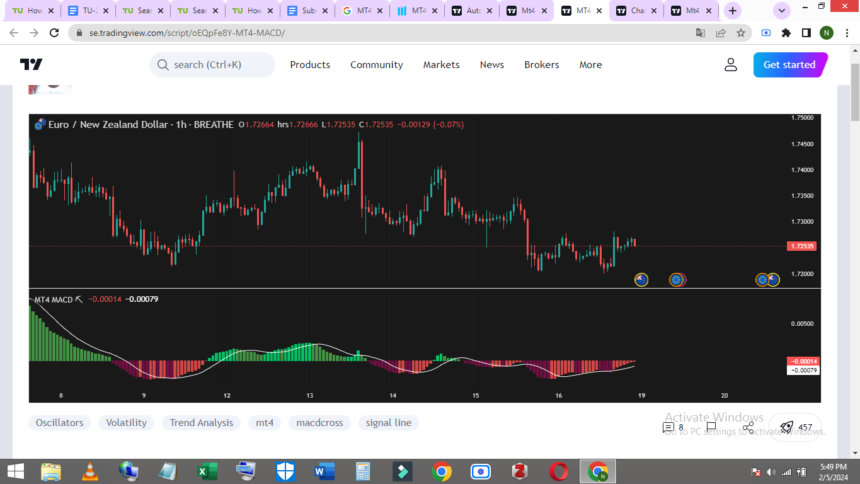
TradingView is a popular, easy to use, highly rated charting tool. Options traders for Nifty and Bank Nifty can benefit from the advanced indicator options and custom strategy scripting, as well as the easy access to large amounts of historical data.
Traders can define their own entry and exit rules for a strategy and work on ideas to improve their strategy.

TradingView is cloud-based and supports a community of traders and scripters, which can be a great asset to your trading.
Integrating your broker allows real-time execution of your strategies and continued best practices for a trader.
| Pros | Cons |
|---|---|
| Powerful Pine Script strategy backtesting | Advanced features require paid plan |
| Huge community-created indicators and scripts | Not fully focused on Indian options data |
| Multi-device cloud access | Execution depends on broker integration |
| Excellent charting and visualization tools | Strategy execution limitations in free tier |
| Real-time alerts and automation support | Learning Pine Script needed for full use |
3. AmiBroker
AmiBroker is a desktop software that enables users to conduct advanced levels of technical analysis and test automated strategies.
Serious traders that are based in India use AmiBroker to optimize their Bank Nifty and Nifty options strategies.
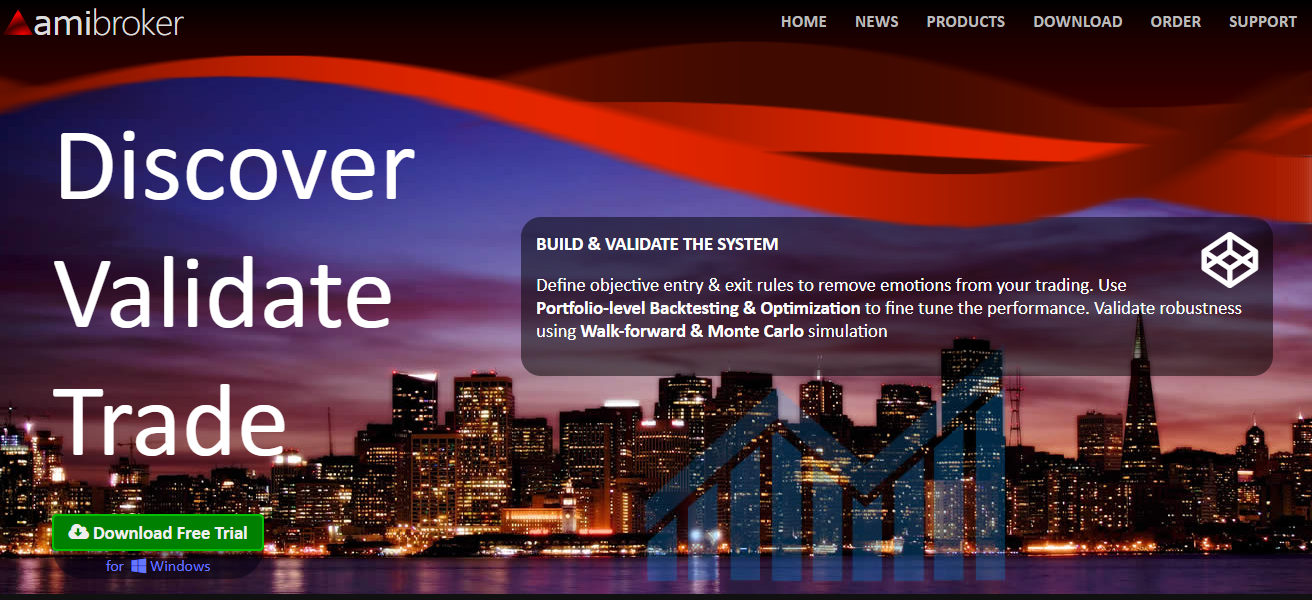
The software has a number of very useful features, like fast backtesting engines, a proprietary scripting language called AFL, and flexible customization levels for indicators and systems.
AmiBroker can hold extensive sets of historical data and also does backtesting at the portfolio level.
For traders with a technical inclination, the software is great for developing strategies, given the accurate performance analytics that the software generates.
| Pros | Cons |
|---|---|
| Extremely fast backtesting engine | Steep learning curve for beginners |
| Highly customizable AFL scripting | Desktop-only software (no cloud native version) |
| Accurate performance analytics | Requires paid license |
| Suitable for deep quantitative analysis | Interface feels outdated |
| Handles large datasets efficiently | Requires manual data management |
4. QuantConnect
QuantConnect is an example of a cloud-based algorithmic trading platform that has the kind of sophisticated backtesting typically found at the institutional level.
In addition to being able to trade options and futures like Bank Nifty and Nifty, this platform is extremely versatile in the asset classes offered.
QuantConnect is built upon the Lean engine and is unique in that it allows users to code in either Python or C#.
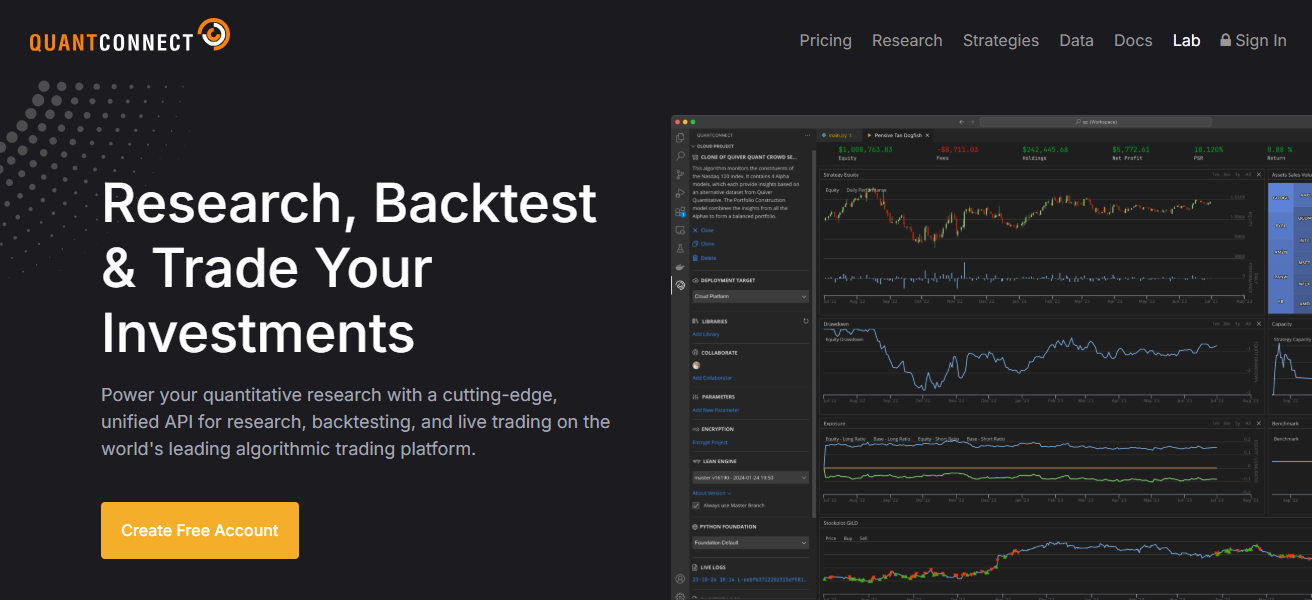
The platform is equipped with many of the features needed to conduct thorough testing of strategies, such as historical data and slippage, and supports the transition from testing to trading.
Given these features, the platform is designed for individual quants, as well as systems trading research and strategies at the hedge fund level.
| Pros | Cons |
|---|---|
| Institutional-grade Lean engine | Requires programming knowledge (Python/C#) |
| Supports multiple asset classes | Complex setup for beginners |
| Cloud-based scalable infrastructure | Premium data can be expensive |
| Realistic slippage and execution modeling | Internet dependency |
| Strong community and documentation | Learning curve is moderate to high |
5. AlgoTest India
AlgoTest India is a niche platform for Indian derivatives traders focusing on Bank Nifty and Nifty options strategies.
This platform incorporates elegant backtesting for spreads, straddles, and intraday strategies. Users can easily test risk and reward, as well as the probability of profit.
AlgoTest India is focused on the Indian markets in regard to volatility and expiration. Because of the niche, this platform is very effective for retail traders focused on directional and non-directional strategies.
| Pros | Cons |
|---|---|
| Built specifically for Indian options market | Limited global market support |
| Excellent for Nifty & Bank Nifty strategies | Fewer advanced coding features |
| Easy options payoff analysis tools | Still evolving platform features |
| Good for intraday strategy testing | Limited customization depth |
| Beginner-friendly interface | Not suitable for institutional quants |
6. Tradetron
Tradetron is a convenient, no-code platform for algorithmic trading. Users can build, backtest, and implement trading strategies all on-site.
With Tradetron’s condition-based logic, traders can use Nifty and Bank Nifty options, build multi-leg strategies, and automate trading across multiple brokers.
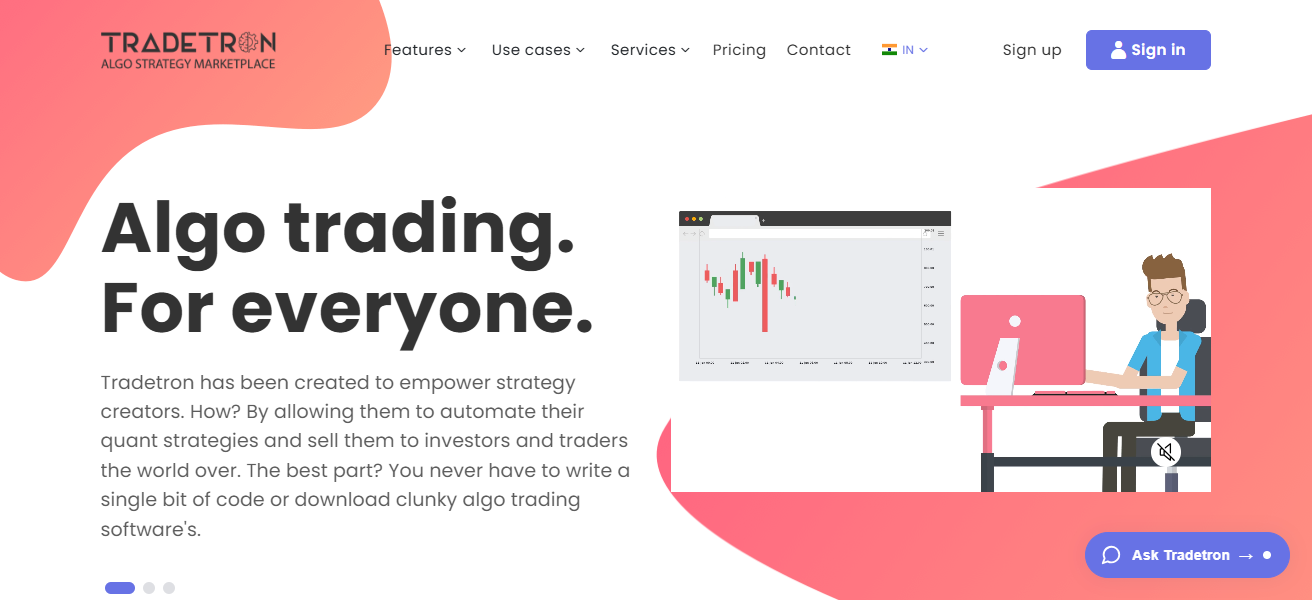
The Tradetron marketplace enables users to follow and monetize strategies. This platform aids traders who want to automate and scale their trading strategies without coding.
| Pros | Cons |
|---|---|
| No-code strategy automation | Execution depends on broker stability |
| Supports multi-leg options strategies | Subscription cost for advanced plans |
| Strategy marketplace available | Complex strategies can become slow |
| Broker integration support | Limited deep research tools |
| Easy automation and deployment | UI can feel cluttered for beginners |
7. AlgoBulls
AlgoBulls is an API-based platform for algorithmic trading that allows users to create, backtest, and deploy trading strategies.
It is most useful for Nifty and Bank Nifty options traders who desire broker-integrated automation. AlgoBulls users can create trading strategies with either a no-code interface or with Python.
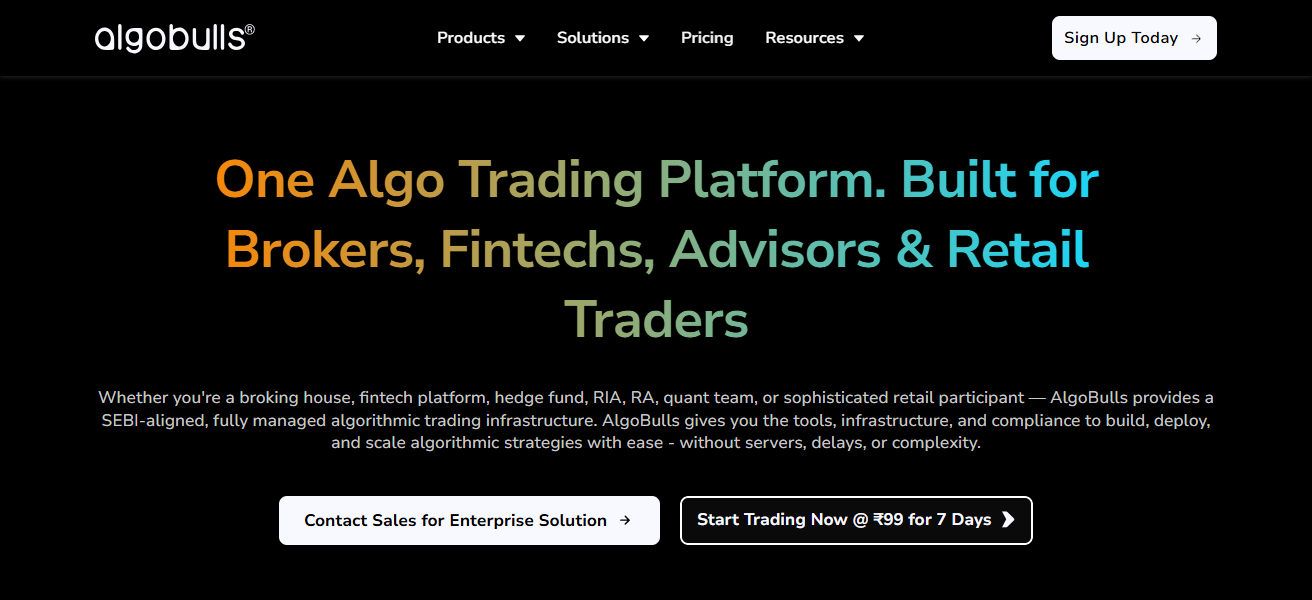
The platform is built for the execution of scalable systems and incorporates features for control of trading risk.
Cloud-based infrastructure helps keep latency low and aids frameworks for quantitative trading that is executed during the day.
| Pros | Cons |
|---|---|
| API-driven advanced automation | Requires technical understanding |
| Supports Python and no-code tools | Smaller user community |
| Real-time execution focus | Premium pricing for full features |
| Strong risk management tools | Setup complexity for beginners |
| Cloud-based scalability | Limited beginner tutorials |
8. Quantman
Quantman is a no-code, rule-based platform for trading and backtesting algorithms that specialize in the Indian Stock and Derivatives markets. It is useful for constructing option strategies.
Additionally, it is popular for backtesting intraday strategies that utilize Nifty and Bank Nifty, as well as strategies that employ momentum and volatility.
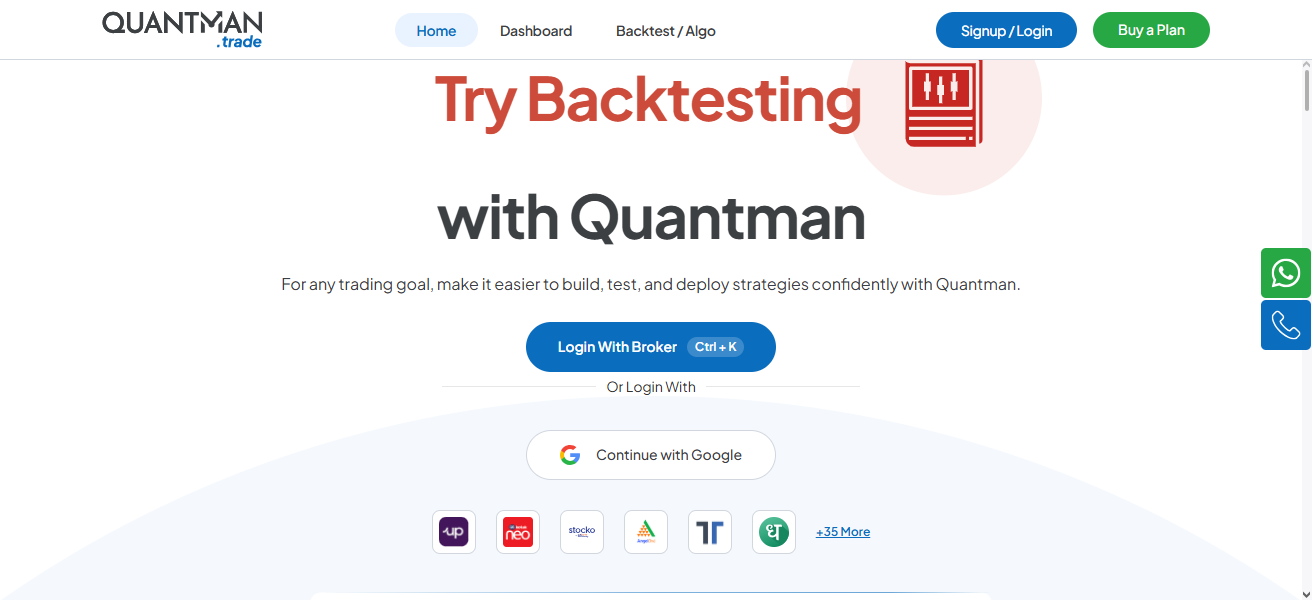
Quantman provides users with the ability to view analyses of performance and drawdowns, as well as visualizations of trades. Its interface and focus on Indian market data make it an excellent option for retail algorithm traders.
| Pros | Cons |
|---|---|
| Simple rule-based strategy builder | Limited advanced algorithm development |
| Strong focus on Indian markets | Not ideal for global trading |
| Good intraday testing tools | Fewer API integrations |
| Easy-to-use interface | Limited customization depth |
| Detailed performance reports | Subscription required for full features |
9. Blueshift
Blueshift is another sophisticated cloud-based platform designed for quantitative research and backtesting. What makes it stand out from its peers is that it is designed specifically for systematic traders.
It makes the process of testing research-backed strategies seamless with the use of Python and large sets of data with a historical backdrop.
If you’re a trader for Nifty and Bank Nifty options, Blueshift provides portfolio simulation and risk modeling analyses at an institutional level.
It is especially convenient for researchers and professional Quants who require scalable infrastructure.
Some of its other features include an event-driven framework coupled with the advantage of cloud-based execution, which makes the testing of complex strategies feasible and reasonably accurate.
| Pros | Cons |
|---|---|
| Institutional-grade research platform | Requires strong Python skills |
| Event-driven backtesting engine | Not beginner-friendly |
| High-quality historical data | Complex setup process |
| Scalable cloud infrastructure | Limited retail trader focus |
| Strong risk modeling tools | Paid data access required |
10. Python Backtrader
Backtrader is an open-source Python library that enables users to create bespoke algorithmic trading and backtesting systems with ease.
It is very flexible and allows you to create a trading strategy for Nifty and Bank Nifty options with as much logic and as many indicators as you prefer. It also allows execution simulation.
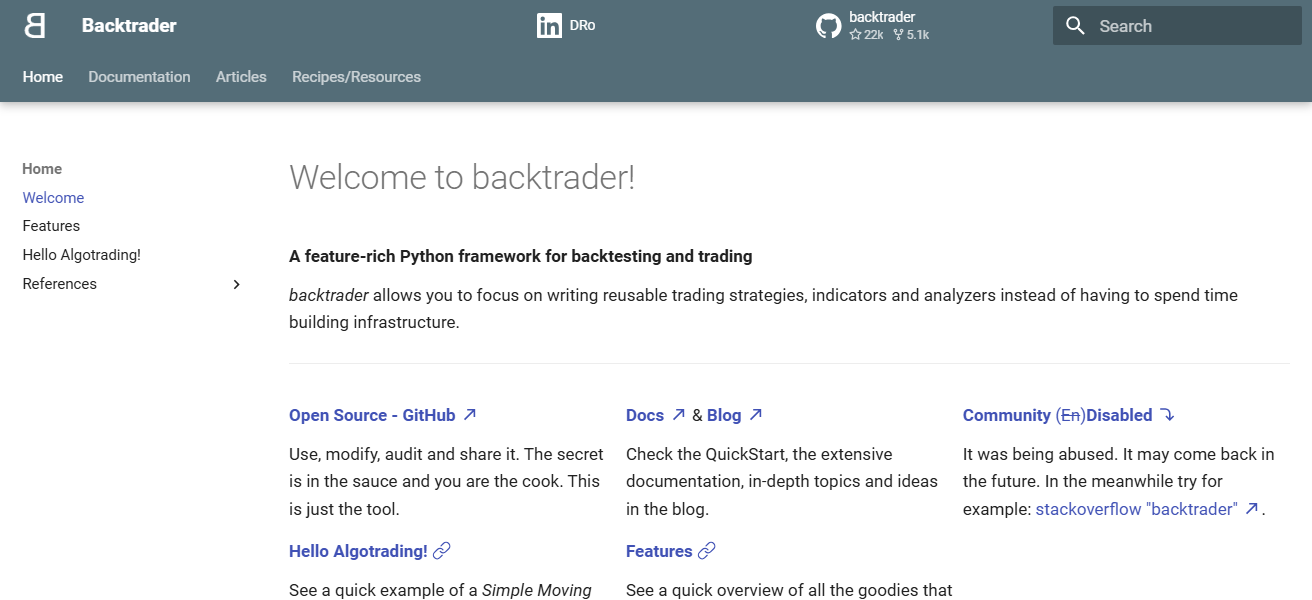
Backtrader is especially impressive as it allows the user to customize the system to the extent that they can plug in real-time data feeds, broker services, and personalized analytics.
The caveat is that you may want to go through the documentation, as it has a steep learning curve for users who do not possess a programming background. However, it remains one of the most powerful tools for quantitative research.
| Pros | Cons |
|---|---|
| Fully open-source and free | Requires strong programming skills |
| Maximum flexibility and customization | No built-in data feed |
| Supports broker API integration | Setup can be time-consuming |
| Ideal for quantitative research | No GUI interface |
| Strong community support | Maintenance depends on user |
Conclusion
In summary, the Best Algorithmic Backtesting Tools for Nifty and Bank Nifty Options offer traders robust platforms for testing, optimizing, and fine-tuning strategies prior to deployment.
No-code platforms like Streak and Tradetron allow for easier entry into the world of automated trading, while more complex tools like QuantConnect and AmiBroker feature more extensible trading strategies and custom algorithms.
The best tool for any individual will ultimately be determined by their level of expertise and the complexity of the strategies built to help achieve their trading objectives.
FAQ
Which is the best tool for beginners in Nifty options backtesting?
Zerodha Streak and Quantman are best for beginners due to their no-code, simple interface, and easy strategy creation features.
Which tool is best for advanced traders?
AmiBroker, QuantConnect, and Python Backtrader are best for advanced users due to deep customization and coding flexibility.
Can I backtest Bank Nifty options strategies?
Yes, all major platforms like TradingView, Tradetron, and AlgoTest India support Bank Nifty options strategy backtesting.
Which tool is completely free for backtesting?
Python Backtrader is open-source and free, but requires coding and external data setup.