
In this article, I will review the Best Clinical Trial Data Management Platforms for Biotech Start-Ups.
Highlighting the most credible, secure, and adaptable managed solutions in use today, I will focus primarily on the platforms that help modern clinical researchers effectively manage clinical trial data.
I will also review some of the most advanced digital automation tools that provide constant compliance and encourage rapid development of pharmaceutical products.
What is a Clinical trial data management platform?
A data management platform for clinical trials is an advanced tool for the safe collection, storage, and management of clinical research data.
A data management platform prioritizes data accuracy and allows for the seamless management of study workflows across multiple clinical trial research sites.
These platforms are designed to build automation and optimization of study workflows and real-time data collection, as well as integrated data management and reporting.
As such, clinical trial data management platforms offer researchers the capacity to expedite clinical trial studies and improve the overall quality of decisions throughout the course of the study.
Key Poinst & Best Clinical Trial Data Management Platforms for Biotech Startups
| Platform | Explanation |
|---|---|
| Medidata RaveA | widely used enterprise EDC for clinical trial data management platform |
| Veeva Vault Clinical | cloud-based clinical trial platform for a regulated data management system |
| Oracle Clinical One | unified clinical data capture platform for global trials operations hub |
| Castor EDC | user-friendly EDC platform enabling fast decentralized clinical studies workflow |
| REDCap | secure web-based application for managing research study data collection |
| OpenClinica | open source clinical trial software for electronic data capture systems |
| Medrio | cloud-based EDC solution designed for fast clinical trials execution |
| IBM Clinical Development | enterprise-grade platform supporting end-to-end clinical studies globally |
| Clario | integrated clinical trial endpoint data and imaging platform solutions suite |
| DFnet | digital clinical trial data management and monitoring platform services tools |
10 Best Clinical Trial Data Management Platforms for Biotech Startups
1. Medidata Rave
Medidata Rave is a top-of-the-line, global market Electronic Data Capture (EDC) system, and is clearly a market leader.
It incorporates a number of state-of-the-art features, including the ability to evaluate the complexity of study designs, conduct real-time validations of clinical trial data, and use AI/ML to analyze data in order to facilitate and support critical path decisions.
With the recent updates of Medidata AI, Medidata Rave is outstanding for aid in recruitment and application of predictive analytics to study design and optimizing clinical trial protocols.
Biotech Startups appreciate the ease of use and the built-in Federal Drug Administration and European Medicines Agency compliance, and the integrated decentralized and hybrid trial solution is the Medidata Rave’s gold standard.
Medidata Rave Pros & Cons
| Pros | Cons |
|---|---|
| Highly scalable for global clinical trials | Expensive for small biotech startups |
| Strong FDA and EMA regulatory compliance | Complex onboarding and setup process |
| Advanced AI-driven analytics features | Requires trained clinical data specialists |
| Excellent integration with decentralized trials | Less flexible for small custom workflows |
| Industry gold standard EDC system | Heavy system may slow initial adoption |
2. Veeva Vault Clinical
Veeva Vault Clinical is an end-to-end, cloud-based clinical trial management system (CTMS). It combines clinical data capture and clinical document and study operations management into one solution.
This marketplace favorite is even more improved now that the Vault Clinical Suite has built in even more advanced features for remote monitoring, real-time collaboration, and other enhanced CTMS capabilities.
Veeva Vault Clinical is a favorite of Biotech Startups with its focus on strict GxP requirements due to its life sciences compliance support offerings and a proven system that decreases study timelines.
Veeva Vault Clinical Pros & Cons
| Pros | Cons |
|---|---|
| Unified platform for documents and data | High licensing and subscription costs |
| Strong GxP compliance and audit readiness | Limited flexibility outside the Veeva ecosystem |
| Real-time collaboration and monitoring tools | Learning curve for new users |
| Cloud-native architecture improves accessibility | Customization can be time-consuming |
| Fast study execution and workflow automation | Best suited for mid-to-large organizations |
3. Oracle Clinical One
Oracle Clinical One is a new, fully integrated EDC, randomization, and clinical trial supply and management platform.
With a focus on the modern, cloud-based, and scalable, Oracle Clinical One has developed AI Data Cleaning and Query Management to further ease the burden of manual data entry.
The modern design and ease of use features of Oracle Clinical One focus on the large, multinational Biotech Startups that need to control and manage studies that cover a large, dispersed geography.
Oracle Clinical One Pros & Cons
| Pros | Cons |
|---|---|
| Unified EDC, RTSM, and data capture system | High implementation complexity |
| Strong support for adaptive clinical trials | Expensive enterprise-level solution |
| AI-powered data cleaning and validation | Requires technical expertise to manage |
| Global scalability for multi-site studies | Interface can feel complex for beginners |
| Real-time data capture and reporting | Longer onboarding time |
4. Castor EDC
Designed for decentralized and hybrid clinical trials, Castor EDC is a no-code solution for easy data capture.
With Castor EDC, electronic case report forms can be created quickly without any training. Updates have added support for wearables and eConsent, improving its use in contemporary patient-centric designs.
With a lower total cost of ownership and rapid implementation, new companies use Castor the most when compared to its competitors as it meets the requirements of varying regulatory regions the fastest.
Castor EDC Pros & Cons
| Pros | Cons |
|---|---|
| No-code platform for quick study setup | Limited advanced enterprise features |
| Ideal for decentralized and hybrid trials | Not ideal for very large complex trials |
| Easy integration with wearables and eConsent | Fewer deep analytics tools |
| Fast deployment for startups | Scaling limitations in global mega trials |
| Cost-effective for small biotech firms | Dependency on cloud infrastructure |
5. REDCap
REDCap is a data capturing solution that is as safe as it is flexible thanks to its survey creation features and data export management.
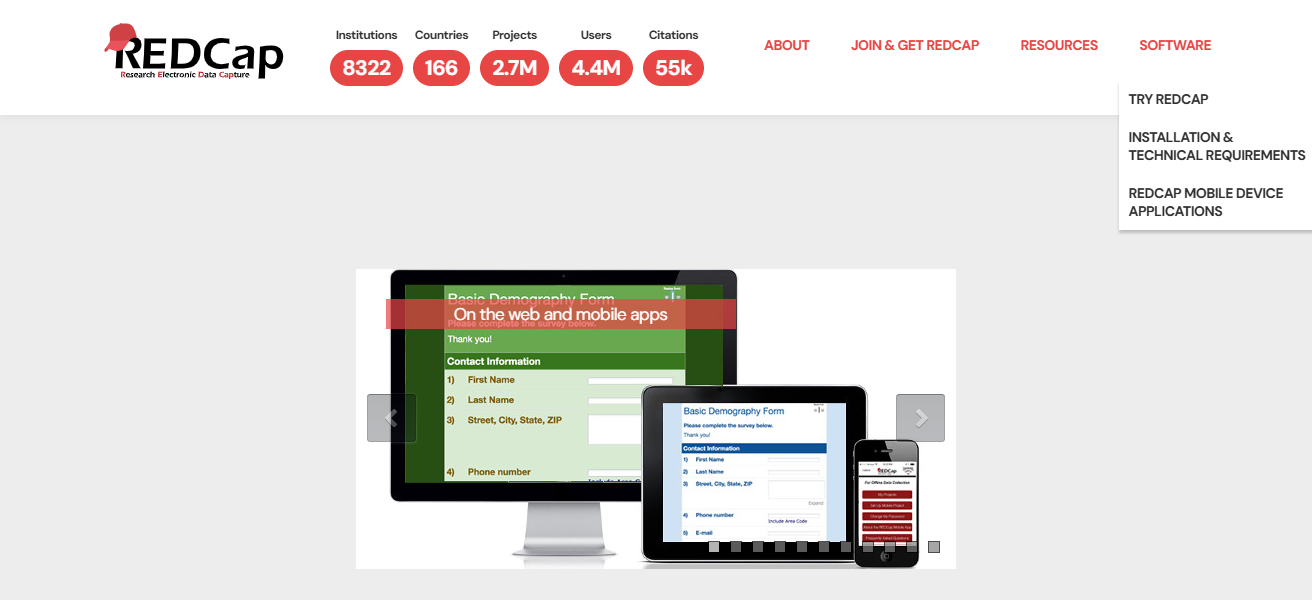
Its strong audit trails allow for easy compliance with regulations. Although it is primarily an academic tool, biotechs begin to adopt it for early research because of its low cost and reliability. For structured data collection and small to medium clinical research, it is a global leader.
REDCap Pros & Cons
| Pros | Cons |
|---|---|
| Free or low-cost academic solution | Limited modern UI and UX features |
| Highly secure and widely trusted | Not built for large commercial trials |
| Strong data export and survey tools | Limited automation capabilities |
| Easy adoption in research institutions | Requires institutional hosting setup |
| Stable and reliable for early-stage studies | Less suitable for advanced AI workflows |
6. OpenClinica
OpenClinica offers the use of electronic data capture and study management tools in a flexible, customizable solution for the clinical trials of open-source companies.
Its strong community support and cost-effectiveness make it a good choice for early-stage biotech firms.
OpenClinica enables compliance with regulatory standards while allowing organizations to maintain control over infrastructure and data governance.
OpenClinica Pros & Cons
| Pros | Cons |
|---|---|
| Open-source flexibility and customization | Requires technical setup expertise |
| Cost-effective for startups | Limited out-of-the-box enterprise features |
| Strong regulatory compliance support | UI is less modern compared to competitors |
| Active developer and user community | Maintenance depends on internal team |
| API integration flexibility | Scaling requires infrastructure planning |
7. Medrio
Medrio is a speed-optimized, simplistic, cloud-based EDC and clinical trial management system. It provides support for, among other features, decentralized trials and mobile data capture.
Medrio is appealing to Biotech Startups for its user-friendliness and lack of substantial supporting IT requirements.
Phase I and II trials, characterized by their time-sensitive and flexible nature, make Medrio an effective option as well.
Recent features that enhance data tracking and AI-based query management are examples of Medrio’s focus on innovative technology.
Medrio Pros & Cons
| Pros | Cons |
|---|---|
| Very fast study deployment | Limited customization for complex trials |
| User-friendly interface for researchers | Fewer advanced analytics features |
| Strong support for decentralized trials | Not ideal for very large global studies |
| Mobile and cloud-based access | Premium pricing for advanced features |
| Ideal for Phase I and II trials | Less enterprise depth than Medidata |
8. IBM Clinical Development
IBM Clinical Development is a comprehensive, enterprise-level system that has every functional feature for managing clinical trials from start to finish.
It provides an integrated workspace for data capture, systematic monitoring and evaluation, and embedded advanced analytics.
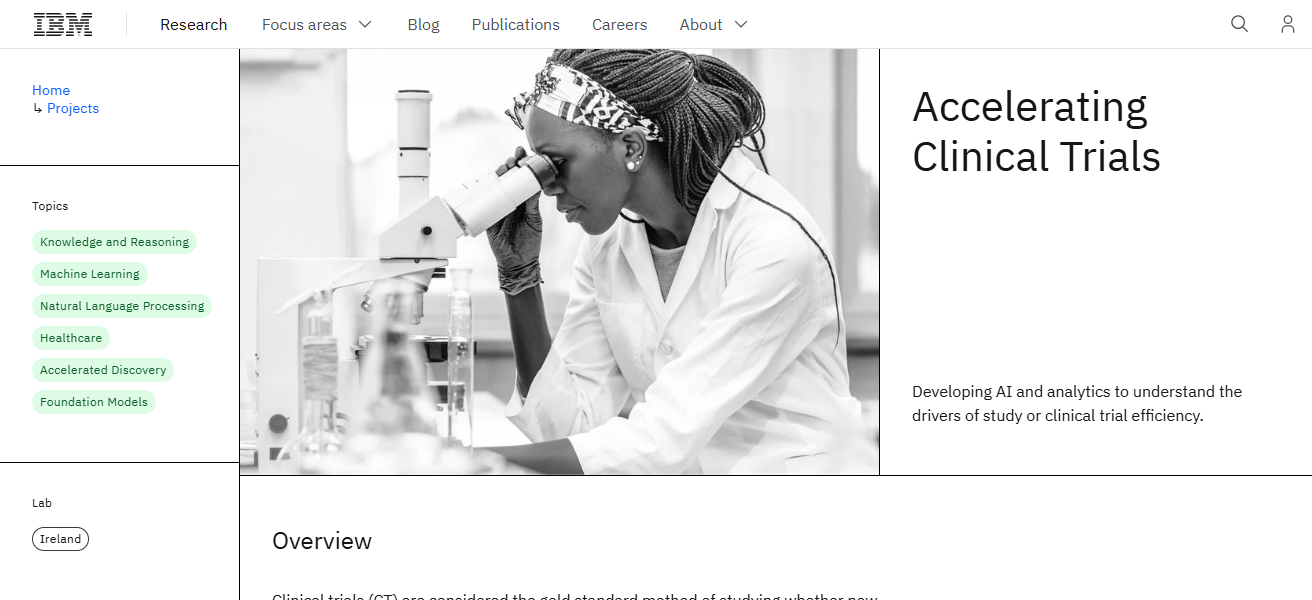
Incorporating IBM’s vast AI and cloud-based technology, this platform enhances not only data quality, but also promotes overall efficiency in clinical trials.
Biotech Startups find the sophisticated automation, ease of use, and firm compliance appealing, particularly for clinical studies that span multiple regions.
IBM Clinical Development Pros & Cons
| Pros | Cons |
|---|---|
| Strong AI and analytics integration | High cost for biotech startups |
| End-to-end clinical trial management | Complex system architecture |
| Scalable for global research programs | Requires IT expertise |
| Real-time dashboards and insights | Longer implementation cycles |
| Strong compliance and security | Not startup-friendly pricing |
9. Clario
Clario’s area of focus is the data endpoint of clinical trials and imaging, combined with sophisticated analytics.
Integrated eCOA, eCapture, and data in the clinical trial framework capture diverse modalities of data, including imaging, cardiac, and respiratory data.

Recent technologies that aid in the support of decentralized clinical trials include endpoint validation and AI.
Biotech Startups enhance the accuracy of data in dedicated therapeutic areas by employing Clario. Its large focus in a clinical data framework combines clinical data with imaging intelligence and is helpful for complex clinical research.
Clario Pros & Cons
| Pros | Cons |
|---|---|
| Excellent imaging and endpoint analytics | Specialized focus limits general use |
| Strong eCOA and sensor integration | Expensive for small trials |
| High-quality clinical data accuracy | Requires training for advanced features |
| AI-enhanced endpoint validation | Less flexible as full EDC platform |
| Ideal for specialized therapeutic studies | Integration complexity in hybrid setups |
10. DFnet
DFnet’s advanced tools develop and manage Virtual Clinical Trials. They offer a unique set of tools that include EDC, remote monitoring, and data cleaning, with compliance and utility in mind.
DFnet has put a lot of effort into developing its cloud dashboard and real-time data tracking, and made advancements for decentralized trials.
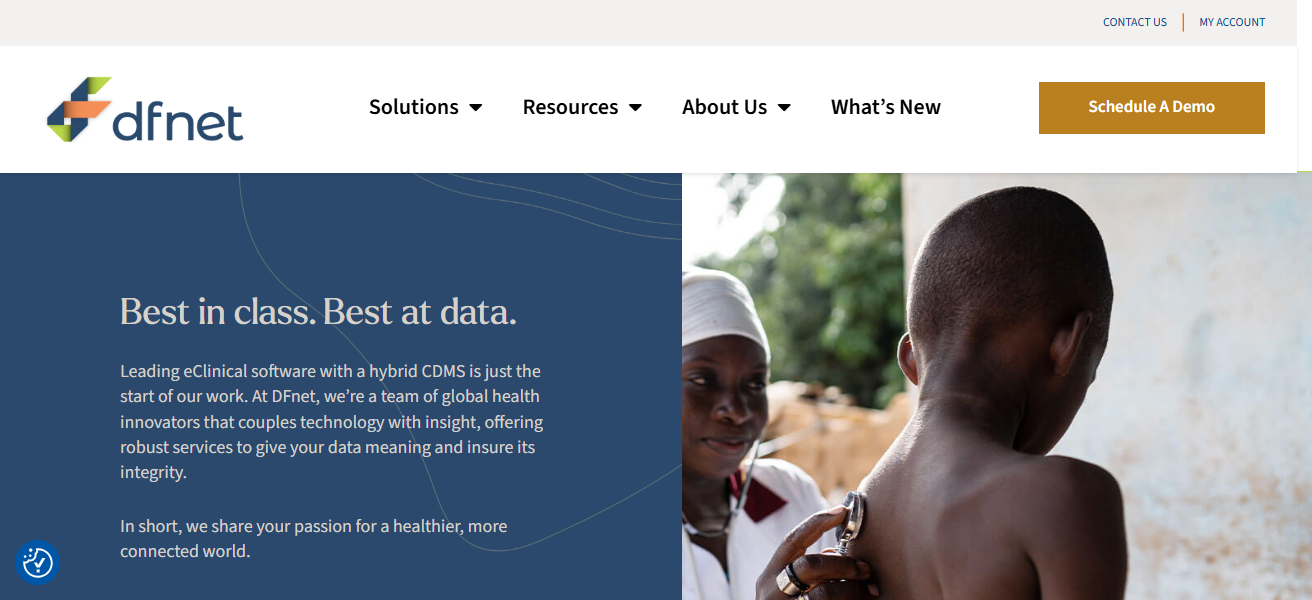
Biotech startups love using DFnet because of the great customer service and value for money, and it works really well for companies that are conducting multiple country trials and don’t have that many resources.
DFnet Pros & Cons
| Pros | Cons |
|---|---|
| Cost-effective for global trials | Smaller market presence than competitors |
| Strong remote monitoring tools | Limited advanced AI capabilities |
| Flexible cloud-based platform | UI is less modern than the top EDC systems |
| Good for decentralized studies | Fewer third-party integrations |
| Strong customer support services | Not ideal for very large pharma trials |
How We Select the Best Clinical Trial Data Management Platforms for Biotech Startups
Startup Friendliness
We choose platforms that are fast to implement, easy to use, affordable, and cater to early-stage resource-constrained biotech companies.
Compliance
The platforms must comply with securing and validating clinical trials with the FDA and EMA, and with good clinical practice.
User-Friendliness
We look for platforms that foster an easier, faster, and self-service approach that enables research teams to be productive with the least amount of training.
Flexibility
We look for platforms that can be used in both small trials as well as expansive global clinical studies.
Security
The platforms must have the necessary clinical data protection safeguards, such as audit trails and data encryption.
Compatibility
We look for platforms that easily integrate with EDC, CTMS, e-Consent, and wearable solutions.
Value-for-Money
We look for good pricing models that cater to startups with low-cost offerings, while still including all of the necessary enterprise features.
Cutting Edge Technologies
We look for platforms that have automated/on-demand analytics, AI, and real time reporting.
Conclusion
In summary, the best data management tools for clinical trials in biotech startups help users maintain high data integrity, remain compliant with regulations, and conduct clinical studies more efficiently.
Startups may be interested in tools such as Medidata, Veeva, Castor, and Medrio. The right system for you will depend on the budget, complexity of the studies, and the goals of the organization to expand.
The more qualified clinical solutions that other biotech startups have, the more likely they will be able to accelerate getting novel therapies approved to be available for the public.
FAQ
Which is the best clinical trial platform for biotech startups?
Castor EDC, Medrio, and OpenClinica are ideal for startups due to affordability, speed, and flexibility.
What is EDC in clinical trials?
EDC (Electronic Data Capture) is a digital system used to collect clinical trial data instead of paper-based methods.
Why is Medidata Rave widely used?
Medidata Rave is widely used due to its scalability, advanced analytics, and strong regulatory compliance in global trials.
Are cloud-based clinical trial platforms safe?
Yes, modern cloud-based platforms follow strict compliance standards like FDA 21 CFR Part 11 and GDPR.
What is the difference between EDC and CTMS?
EDC focuses on data collection, while CTMS manages overall clinical trial operations and workflows.