In this guide, I will share my overview of The Best Business Liability Insurance Providers for Tech Startups — the most reliable insurers who provide coverage against risks such as lawsuits, cyber threats, or professional mistakes.
Each new provider you add forms a part of your unique technology stack, and it is important to choose wisely as this choice keeps your startup propelling forward,
Growing its revenue without unnecessary impacts on funds or scale — a crucial point for any business given the rapidly evolving and hyper-competitive nature of today’s technology market.
Key Points & The Top Business Liability Insurance Providers for Tech Startups
Vouch Insurance Specialized startup-focused insurance platform offering tailored liability coverage, fast digital onboarding, and flexible policies.
Hiscox Global insurer providing professional liability coverage, especially for freelancers, consultants, and small tech startups.
The Hartford Established US insurer offering comprehensive business liability insurance, strong claims support, and broad industry coverage.
Next Insurance Digital-first insurer providing instant online quotes, affordable liability policies, and simple startup-friendly insurance management tools.
Corgi AI-driven startup insurer offering fast, direct commercial coverage for tech companies with simplified underwriting processes.
HDFC ERGO Leading Indian insurer offering robust business liability coverage, strong digital claims, and wide startup protection plans.
ICICI Lombard Major Indian insurer providing flexible liability, cyber, and SME insurance with strong digital services and support.
TATA AIG Trusted insurer offering customizable business liability insurance, strong claim settlement, and extensive corporate risk coverage solutions.
Acko General Insurance Digital-first insurer providing simple, low-cost business and liability policies with fast claims and mobile-first experience.
Bajaj Allianz Well-known insurer offering comprehensive startup liability coverage, customizable plans, and reliable claims with wide Indian presence.
The Top 10 Business Liability Insurance Providers for Tech Startups
1. Vouch Insurance
Vouch Insurance A startup-focused insurance provider tailored for modern tech companies It provides customized business liability insurance like general liability, professional indemnity, cyber liability and directors & officers (D&O) cover.
The highly digital platform allows policy issuance and management to be fast and straightforward for start-ups.
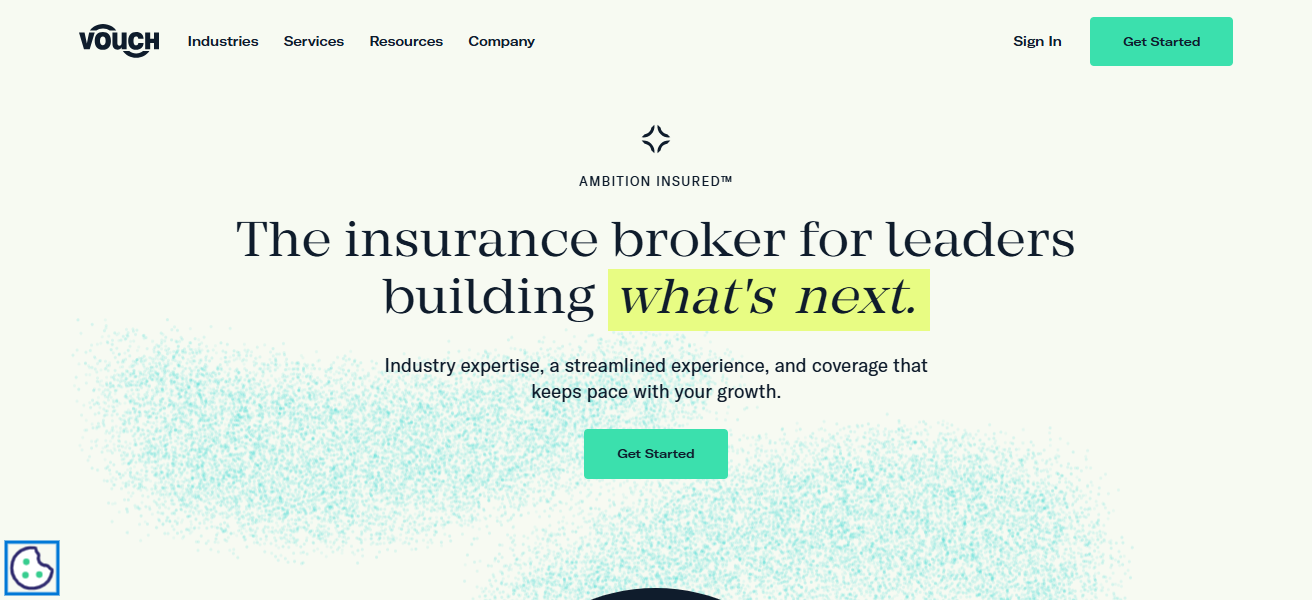
Vouch customizes policies around variables such as funding stage, team size and operational risk. US-based venture-backed startups are drawn to it for its ability to turn complex insurance needs into scalable packages.
It’s very startup centric, which is perfect for early-stage companies that need flexible protection solutions that are ready to grow.
| Pros | Cons |
|---|---|
| Highly startup-focused insurance solutions | Limited availability outside US markets |
| Flexible policies for funding stages | Premiums may be higher for early startups |
| Fast digital onboarding and management | Less suitable for traditional enterprises |
| Strong cyber and D&O coverage options | Smaller global brand recognition |
| Tailored for venture-backed tech companies | Limited offline customer support |
2. Hiscox
Hiscox is a leading global insurer specializing in small business, freelancer and tech startup insurance. It provides a commercial liability insurance such as professional indemnity cover, general liability and cyber coverage.
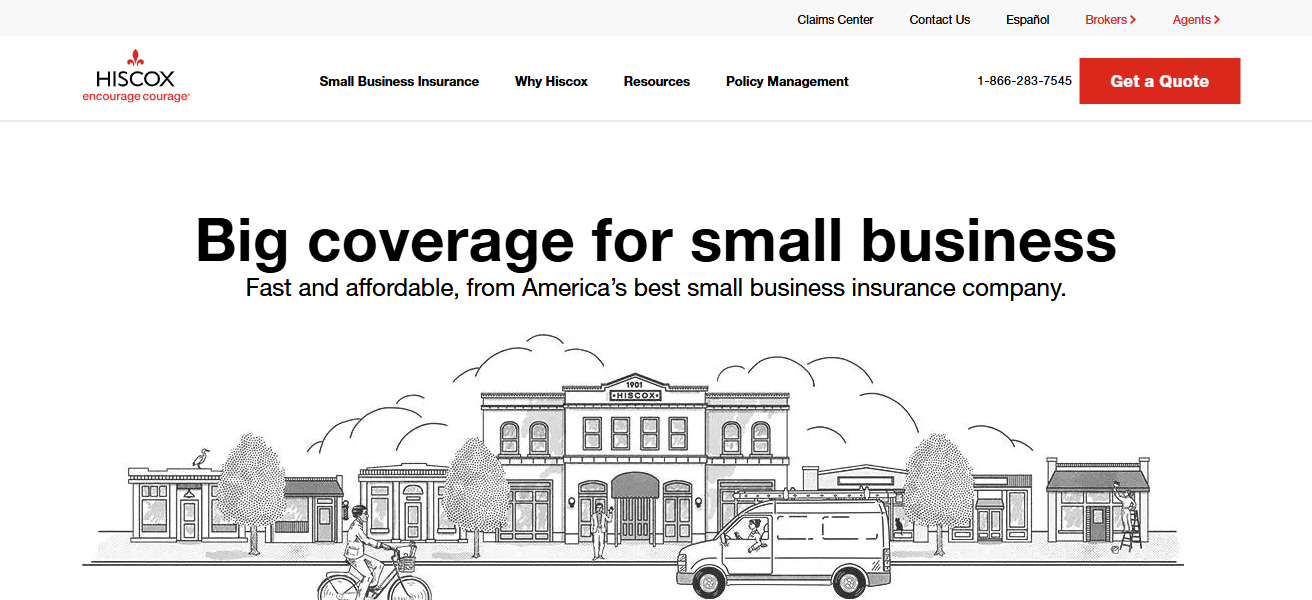
Hiscox is known for having a robust digital platform and seamless online policy management. It is gaining particularly in the US and UK market for tech consultants and software developers.
The firm offers flexible, modular insurance plans capable of scaling with a startup’s growth. Hiscox also has an excellent reputation for intellectual property and defamation claims, making it a good fit for SaaS and IT service startups with client facing risk exposure.
| Pros | Cons |
|---|---|
| Strong global reputation and trust | Can be expensive for very small startups |
| Excellent for freelancers and SaaS startups | Limited customization in some regions |
| Easy online policy management | Not deeply localized for emerging markets |
| Strong intellectual property protection | Slower claim handling in complex cases |
| Wide range of liability coverage options | Focus more on Western markets |
3. The Hartford
The Hartford is one of the most trusted and long-serving insurance companies in America. The service offers small business and startup-oriented comprehensive business liability insurance solutions for tech businesses.
Types of coverage can include general liability, professional liability, cyber insurance and workers’ compensation.

The Hartford has a reputation for stability and supports claims extremely well, so it’s reliable in a high-risk event. Its policies are very customizable, helping startups scale protection as they grow.
It’s particularly well-suited for existing startups that need reliable, full-spectrum business protection along with in-house customer service and risk management tools.
| Pros | Cons |
|---|---|
| Extremely strong financial stability | Premium pricing can be high |
| Excellent claims support system | Less flexible for very early-stage startups |
| Comprehensive coverage options | Complex policy structure for beginners |
| Strong risk management tools | Mostly US-focused services |
| Trusted long-standing insurer | Slower onboarding compared to digital-first platforms |
4. Next Insurance
Next Insurance, a digital-first insurance company built for small businesses and startups. It provides fully online business liability insurance including general liability, professional liability, and commercial auto coverage.
The platform features instant quotes, speedy policy issuance, and manages everything on mobile — this startup is perfect for tech startups.

Next Insurance prides itself on being affordable and uncomplicated, catering to small businesses in need of quick custom or off-the-shelf coverage without a lot of fuss.
Its AI-based underwriting reduces paperwork and fast-tracks approvals. This makes it particularly suitable for startups, freelancers and IT service providers seeking affordable and fully digital insurance solutions.
| Pros | Cons |
|---|---|
| Fully digital and easy to use | Limited advanced enterprise coverage |
| Fast online quotes and approvals | Not ideal for large corporations |
| Affordable pricing for small businesses | Coverage options still expanding |
| Mobile-friendly management system | Less personalized advisory support |
| AI-driven fast underwriting | Limited global presence |
5. Corgi
Corgi Insurance is a newer, AI-powered startup insurer that explicitly targets tech companies and venture-backed businesses.
It functions as a full-stack insurance carrier, meaning it creates and administers its own policies without third-party intermediaries.
Corgi offers startup-specific coverage for business liability, cyber insurance, E&O, and D&O. “This means speed is a big part of the company ethos — instant quotes and quick onboarding via automated underwriting,” he told me in an email.
That makes it especially appealing for startups requiring flexible, modern insurance solutions. Corgi aims to simplify the commercial insurance process for high-growth tech companies throughout their early and scaling stages, backed by robust investor support and AI-Driven risk assessment.
| Pros | Cons |
|---|---|
| AI-driven fast insurance processing | Very new company with limited track record |
| Full-stack insurance carrier model | Limited geographic availability |
| Built specifically for startups | Higher uncertainty due to early-stage status |
| Fast onboarding and quotes | Smaller customer support network |
| Strong investor backing | Limited historical claim data |
6. HDFC ERGO
HDFC ERGO is a prominent general insurance company in India providing comprehensive commercial liability coverage for startups and enterprises.
At tech firms, its policies range from professional indemnity to cyber insurance to commercial general liability.
HDFC Group and Munich Re provide strong financial backing to the company making its claims settlement reliable.
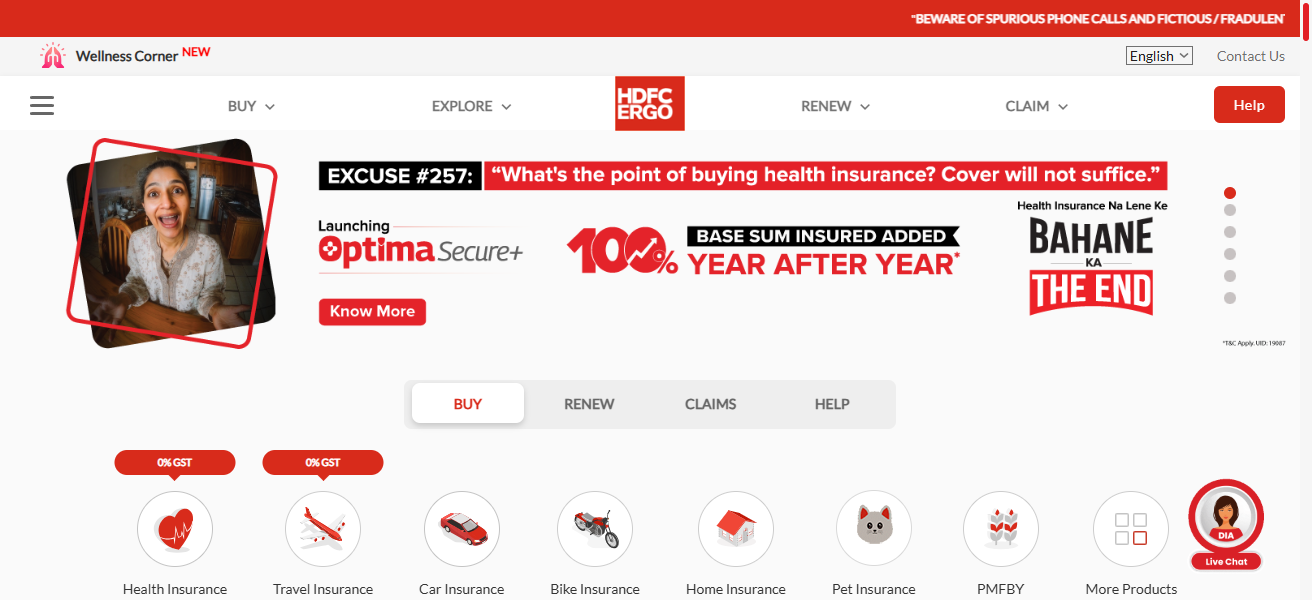
With its digital-first approach, HDFC ERGO enables customers to purchase policies and track their claims conveniently.
Indian startups trust it for its affordable and customized coverage options. The insurer is ideal for technology businesses in search of stable, locally compliant insurance solutions backed by strong service support.
| Pros | Cons |
|---|---|
| Strong financial backing in India | Slower digital experience vs global insurtechs |
| Reliable claim settlement process | Complex documentation requirements |
| Wide range of startup insurance products | Less innovative product customization |
| Strong trust in Indian market | Limited global expansion |
| Good cyber insurance offerings | Traditional underwriting processes |
7. ICICI Lombard
ICICI Lombard is one of India’s largest private general insurance companies and provides robust business liability insurance for startups.
Coverage includes cyber risks, the fully underwriting of professional indemnity and general liability — all specifically designed for IT and SaaS businesses.
The company is recognized for its innovative digital claim processing as well as widespread network of branches throughout the Indian subcontinent.
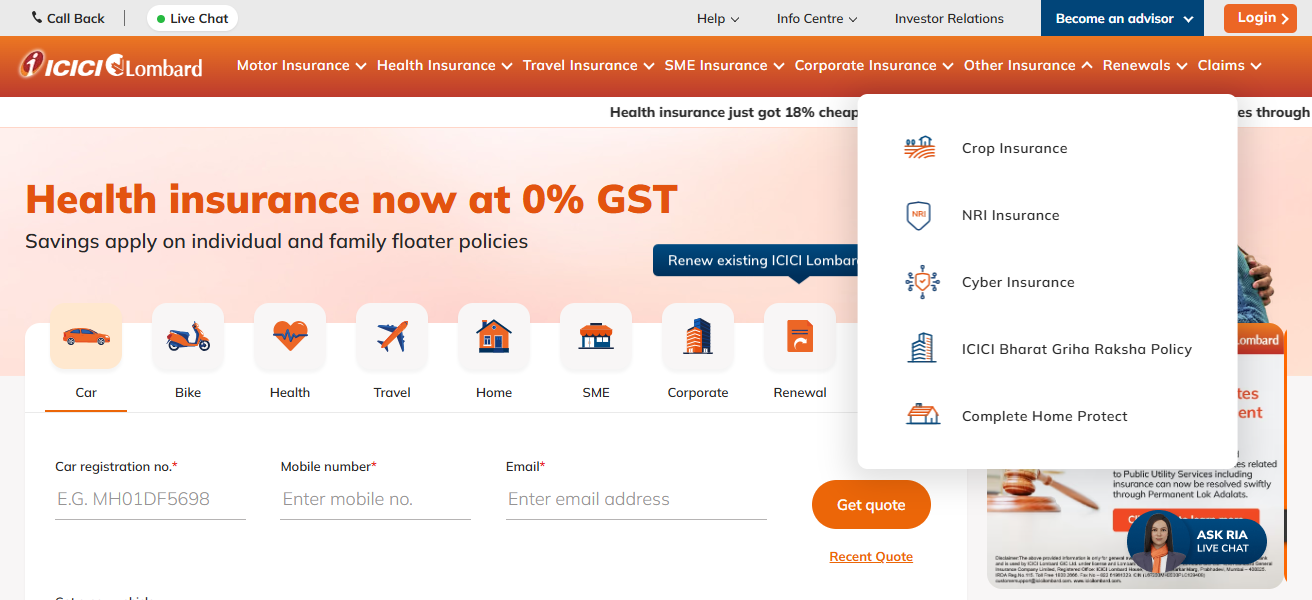
ICICI Lombard offers versatile policies that can be customized in accordance with varied startup sizes and sectors.
Robust service delivery and powerful fiscal soundness are the daily endowments. It is especially useful for tech startups that need stable insurance from a well-established and technology-driven insurer.
| Pros | Cons |
|---|---|
| Large network and strong presence | Premiums may be higher for startups |
| Advanced digital claim processing | Less personalized startup-focused plans |
| Strong financial stability | Policy customization can be limited |
| Fast service and support | Complex policy terms for beginners |
| Good cyber and liability coverage | Focus not only on startups |
8. TATA AIG
With strong business liability coverage for the startups and enterprises, TATA AIG is also one of the most trusted insurance providers in India.
It also offers professional indemnity, cyber insurance and commercial general liability specifically tailored for technology businesses.
Insurer that provides structured transparency of the policies, thanks to its trusted brand equity and really fast claims settlement.
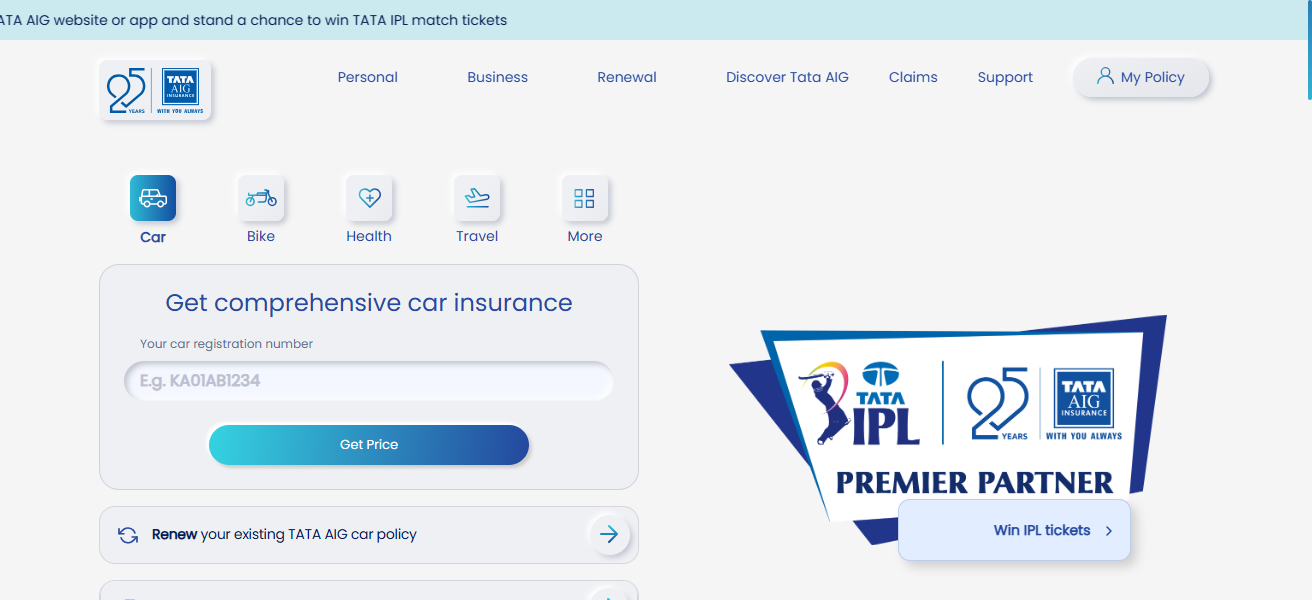
TATA AIG provides customizable plans are highly suitable for startups in consulting, SaaS and IT services. Gati has a large network to provide better customer assistance throughout the country.
Adequately serviceable for modern day needs, financed by the credibility of Tata Group and AIG partnership it is best suitable to startups for a reliable insurance coverage.
| Pros | Cons |
|---|---|
| High brand trust in India | Pricing not always startup-friendly |
| Strong claims handling process | Slower policy customization |
| Wide insurance coverage options | Less digital-first experience |
| Backed by Tata and AIG credibility | Limited innovation compared to insurtechs |
| Suitable for IT and SaaS firms | Traditional underwriting approach |
9. Acko General Insurance
Synchrony is a premier provider of consumer financial services with 85 years of experience. It is better known for motor and health insurance but has been venturing into business-related cover.
Acko is entirely online giving it the ability to issue policies in no time, charge lower premiums and rapid claims settlement. Its tech-forward model utilizes automation to lower operational costs and enhance customer experience.
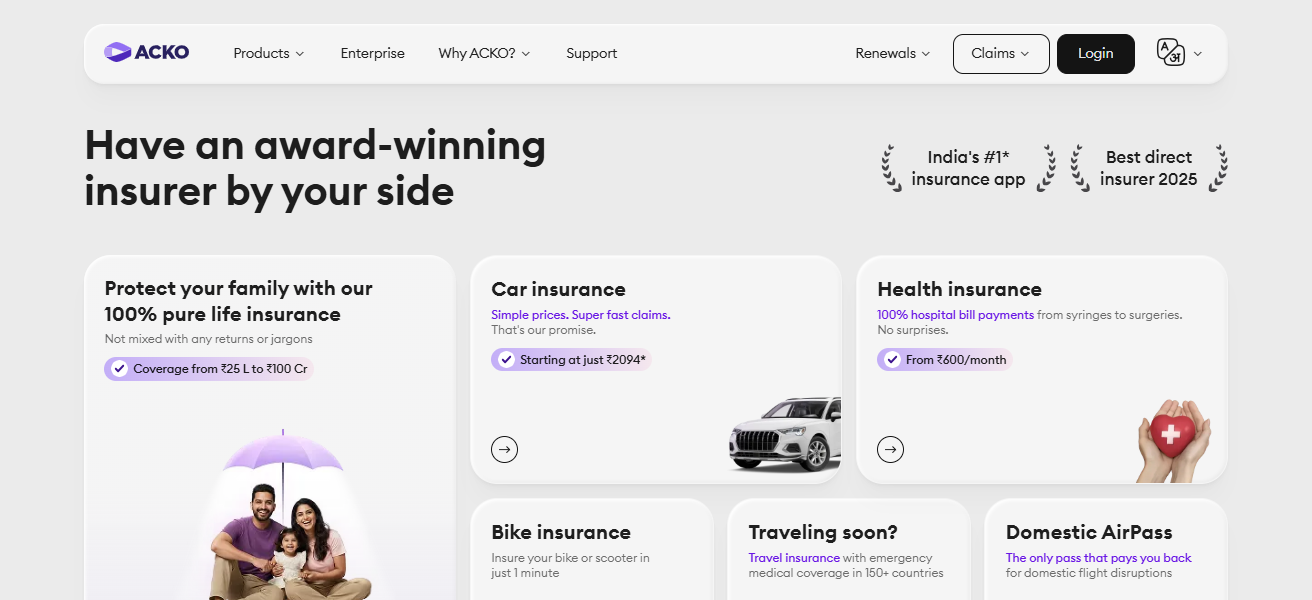
Especially for startups, Acko can provide added convenience and speed compared to the complex enterprise-level customization.
Best for: Small businesses and startups in their early stages looking for basic liability coverage with little paperwork and a fully online insurance experience.
| Pros | Cons |
|---|---|
| Fully digital and fast processing | Limited business insurance depth |
| Low-cost insurance options | Not ideal for complex corporate needs |
| Simple and user-friendly platform | Still expanding commercial offerings |
| Fast claims settlement system | Limited customization for startups |
| Strong tech-driven automation | New in enterprise liability segment |
10. Bajaj Allianz
Bajaj Allianz is an Indian insurer and one of the largest business liability insurers for startups and small executive start-ups in the country.
It provides professional indemnity, cyber insurance and general liability coverage for tech and service-based businesses.
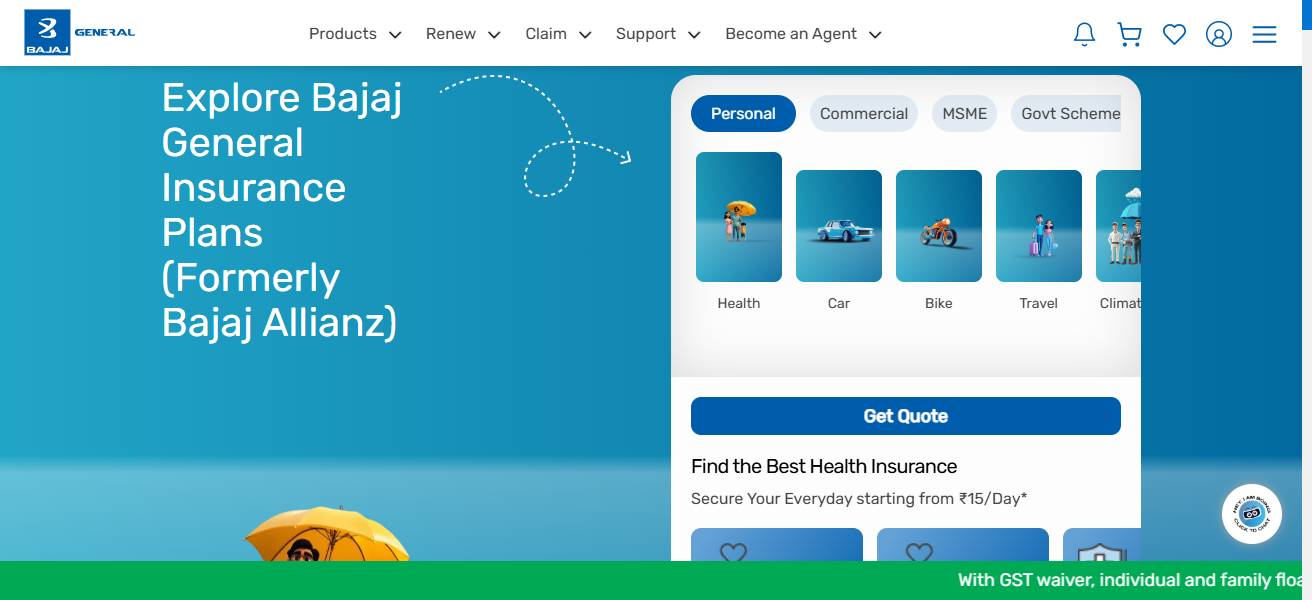
The company has a good claim settlement ratio and wide distribution throughout India. Bajaj Allianz offers customizable solutions that help startups scale coverage as they grow.
Its platforms allow for easier policy management and claims. If you want the best protection from a trustworthy, reliable financial institution that won’t break the bank in its early years, it is a strong option for startups.
| Pros | Cons |
|---|---|
| Strong brand trust and reliability | Traditional processes can be slow |
| Wide coverage for startups and SMEs | Less flexible than insurtech startups |
| Good claim settlement ratio | Complex policy structures |
| Strong India-wide presence | Limited startup-specific customization |
| Balanced pricing and coverage | Digital experience not fully modern |
How To Choose The Top Business Liability Insurance Providers for Tech Startup
Understand Your Startup Risks Recognizing risks such as lawsuits, outages, and missteps unique to your tech business model.
Check Coverage Types Offered Make sure the provider has general, cyber insurance too along with E&O and D&O coverage for complete protection.
Compare Multiple Insurance Providers Always compare quotes, pricing and benefits from various insurers before settling on one.
Look for Startup-Specific Plans Select insurers that customize policies based on startup stage, size and technology-related risks.
Evaluate Financial Strength & Reputation Prefer providers with a strong balance sheet and good claim settlement history for long-term security.
Check out Digital Experience & Ease of Use Choose insurers that offer fast onboarding, online policy management, and rapid claims processing systems.
Consider Policy Customization Options Policies should be adaptable and scalable as the startup matures and its risks develop over time.
Bundle Policies for Cost Efficiency Seek out Business Owner’s Policy (BOP) that combines coverage at a reduced overall price.
Conclusion
In summary, selecting the best business liability insurance companies for tech startups is crucial for risk management and sustainability.
The best insurer provides comprehensive coverage, flexible policies and dependable claims support. Evaluating options with an eye toward startup-specific needs so that businesses can protect their operations
Help build investor confidence and scale securely in a more competitive technology landscape where risk is on the rise.
FAQ
What is business liability insurance for tech startups?
It protects startups from financial losses due to lawsuits, errors, cyber risks, and third-party claims.
It protects startups from financial losses due to lawsuits, errors, cyber risks, and third-party claims.
Tech startups face risks like data breaches, contract disputes, and service failures that can be costly.
What types of liability insurance should startups consider?
General liability, professional liability (E&O), cyber insurance, and directors & officers (D&O) coverage.
Which providers are best for tech startups?
Top providers include Vouch, Hiscox, Next Insurance, HDFC ERGO, ICICI Lombard, and TATA AIG.