

This article outlines the Best Crypto APIs for tax reporting and transaction history. These APIs assist developers and businesses, and support the automation of crypto tax calculation and transaction tracking within fintech platforms.
You will be informed on the advantages, features, integrations and the best crypto APIs to use for effective and precise reporting and for regulatory compliance pertaining to crypto portfolio management in the year 2026.
What Is a Crypto API for Tax Reporting?
A Crypto Tax Reporting API is designed to help organizations automate the gathering of crypto transaction data. This data can be sourced from wallets, exchanges, blockchains, and DeFi, among others.
This API will gather trading data, holdings, historical pricing, staking rewards, and transfers in order to compute capital gains/losses and taxable income.
These APIs help to streamline tax compliance, improve bookkeeping and financial reporting, and aid users in generating accurate tax reports. These APIs also support multiple blockchains and crypto.
Why Businesses Need Crypto Tax Reporting APIs
Effortless Crypto Tracking – APIs track transactions on wallets, exchanges, and blockchains, and consolidate the data into one place. Manual entry is not required.
Gains and Losses Calculated – Historical data is recorded and organized for easy calculations of capital gains, losses, and taxable income.
Helps with Filing Requirements – Reporting is done in a way that meets the requirements of reporting crypto transactions for tax assessment in most jurisdictions.
Less Time Doing Books – The process of importing crypto transactions is done for you and reconciled and categorized in the system.
Current Standing of Assets – Constant tracking of balances and movement of assets and analysis of the portfolio.
Key Points & Best Crypto APIs for Tax Reporting and Transaction History
| API | Explanation |
|---|---|
| Vezgo API | Aggregates historical crypto transactions from wallets, exchanges, enabling accurate tax software integration effortlessly. |
| CoinAPI | Delivers normalized market data, historical prices, audit trails for reliable cryptocurrency tax reporting accuracy. |
| Crypto APIs | Provides blockchain data, xPub parsing, transaction tracking for precise crypto gain-loss calculations efficiently. |
| CoinStats API | Tracks portfolios, DeFi assets, transactions across exchanges and blockchains through unified API access. |
| Kryptos Connect | Enables compliant global tax reporting with balances, transactions across thousands of crypto integrations seamlessly. |
| Bitquery | Decodes blockchain transactions, Coinpath analysis, GraphQL queries supporting advanced Web3 tax audits efficiently. |
| Koinly API | Syncs exchange history, generates ready-to-file tax reports for developers and businesses automatically everywhere. |
| CoinTracker | Calculates capital gains using wallet, exchange, DeFi integrations for accurate cryptocurrency taxes automatically. |
| CoinLedger | Simplifies crypto tax reporting with exchange integrations, tax-loss harvesting, TurboTax export capabilities efficiently. |
| TokenTax | Automates DeFi, NFT, portfolio tax reporting for active cryptocurrency traders with comprehensive integrations. |
10 Best Crypto APIs for Tax Reporting and Transaction History
1. Vezgo API
Vezgo API is a great choice for developers looking for a tax reporting and transaction history API. With Vezgo, developers can integrate thousands of cryptocurrency wallets, centralized exchanges, and DeFi platforms with just one API.
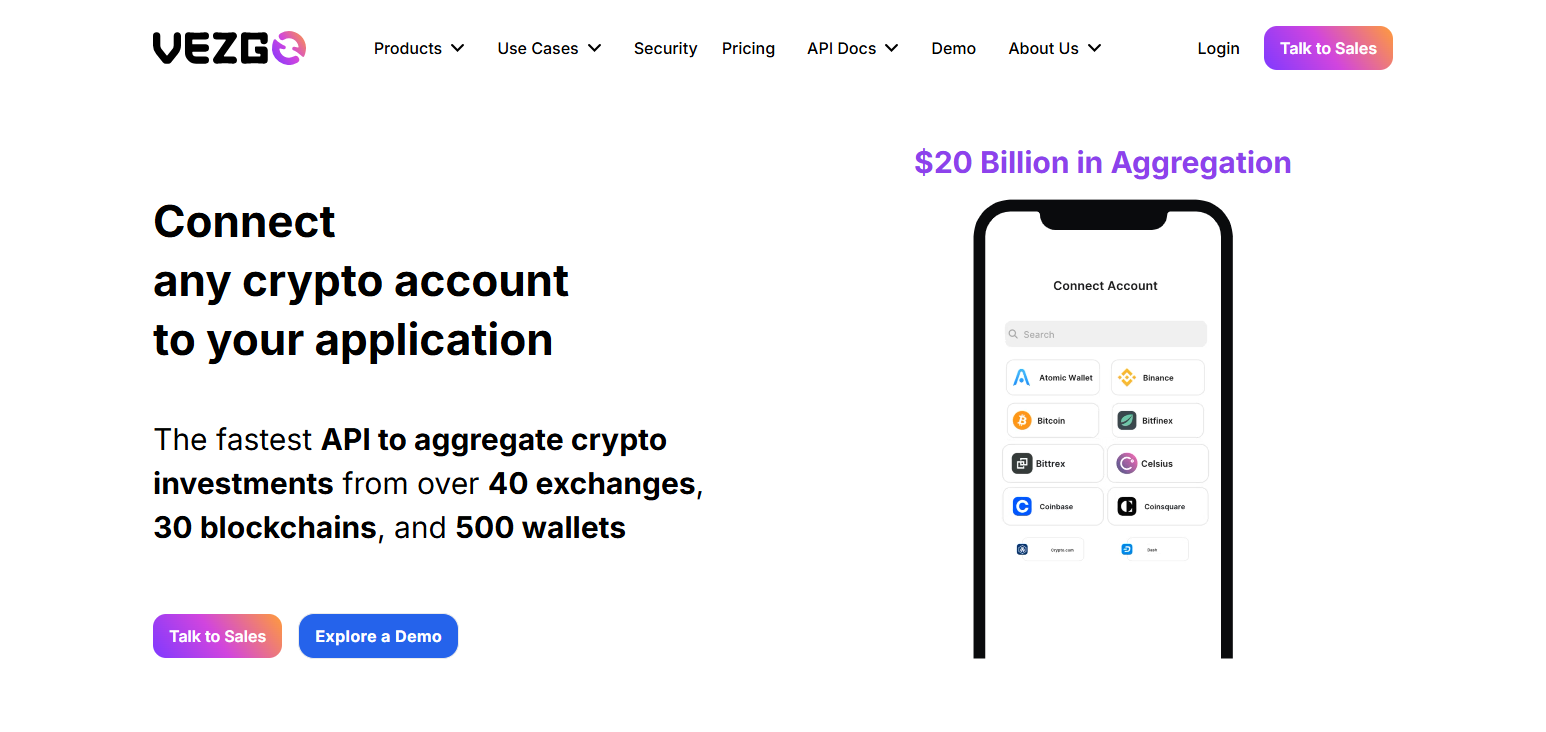
Developers are able to access historical transaction records even for the platforms they have not built connectors for. Because Vezgo API standardizes financial data, it streamlines tax reporting, tracking portfolios, and accounting.
Vezgo also has additional features that support the syncing of data on a regular basis. This allows businesses to create tax reports that are accurate and reduces the manual data collection and reconciliation.
Vezgo API – Key Features
- One API connects thousands of crypto wallets, exchanges, and DeFi applications.
- Complete historical transactions are available for tax and accounting purposes.
- Financial data is mapped to one format, making application development easier.
- Portfolios and taxes can be kept up to date continuously with automatic data synchronization.
| Pros | Cons |
|---|---|
| Single API connects thousands of wallets and exchanges. | Advanced features may require premium subscription plans. |
| Simplifies tax reporting with standardized transaction data. | Some niche platforms may have limited integration support. |
| Reduces development time using unified API endpoints. | Internet connectivity is required for continuous synchronization. |
| Supports automated portfolio and transaction updates. | Custom implementation may need technical development expertise. |
2. CoinAPI
CoinAPI is a premium solution that provides accurate cryptocurrency market data that can be used for tax reporting and financial assessments. CoinAPI provides normalized historical cryptocurrency market data, trade data, and exchange data from hundreds of cryptocurrency exchanges.

CoinAPI is particularly useful for tax reporting and financial assessments because the pricing and trade data are reliable and stable. Because of the extensive archive of data provided by CoinAPI, it can also be used to assess financials and report for multiple prior periods with no additional setup.
CoinAPI – Key Features
- Provides a standardized crypto market data from hundreds of exchanges.
- Time stamped historical prices support the calculation of Capital Gains and Loss.
- One API offers reliable exchange rates, trade data, and market data.
- Enterprise-grade infrastructure offers high availability, fast, and scalable performance.
| Pros | Cons |
|---|---|
| High-quality normalized market and pricing data. | Enterprise pricing may not suit small startups. |
| Extensive historical cryptocurrency market database. | Focuses mainly on market data rather than wallet management. |
| Reliable infrastructure with fast API performance. | Advanced analytics require additional implementation effort. |
| Supports institutional-grade financial reporting. | Free usage limits are relatively restrictive. |
3. Crypto APIs
Crypto APIs has all the tools developers need to automate tax reporting. Developers can use Crypto APIs to simplify the monitoring of crypto transactions and tax reporting. Crypto APIs also provides all the tools developers need to track trading activity and perform gain-loss calculations.

Crypto APIs is developer friendly, provides transactions updates in real time, and has a REST API. Because of these features, Crypto APIs is also an excellent option for tax automation.
Crypto APIs – Key Features
- Provides REST API access across multiple supported blockchains.
- Wallet management, xPub parsing, and monitoring of blockchain addresses are included.
- Offers tax and finance app compliant histories of transactions.
- Provides real-time notifications of transactions on the blockchain.
| Pros | Cons |
|---|---|
| Supports numerous blockchain networks through one platform. | Premium blockchain services increase operating costs. |
| Real-time blockchain events and notifications. | Learning curve for beginners using advanced endpoints. |
| Includes wallet management and xPub support. | High-volume applications may require larger API plans. |
| Eliminates need for self-hosted blockchain nodes. | Some blockchain-specific features vary by network. |
4. CoinStats API
CoinStats API offers a centralized solution for monitoring crypto portfolios, DeFi funds, NFTs, and blockchain activity across numerous exchanges and networks.
Its data amalgamation enables developers to attain their users’ wallet balances, view historical transactions, see active wallet data, and analyze portfolios using a single API.
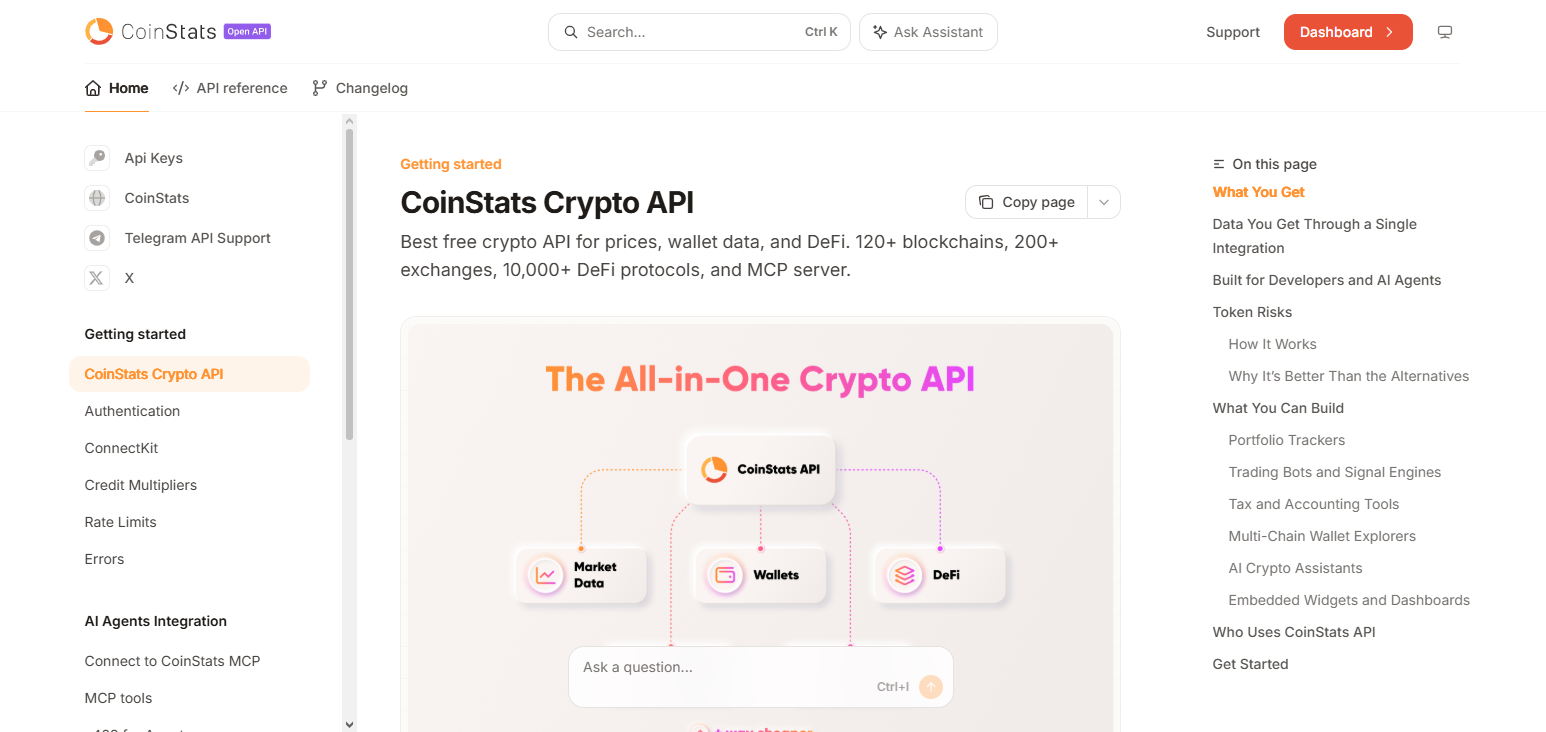
CoinStats API consolidates users’ fragmented crypto dealings, and provides a single dataset for users to report on their crypto taxes. CoinStats API is a fantastic option for accounting apps, portfolio management apps, and crypto wealth tracking apps.
CoinStats API – Key Features
- Offers an aggregated view of wallets and transaction data across multiple platforms.
- Provides a unified view of transactions and performance.
- Supports hundreds of exchanges and blockchains.
- Integrated management for cryptocurrencies made simple.
| Pros | Cons |
|---|---|
| Aggregates portfolios across multiple exchanges and wallets. | Some advanced analytics require paid access. |
| Supports DeFi, NFTs, and traditional crypto assets. | Historical coverage depends on connected platforms. |
| Simplifies portfolio monitoring with unified data. | API rate limits apply on lower-tier plans. |
| Easy integration for wealth management applications. | Limited customization for specialized accounting workflows. |
5. Kryptos Connect
Kryptos Connect simplifies the global crypto tax compliance process by providing a comprehensive integration network. The platform has automated the importing of crypto balances and transactions, as well as staking and trading records.

Kryptos Connect provides businesses with the ability to generate tax reports that comply with the local laws of their country, while greatly reducing the amount of manual transaction clearing that is required.
With its rapidly expanding integration network, Kryptos Connect is a viable option for businesses with a presence in many countries.
Kryptos Connect – Key Features
- Automated import of wallet balances and transaction histories from exchanges and the blockchain.
- Supports local Crypto tax compliance in multiple jurisdictions globally.
- Crypto transaction data are standardized for compliance and accounting frameworks.
- Integrates with thousands of cryptocurrency platforms with broad integration coverage.
| Pros | Cons |
|---|---|
| Strong focus on global crypto tax compliance. | Regional tax rules may require additional configuration. |
| Imports balances and transaction histories automatically. | Enterprise-focused features can be costly for individuals. |
| Supports thousands of exchange integrations. | Smaller blockchain ecosystems may receive slower support. |
| Reduces manual reconciliation work significantly. | Developer documentation may require careful study. |
6. Bitquery
Bitquery is a highly sophisticated blockchain data platform that provides on-chain analytics for crypto tax reporting and compliance.
Their GraphQL APIs provide extensive blockchain data including wallet activity, token transfers, smart contract interactions, and transfers of value with the Coinpath money flow analysis.

These analytics allow auditors, compliance, and developer teams to track complex DeFi transactions. Bitquery is an excellent option for large scale enterprise crypto tax reporting and highly complex blockchain investigations.
Bitquery – Key Features
- Delivers decoded blockchain data for many public blockchains.
- Data for query and analysis is offered through GraphQL APIs.
- Involves Coinpath for integrity and tracing of funds and transfers.
- Uses wallet and token activity analysis and smart contract transfers.
| Pros | Cons |
|---|---|
| Advanced blockchain analytics with GraphQL queries. | GraphQL knowledge is helpful for effective usage. |
| Decodes complex smart contract interactions. | Premium datasets may increase subscription expenses. |
| Excellent for blockchain investigations and audits. | Complex queries may require optimization skills. |
| Supports detailed wallet and token tracking. | Not primarily designed for beginner developers. |
7. Koinly API
The Koinly API provides a way for developers to add automated tax reporting to their applications. Koinly syncs trading histories from most exchanges and wallets and tax records for your trades.
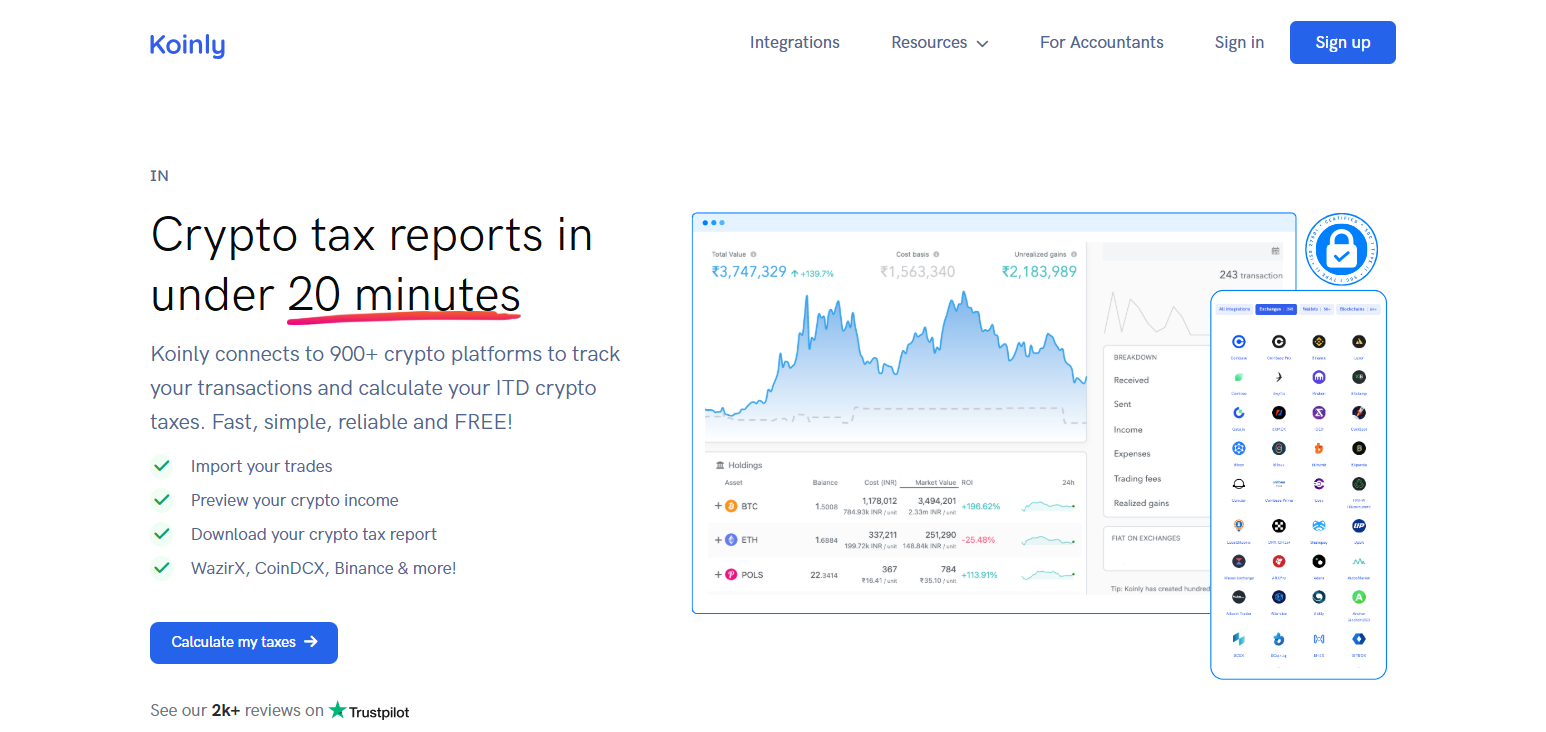
Koinly also automatically calculates your gains, losses, transfers, and income, so you do not have to do any manual calculations. Koinly is a great API for financial applications that need a reliable tax automation solution.
Koinly API – Key Features
- Automatically imports crypto transactions from wallets and top exchanges.
- Efficiently estimates capital gains and losses along with taxable income.
- Prepares financial statements by systematizing transaction history for taxes.
- Makes the crypto tax payment process easier by automating crypto record maintenance.
| Pros | Cons |
|---|---|
| Automatically prepares tax-ready transaction records. | Advanced reporting features require higher-tier plans. |
| Supports numerous exchanges and crypto wallets. | API customization options are relatively limited. |
| Reduces manual tax calculations significantly. | Some integrations rely on third-party exchange support. |
| Easy implementation for financial applications. | Less suitable for highly customized enterprise workflows. |
8. CoinTracker
CoinTracker is another cryptocurrency tax reporting API that is great for managing your portfolio and calculating capital gains. CoinTracker pulls transaction data from a lot of different sources because it integrates with a lot of wallets, exchanges, and DeFi applications.

CoinTracker also creates a tax summary, and CoinTracker is a good option for software creators who want to build a financial reporting application or an investment dashboard application.
CoinTracker – Key Features
- Hundreds of wallets and exchanges are integrated with CoinTracker APIs.
- Trade (and transfers) as well as staking and income events are automatically processed and categorized.
- A clear record of all prior transactions is used for calculating capital gains.
- Tax summaries designed for individual and enterprise financial applications are prepared.
| Pros | Cons |
|---|---|
| Automatically calculates capital gains and losses. | Premium plans unlock advanced reporting capabilities. |
| Supports extensive wallet and DeFi integrations. | Large portfolios may require higher subscription tiers. |
| Intelligent transaction categorization saves time. | Some historical imports may need manual review. |
| Suitable for personal and business tax reporting. | Limited customization for specialized accounting needs. |
9. CoinLedger
CoinLedger is one of the easiest crypto tax reporting APIs because of their integrations with so many exchanges and wallets. CoinLedger uses tax filing software and pulls your trading histories and calculates gains and losses.
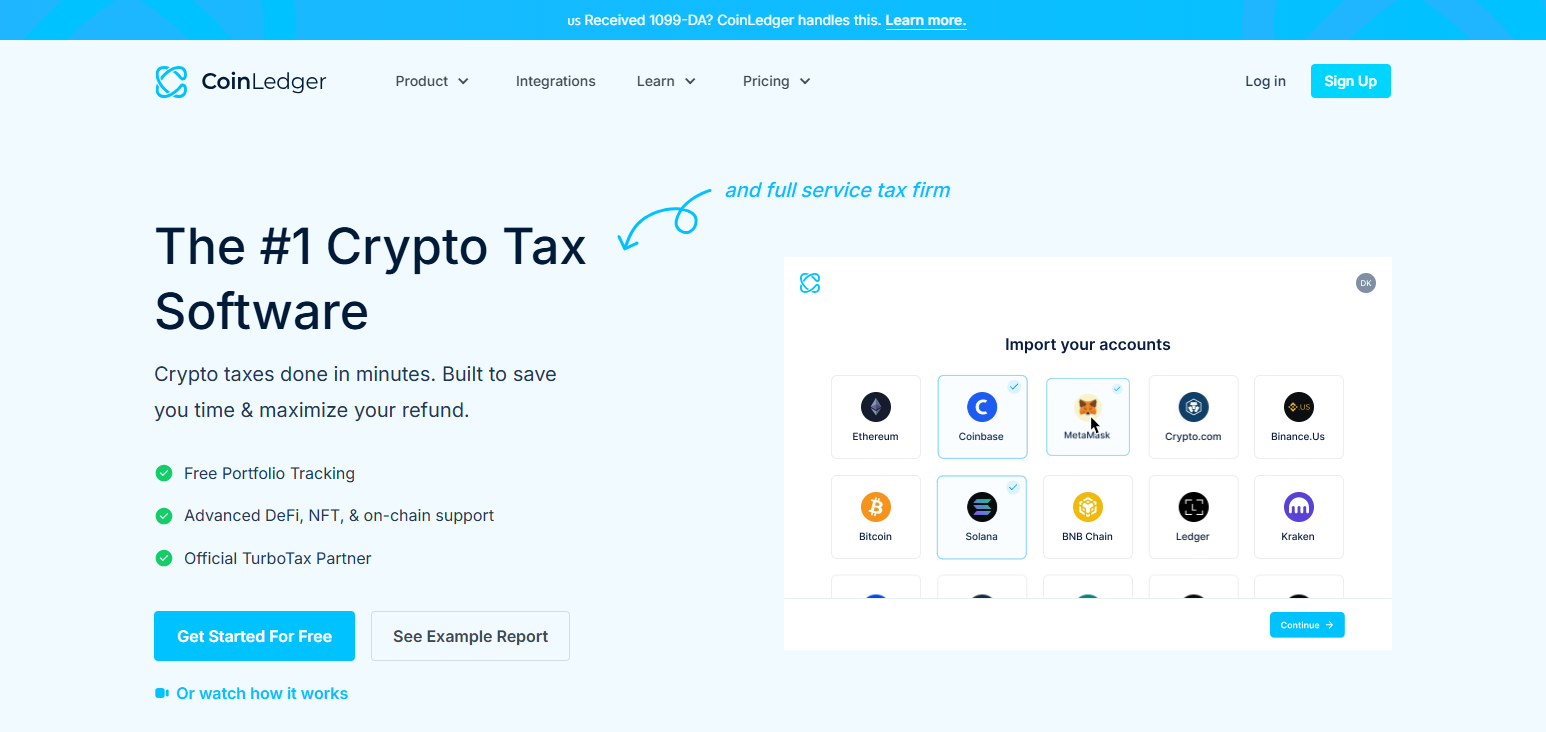
CoinLedger even offers tax-loss harvesting. CoinLedger is great to simplify accounting for businesses and individuals who use CoinLedger to pull financial records for reporting.
CoinLedger – Key Features
- Numerous wallets and exchanges are integrated for importing crypto transactions.
- Gains and losses along with potential tax loss harvesting are calculated.
- Tax exports are supported for the most popular tax filing software.
- The crypto tax payment process is greatly simplified by the system’s extensive automation.\
| Pros | Cons |
|---|---|
| User-friendly cryptocurrency tax reporting platform. | Advanced enterprise features are relatively limited. |
| Supports tax-loss harvesting opportunities. | Some exchange integrations require manual verification. |
| Exports reports for popular tax software. | Premium plans needed for larger transaction volumes. |
| Easy setup with automated transaction imports. | Less focused on advanced blockchain analytics. |
10. TokenTax
TokenTax is a good solution for crypto investors who engage heavily with DeFi protocols, NFTs, and other newer trading options, as well as reflective of typical behavior among investors who trade crypto across multiple platforms.
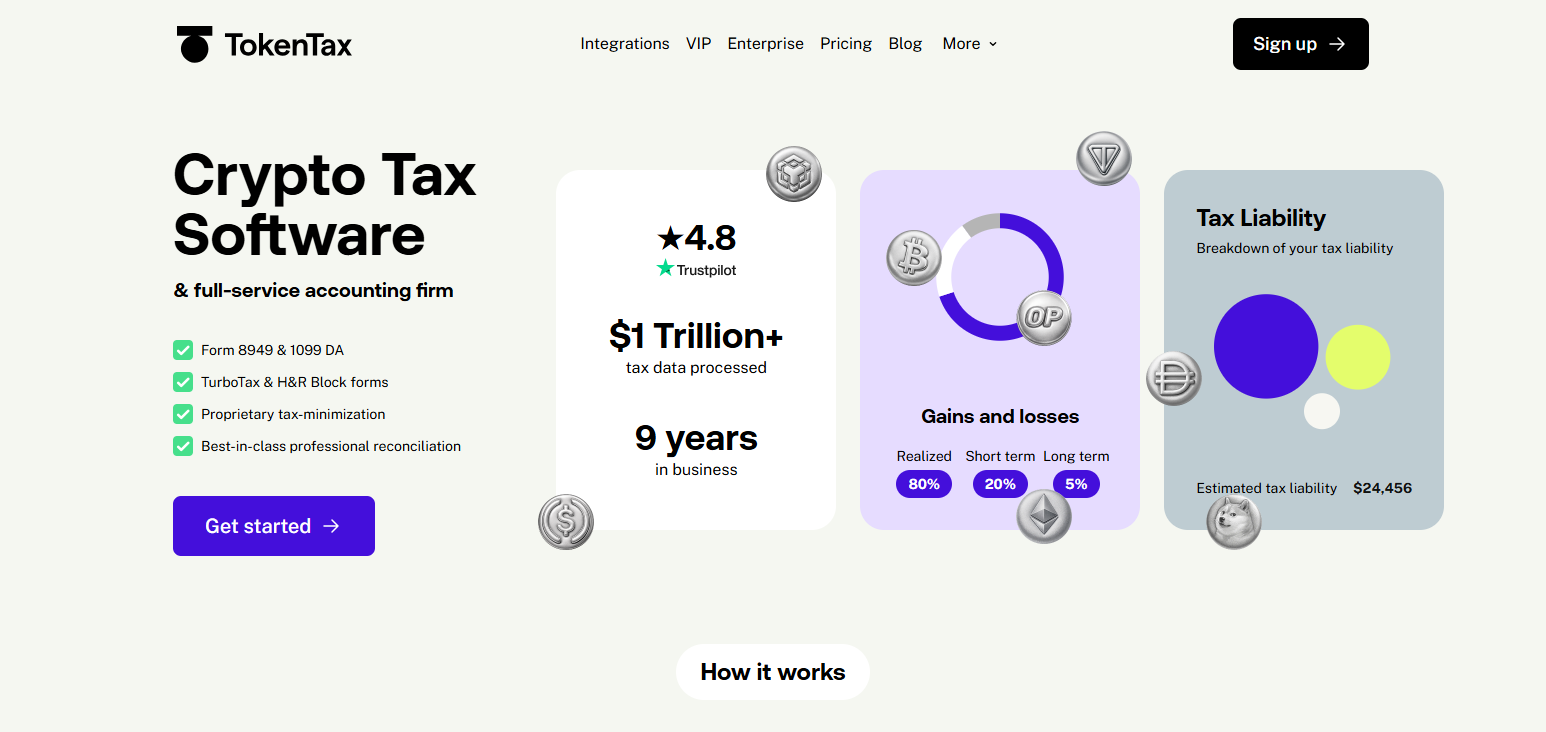
Users can automate the importing of their transactions, sync their portfolios, calculate their cost-basis, and generate tax reports via APIs.
TokenTax can handle the trading looked at in this report with a level of certainty most tax solutions cannot. TokenTax is useful for traders, crypto funds, and, especially, fintech platforms that have a lot of transactions.
TokenTax – Key Features
- Supports a complex crypto portfolio that includes DeFi, NFTs, staking, and margin trading.
- Automated imports of transactions across blockchains are supported.
- Advanced crypto tax reporting is supported by calculating an accurate cost basis.
- TokenTax is customized for investment firms with an active trading clientele and provides detailed tax reporting.
| Pros | Cons |
|---|---|
| Handles complex DeFi, NFT, and staking transactions. | Pricing is higher than many competing solutions. |
| Supports sophisticated cryptocurrency portfolios. | Best suited for experienced crypto investors. |
| Automates cost-basis and tax calculations. | Some advanced integrations require premium plans. |
| Excellent for high-volume trading activities. | Initial portfolio setup can take additional time. |
Considerations For Selecting a Crypto Tax API
- Business Size & Type – Select an API that correlates with the size of your business and the tax reporting options you require.
- Crypto Tax API Business Model Fit – The API must support the blockchains and crypto wallets used by your platform.
- Business Model Fit – APIs must provide the fastest response times with the highest uptimes for the real-time data you require.
- Evolving Business Needs – Select APIs that handle your future business growth, and the future growth of your users and transactions.
- Tax Compliance – Ensure the API has coverage of tax compliance, audit trails, and alternative methods of reporting sufficient business transactions.
- Cost vs Benefit – Evaluate subscription plans, API limits, and overall cost vs benefit balance.
- Technical Resources – Select an API provider that has the most responsive support, along with SDKs, and developer resources.
- Continuously Updated Documentation – The API must have documentation with code examples and guides for easy integrations.
Conclsuion
Selecting the Best Crypto APIs for tax reporting and transaction history helps businesses and developers tackle the challenges of cryptocurrency accounting and tracking crypto transactions while meeting tax compliance obligations.
The right API can cut down the amount of time and effort required for reporting and can capture enterprise-grade analytics and other reporting needs like multi-wallet analytics and advanced DeFi reporting.
When choosing an API, consider the features, which blockchains are supported, and the pricing and how scalable the API is, to select the best option for your current requirements and that you can afford for the future.
FAQ
Which is the best Crypto API for tax reporting?
Popular options include Vezgo API, CoinAPI, Crypto APIs, Koinly API, CoinTracker, and TokenTax.
Can Crypto Tax APIs track DeFi and NFT transactions?
Yes, many modern APIs support DeFi protocols, NFT transactions, staking, and liquidity pools.
Do Crypto Tax APIs support multiple blockchains?
Most leading APIs support major blockchains such as Bitcoin, Ethereum, Solana, Polygon, BNB Chain, and many others.
Are Crypto Tax APIs suitable for developers?
Yes, they provide REST or GraphQL APIs, SDKs, and documentation for easy integration.