This article will cover the Best Tokenized Royalty and IP Marketplaces. I will look at how Blockchain technology is used to represent intellectual property and royalty interests in a digital form. What makes a marketplace? I will describe marketplace operations and features.
I will also detail what the potential opportunities and important risks are. I will help my readers gain a better understanding of the digital asset market with this article.
Key Points
| Platform | Explanation |
|---|---|
| Centrifuge | Connects invoices, private credit, revenue streams with on-chain liquidity pools. |
| Securitize | Enables regulated tokenized private equity and compliant secondary digital-asset trading. |
| tZERO | Provides regulated secondary trading infrastructure for digital and tokenized securities. |
| Tokeny | Offers compliant tokenization infrastructure with automated smart-contract transfer restrictions. |
| Polymath (Polymesh) | Provides institutional blockchain infrastructure for regulated security tokens and compliance. |
| Brickken | Helps tokenize real-world assets and equity while managing digital cap tables. |
| Ondo Finance | Bridges traditional finance and DeFi through tokenized yield-bearing investment products. |
| RealT | Enables fractional real-estate ownership through income-producing tokenized property investments. |
| Lofty | Enables fractional property investing with fast peer-to-peer on-chain settlement capabilities. |
| ADDX | Provides regulated access to tokenized private-market funds and alternative investments. |
10 Best Tokenized Royalty and IP Marketplaces
1. Centrifuge
Centrifuge interfaces invoices, private credit, and recurring revenue with liquidity pools on the blockchain, allowing businesses to finance physical assets using decentralized vaults in lieu of traditional banks.
It is focused on structured credit, which includes trade finance, revenue-based financing, and asset-backed loans, whereby issuers source capital from DeFi through platforms like MakerDAO and Aave. Meanwhile, marketplaces of tokenized royalties and IP like Aria Protocol
Which minted $APL backed by 48 high-profile songs and subsequently Aria PRIME for $100M+ of the Korean music catalog, illustrate the Cash flows from intellectual property can follow similar structures.
Centrifuge — Key Features
- On-chain Credit Pools grant access to liquidity for financing through decentralized credit facilities.
- Structured Credit Support facilitates trade finance, RBF, and asset-backed lending with institutional-grade transparency.
- Royalty/IP Integration Mid-point: Tokenized royalties through Aria Protocol have pioneered the cash-flow tokenization model with the launch of $APL supported by 48 songs and Aria PRIME for the $100M Korean catalogs.
- DeFi Capital Access enables capital markets integrated with decentralized finance (DeFi) through MakerDAO, Aave, and other liquidity tools.
| Pros | Cons |
|---|---|
| Supports multiple real-world asset categories and financing structures. | Platform complexity may challenge users unfamiliar with blockchain infrastructure. |
| Connects traditionally illiquid assets with decentralized capital markets. | Asset performance depends partly on underlying real-world borrower quality. |
| Provides infrastructure for bringing credit assets on-chain. | Due diligence requirements can vary across individual pools. |
2. Securitize
Securitize has a regulated platform of tokenizing private equity, funds, and alternative assets, as well as investor onboarding and KYC/AML, and compliant trading of secondary digital securities.
Its tech supports issuers of multiple jurisdictions and integrates transfer agents, broker-dealers, and custodians to ensure tokenized shares are compliant with securities law.

In the IP space, Royal.io and Anotherblock allow artists to tokenize and fractionalize music rights, and provide streaming royalty exposure, while maintaining similar regulatory controls as Securitize.
Securitize — Key Features
- Regulated Tokenization enables tokenization of private equity and alternative assets in a compliant manner.
- Integrated Compliance Stack provides KYC/AML, transfer agent, custodian services, and broker dealers in one integrated package.
- Royalty/IP Market Alignment Mid-point: Royalty tokenization platforms Royal.io and Anotherblock have adopted a similar framework to Securitize with the tokenization of music streaming rights.
- Cross-Jurisdiction Support allows companies to operate in the U.S., EU, and APAC regulatory domains.
| Pros | Cons |
|---|---|
| Focuses strongly on regulatory compliance and institutional participation. | Access to some offerings may have investor eligibility requirements. |
| Supports tokenized private-market and alternative investment products. | Regulatory requirements can limit market accessibility for some users. |
| Provides infrastructure for compliant digital securities trading. | Product availability may differ across jurisdictions and investor categories. |
3. tZERO
tZERO focuses on the liquidity for private market assets and security tokens, and digital equities, providing a regulated platform for trading digital and tokenized securities and ATS (alternative trading systems) along with compliance and connectivity to broker-dealers.

Like IP, platforms such as Opulous use Music Fungible Tokens (MFTs) to enable fans to invest directly in music royalties. This transforms previously illiquid music catalogs into tradable positions. tZERO similarly does with private securities.
tZERO — Key Features
- Regulated ATS Infrastructure provides compliant trading facilities for security tokens.
- Liquidity for Private Markets provides liquidity for non-public securities and digital equity.
- Royalty/IP Parallels Mid-point: The direct investment in music royalties offered by Opulous MFTs is a close parallel to the liquidity for private securities offered by tZERO.
- Broker-Dealer Connectivity provides direct access to compliant trading for institutions.
| Pros | Cons |
|---|---|
| Provides regulated infrastructure for secondary digital-asset trading. | Secondary-market liquidity can vary between individual securities. |
| Supports trading of tokenized securities within regulated frameworks. | Trading access may depend on applicable investor restrictions. |
| Targets greater efficiency in digital securities markets. | Available assets may be narrower than broader cryptocurrency platforms. |
4. Tokeny
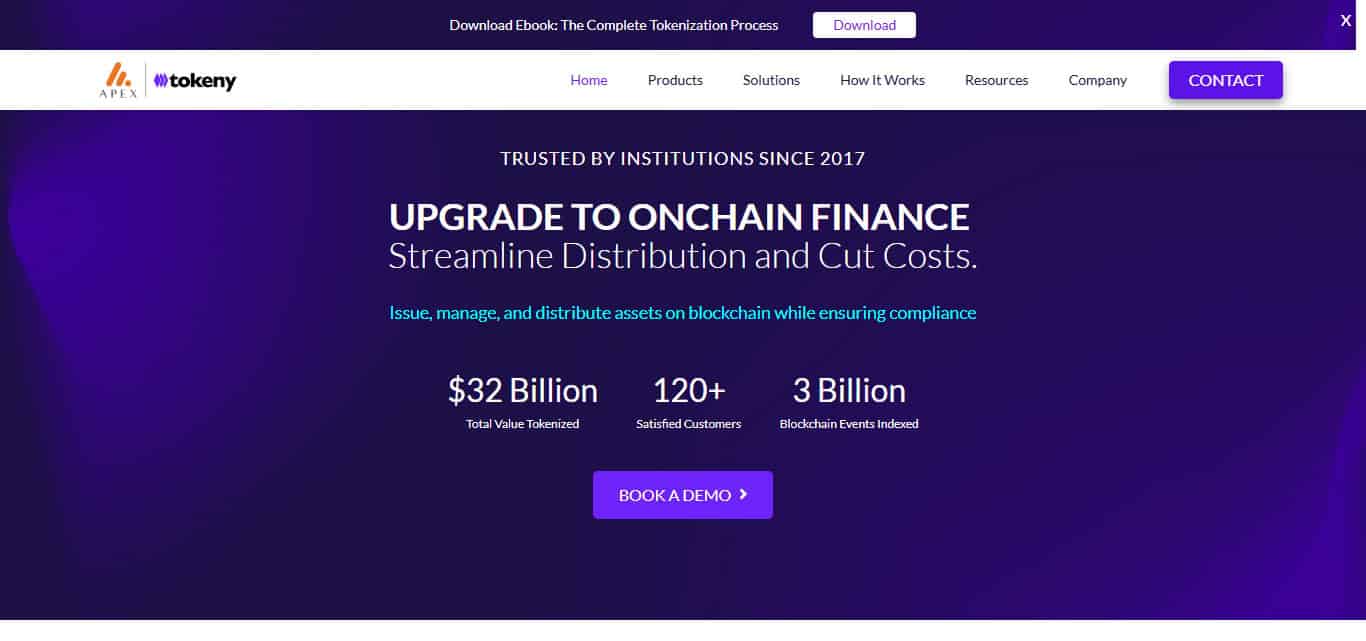
Tokeny builds compliant tokenization infrastructure that offers investors an automated smart contract-based system for managing cap tables and transfer restricts on security tokens. Tokeny’s solutions allow issuers to comply with jurisdictional lockup and whitelist constraints while retaining an easy interface for investors.
In the royalty and IP segment, Bolero and Royal.io utilize similar approaches as Tokeny, automating royalty splits and payouts via smart contracts.
Tokeny — Key Features
- Programmable Compliance — Automates compliance for transfer restrictions, lockups, and jurisdictional rules.
- Investor Onboarding Automation — Provides seamless KYC, whitelisting, and cap-table management.
- Royalty/IP Automation — Mid-Point: Bolero and Royal.io use smart contracts to automate royalty splits, mirroring Tokeny’s programmable compliance.
- Institutional Token Framework — Supports regulated issuances for equity, funds, and RWAs.
| Pros | Cons |
|---|---|
| Uses smart contracts to automate compliance-related transfer controls. | Technical implementation can require specialized blockchain expertise. |
| Supports compliant issuance and management of digital assets. | Regulatory requirements differ across supported jurisdictions. |
| Helps issuers manage restrictions throughout token lifecycles. | Infrastructure-focused services may require additional external integrations. |
5. Polymath (Polymesh)
Polymath’s Polymesh blockchain offers regulated security token infrastructure with built-in identity, compliance, and governance at the protocol level that is geared towards financial institutions with a need for deterministic finality and regulated asset support while allowing control over who can hold or transfer tokens.

Aria Protocol’s IPRWA model for tokenized music IP uses on-chain rules and staking to manage royalty distribution and buybacks. This demonstrates that specific chains and protocols can be built to optimize IP cash flows over traditional securities.
Polymath/Polymesh — 4Key Features
- Institutional Blockchain — Security token-focused, private chain.
- Identity & Governance Controls — Enforces identity-verified participation and deterministic finality.
- Royalty/IP Protocol Parallels — Mid-Point: Aria Protocol’s IPRWA uses staking + on-chain rules for royalty distribution and buybacks, similar to Polymesh’s compliance-first architecture.
- Regulated Asset Support — Built for institutions requiring strict compliance.
| Pros | Cons |
|---|---|
| Built specifically around regulated security-token requirements. | Purpose-built architecture may offer less flexibility for unrelated applications. |
| Embeds compliance considerations directly into blockchain infrastructure. | Users may need technical knowledge to utilize network functionality. |
| Designed with institutional digital-asset issuance in mind. | Adoption depends on issuers, applications, and ecosystem development. |
6. Brickken
Brickken helps businesses and asset owners tokenize real world assets such as real estate, equity, and revenue streams, while managing digital cap tables and investor relations. It also provides fractional ownership, governance, and automated distributions, thereby facilitating global capital formation for SMEs and startups.

ANote Music, Royalty Exchange, and other pioneers in royalty and IP markets created a system in which artists auction their future royalty streams to catalog owners and developed newer models based on tokenization. Aria and Opulous have followed in these footsteps and developed Brickken-style fractionalization for music and media rights.
Brickken — Key Features
- RWA Tokenization Tools — Tokenizes equity, real estate, and revenue-based assets.
- Digital Cap-Table Management — Automates investor rights, governance, and distributions.
- Royalty/IP Market Extensions — Mid-Point: ANote Music and Royalty Exchange auction royalty streams, while Aria/Opulous extend Brickken-style fractionalization to music IP.
- SME Capital Access — Assists startups in realizing compliance-focused tokenization for global capital raising.
| Pros | Cons |
|---|---|
| Supports tokenization of business equity and real-world assets. | Tokenization processes may involve legal and regulatory complexity. |
| Provides digital cap-table management capabilities for issuers. | Availability of investment opportunities can vary by jurisdiction. |
| Helps businesses integrate blockchain into ownership structures. | Users should independently evaluate each underlying asset and issuer. |
7. Ondo Finance
Ondo Finance attempts to combine traditional finance and DeFi by creating tokenized, yield-generating products such as tokenized U.S. Treasuries and bond-like instruments that can be used in DeFi. Ondo Finance uses DeFi liquidity pools to bring off-chain yield within DeFi.

The growing tokenized royalty ecosystem—Royal.io, Opulous, Aria, and Audius—brings IP revenue on-chain with the global music NFT market expected to grow from $4.8 billion in 2026 to over $46 billion by 2035, demonstrating similar yield-centric dynamics toward cultural assets.
Ondo Finance — Four Key Features
- Tokenized Yield Products: Ondo Finance has the ability to tokenize products and treasuries.
- Regulated Wrappers: Ondo Finance is creating methods to allow TradFi to enter DeFi liquidity pools.
- Royalty/IP Yield Growth: Mid-point: With the current growth trends of NFTs and IP-based yield, Royal.io, Opulous, Aria, and Audius, music NFTs are projected to grow significantly from $4.8B (2026) to $46B (2035).
| Pros | Cons |
|---|---|
| Connects traditional financial products with decentralized blockchain infrastructure. | Access to products may depend on geographic and regulatory eligibility. |
| Focuses on tokenized products designed to generate investment yield. | Product risks remain connected to underlying traditional financial assets. |
| Provides blockchain-based access to selected institutional-style assets. | DeFi integrations can introduce additional technology and smart-contract risks. |
8. RealT
RealT has launched tokens that allow investors to own a fraction of income generating properties. This platform distributes rental income to token holders. Traditionally, it has been difficult for individual investors to gain direct access to the single family and multifamily real estate.

RealT is providing investors with the opportunity to build real estate portfolios. The company also provides investors trust of on-chain real estate ownership and distribution of rental income.
Similar opportunities have emerged in the IP marketplace with Aria’s $APL token and Royal.io’s royalty NFTs where users now have the ability to collect passive income from curated music catalogs. This creates an “income property” for the users in the music industry.
RealT – Key Features
- Fractional Real Estate: Tokenization of income-producing U.S. properties.
- On-chain distribution of Rental Income: RealT rental income is distributed directly to token holders.
- Royalty/IP Income Parallels: Midpoint: Aria and Royal.io have developed real-world NFTs that function as digital “income properties”.
- Transparent Ownership: Immutable proof of ownership and distribution of rental income.
| Pros | Cons |
|---|---|
| Enables fractional participation in tokenized real-estate assets. | Real-estate values can fluctuate with local market conditions. |
| Focuses on properties designed to generate recurring rental income. | Property ownership structures can differ from conventional direct ownership. |
| Blockchain records can simplify tracking of fractional interests. | Rental income depends on occupancy, expenses, and property performance. |
9. Lofty
Lofty specializes in fractional property investing through peer-to-peer on-chain transactions, enabling investors to purchase a fraction of a tokenized real estate and with low friction trade it. Lofty has low minimums, daily liquidity, and community governance.
Lofty has strong competition in the royalty and IP space, as other companies specialize in fractional investing and real estate investments. Other companies specialize in the fractional ownership of songs.

Audius and Anotherblock have similar investment entry models as Lofty. Users are able to purchase songs, and these companies offer real time song sales, profit sharing and community governance.
Lofty – Key Features
- Fractional Real Estate Investing: Lofty offers real-world fractional real estate ownership.
- Fast and Easy Transactions: Lofty offers real-time transfer of ownership.
- Royalty/IP Yield Growth: Midpoint: Lofty’s model of investment access mirrors the existing projects Audius and Anotherblock.
- Community Governance: Token holders vote on property-related decisions.
| Pros | Cons |
|---|---|
| Makes fractional property investment accessible through blockchain technology. | Individual property opportunities may have limited liquidity. |
| Supports smaller investment amounts than traditional property purchases. | Real-estate investments remain exposed to property-market risks. |
| Uses on-chain settlement for fractional ownership transactions. | Investors still need to assess each property’s financial fundamentals. |
10. ADDX
Servicing accredited and semi-professional investors, ADDX has simplified access to alternative investments, e.g. Tokenized private-market funds and sell side hedge funds, private credit and pre-IPO equity.
ADDX has developed a compliant framework for the end to end issuance, custody and secondary trading. In the tokenized royalty and IP domain, Aria PRIME, a $100 million initiative for music catalogs on-chain for funds and family offices, also exemplifies

ADDX’s strategies for turning traditionally exclusive IP portfolios into structured, investable products with on-chain performance. Songcoins.or Blockchain-native music royalties and Aria’s platform are changing how artists and investors interact with on-chain revenue.
ADDX: Key Features
- Private-Market Access: Tokenizes hedge funds, private credit, and pre-IPO equity.
- Regulated Issuance & Custody: Provides compliant issuance, custody, and secondary trading.
- Institutional IP Tokenization – Mid-Point: Aria PRIME brings $100M music catalogs on-chain for funds and family offices, mirroring ADDX’s institutional RWA model.
- Lower Investment Minimums: Opens private market opportunities to semi-professional investors.
| Pros | Cons |
|---|---|
| Provides regulated access to tokenized private-market investments. | Investment access can be restricted by eligibility requirements. |
| Operates within Singapore’s regulated financial-market framework. | Product selection may be narrower than conventional public markets. |
| Supports fractional access to selected alternative investments. | Alternative investments can involve higher complexity and limited liquidity. |
Conclusion
In conclusion, tokenized royalty and IP marketplaces are innovating the representation, accessibility, and management of intellectual property interest using blockchain technology.
These dynamic systems bring transparency to systems of fractional and royalty access and introduce new problems regarding regulation, valuation, ownership, and liquidity, amongst others.
Participants are advised to conduct due diligence for each marketplace. They should understand the rights, assess and understand the risks, and address the applicable laws in their jurisdiction.
FAQ
What are tokenized royalty and IP marketplaces?
Platforms enabling digital ownership or royalty interests through blockchain-based tokens.
How do tokenized IP marketplaces work?
They represent intellectual property rights or royalties using blockchain tokens.
What types of intellectual property can be tokenized?
Music, patents, copyrights, trademarks, media rights, and licensing agreements.
Can tokenized royalties generate recurring income?
Some tokens provide income linked to future royalty payments or licensing.