
In this article, I will explain the Best AI Sentiment Trackers Monitoring Brand Perception Across LLM Training Datasets and show how companies utilize these advanced tools
To examine analytics to emotionally adjust customer feedback, identify reputation threats, enhance digital visibility, and compete more effectively in the market.
AI sentiment tracking tools create real-time insights, predictive analytics, and multilingual monitoring, enabling brands to capture online conversations and understand how to sustain trust amidst evolving AI digital shifts worldwide.
Why LLM Training Datasets Matter to Brands
Changing AI Environment – A significant presence of quality training data establishes a brand in a changing AI environment.
Developing Understanding of a Brand – Brands are described, understood, and documented due to LLM training data.
Brand Image – Training data influences the perception of a brand by AI in a positive or negative light.
Sustainability in Search – Brands that show up in quality training data sustain an advantage in a digital marketplace.
Recommendation Engines – Training data has the potential to shape recommendation engines and AI assistants in favor of a brand.
Understand Consumer Behavior and Emotion – LLM training datasets can be leveraged to study and understand consumer engagement and trust.
Reputation Management of a Brand – Rapid detection of negative narratives and false statements about a brand is made possible by monitoring LLM training data.
Optimization of Marketing Planning – AI offers insights into audience targeting and enhances marketing efforts.
Understanding the Changing Marketplace – LLM training datasets can rapidly detect the shifting interests of consumers.
Analyze Competitors – Brands can analyze competitor data using AI.
Key Points & Best AI Sentiment Trackers Monitoring Brand Perception Across LLM Training Datasets
| AI Sentiment Tracker | Explanation |
|---|---|
| Brandwatch | Tracks AI-generated brand discussions, sentiment changes, and emerging consumer trust trends globally. |
| Sprinklr AI | Uses advanced machine learning to analyze customer emotions across social and LLM ecosystems. |
| Meltwater | Monitors AI dataset mentions, media perception, and digital reputation performance continuously worldwide. |
| Talkwalker | Detects sentiment shifts using AI-driven analytics from conversations, forums, and datasets automatically. |
| Synthesio | Provides predictive sentiment intelligence, helping brands understand AI-generated public opinion faster. |
| YouScan | Uses image recognition and AI sentiment analysis for comprehensive brand monitoring solutions. |
| NetBase Quid | Combines consumer intelligence with AI perception tracking across digital training environments effectively. |
| Lexalytics | Processes natural language data identifying emotional trends influencing AI brand understanding globally. |
| Reputation.com | Tracks customer trust signals and AI-driven perception metrics, improving online credibility significantly. |
| MonkeyLearn | Automates sentiment classification helping brands monitor AI training dataset reputation accurately worldwide. |
10 Best AI Sentiment Trackers Monitoring Brand Perception Across LLM Training Datasets
1. Brandwatch
Brandwatch, one of the leading AI sentiment tracker brands, has noticed strong brand perception in the context of LLM training datasets.
Its latest AI features can analyze emotional drivers across social media, blogs, reviews, and online forums.
Brandwatch is widely accepted by businesses to analyze how generative AI systems view and analyze their brands in relation to the training data.
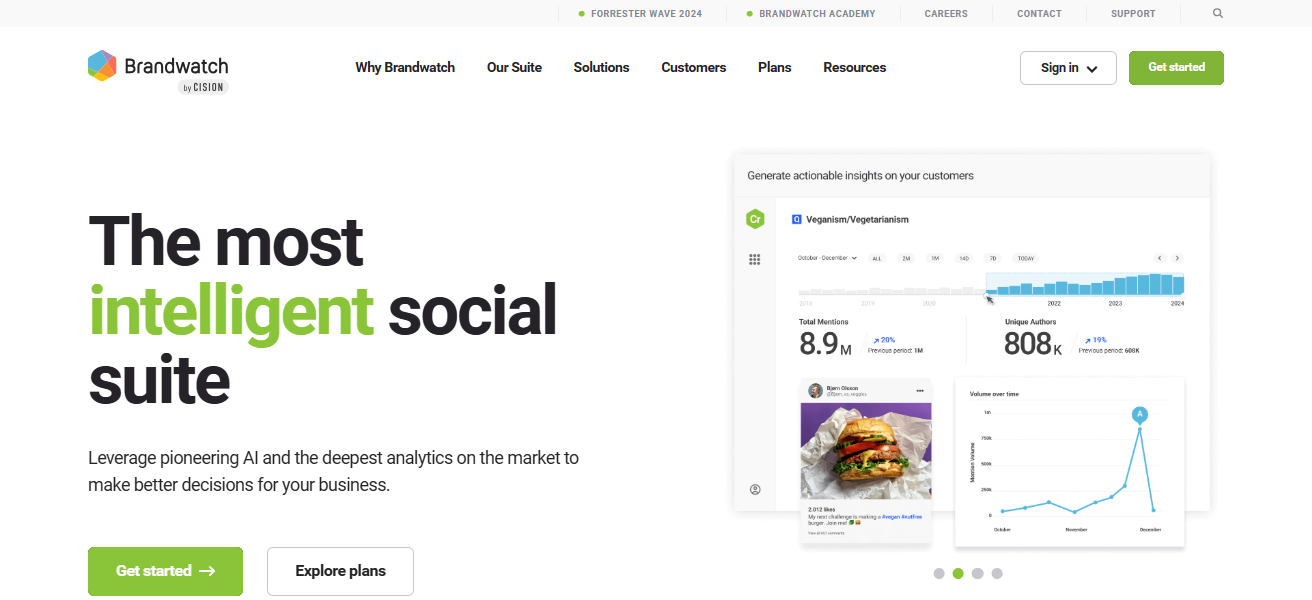
The platform has integrated consumer intelligence, real-time dashboards, predictive trend analytics, and automated crisis management.
Brandwatch is rapidly preferred by large enterprises as the provider of monitoring solutions to manage brand reputation and optimize AI visibility and protection strategies globally.
Brandwatch – Pros & Cons
| Pros | Cons |
|---|---|
| Advanced AI-driven sentiment tracking across multiple digital platforms. | Expensive pricing for small businesses and startups. |
| Real-time alerts and predictive reputation monitoring features are available. | Requires training for using advanced analytics tools effectively. |
| Strong consumer intelligence and crisis detection capabilities globally. | Limited customization options in lower-tier subscription plans. |
2. Sprinklr AI
Sprinklr is a leading U.S.-based provider of enterprise-grade AI sentiment tracking based on the analysis of customer conversations and LLM-related content.
The platform employs advanced machine learning models to detect emotional tone, trust, and brand reputation risk across the digital landscape.
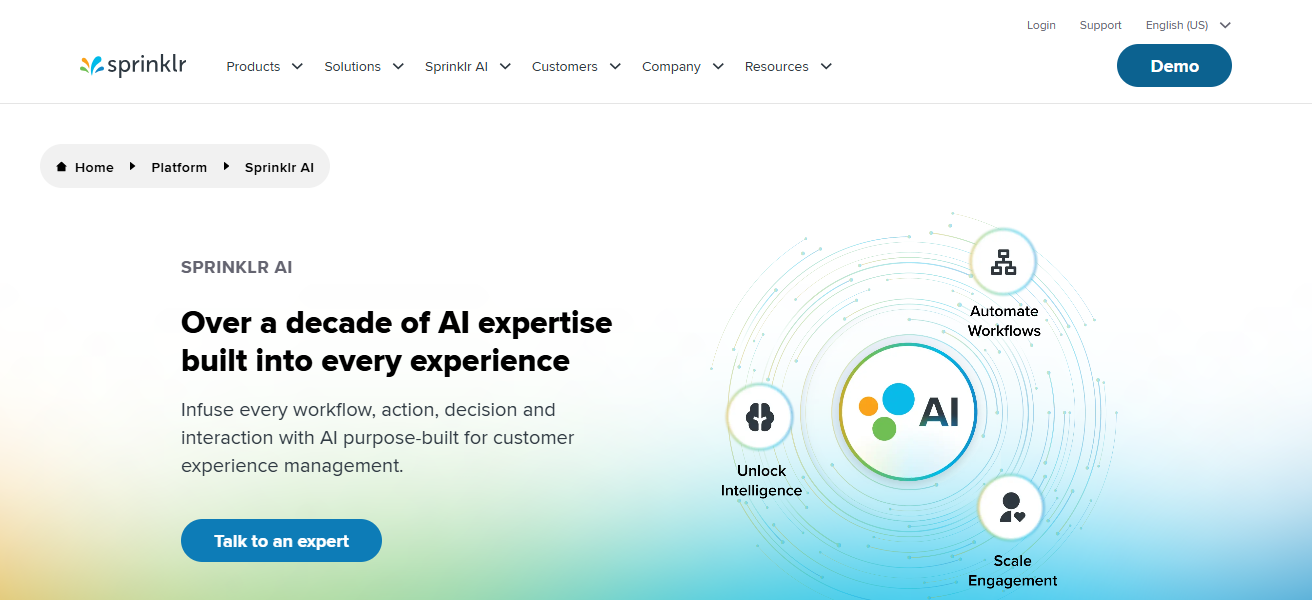
Sprinklr has recently updated its generative AI monitoring capabilities, enabling brands to understand how AI systems analyze customer conversations and online stories.
The platform provides its users with unified analytics dashboards, sentiment analysis in multiple languages, and predictive analytics of consumer behavior.
Sprinklr’s rapid global expansion is a testament to the strength of its AI-based brand perception management capabilities.
Sprinklr AI – Pros & Cons
| Pros | Cons |
|---|---|
| Excellent multilingual sentiment analysis and customer experience management. | A complex interface may overwhelm new users initially. |
| Scalable enterprise architecture supporting global brand monitoring efficiently. | Higher implementation costs compared with smaller competitors. |
| Advanced AI analytics with predictive customer behavior insights. | Some integrations require additional premium subscription features. |
3. Meltwater
Meltwater provides exceptional AI sentiment analysis tools to assess digital reputation and LLM dataset exposure.
Their tools capture online news, discussions, and reviews, and social media content to gauge the perception of a brand impacted by AI.
Meltwater advanced its AI tools to identify patterns and automatically predict future changes with greater context.

Organizations can respond to potentially damaging reputation issues by discovering favorable brand mentions across the world.
Meltwater is preferred by marketing teams as this tool is a unique integrated platform providing media intelligence, social listening, and AI analytics for brand monitoring across the globe.
Meltwater – Pros & Cons
| Pros | Cons |
|---|---|
| Combines media intelligence with powerful AI sentiment analytics. | Dashboard customization can feel limited for advanced users. |
| Detects reputation risks across news and social discussions rapidly. | Premium plans may become costly for growing businesses. |
| Provides automated trend prediction and contextual data analysis. | Reporting tools occasionally require manual data adjustments. |
4. Talkwalker
Talkwalker has developed advanced analytics to help brands track the sentiment about their brands on the internet and the perception about their brands in the AI training datasets.
Its AI framework is capable of analyzing posts on forums, social media, and customer reviews with the ability to process billions of online discussions daily.
Talkwalker is skilled at sentiment analysis and determining potential reputation risk issues that may be trending and growing at an alarming rate.
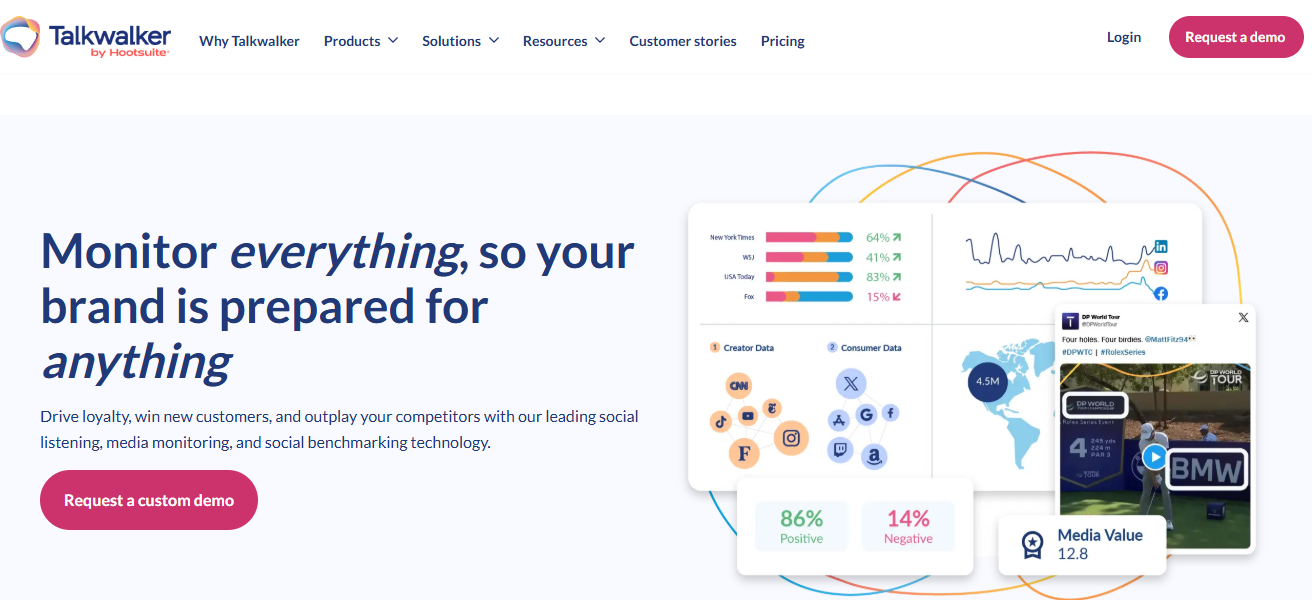
Time-sensitive alerts, analysis dashboards, and sentiment recognition across multiple languages help brands understand reputation risk and loss.
The capacity for image and video sentiment analysis also provides brands with the choice to broaden the perception monitoring to recently developed digital platforms.
Talkwalker – Pros & Cons
| Pros | Cons |
|---|---|
| Supports image, video, and text sentiment monitoring simultaneously. | Enterprise-focused pricing may not suit smaller companies. |
| Real-time conversational analytics improve reputation risk detection. | A learning curve exists for advanced monitoring features. |
| Multilingual AI sentiment recognition across global digital platforms. | Some historical data access requires premium subscriptions. |
5. Synthesio
Synthesio has created a solution that gives businesses predictive AI, wherein they can gain sentiment analysis and insight to better comprehend the rapidly changing digital perceptions of their brand.
The program aids companies in understanding the conversations in digital spaces and how large language models are trained to consider corporations.
Recently, Synthesio added smart AI trend forecasting, which allows companies to anticipate the shift in public sentiment to avoid adverse effects on their reputation.
Companies can instantly assess customer trust and the upcoming market conversations regarding Synthesio’s advanced and user-friendly dashboards.
Synthesio has a strong customer base with enterprise marketers due to its synthesis of social listening with AI, and the fact that companies can take action on the insights regarding their reputation globally.
Synthesio – Pros & Cons
| Pros | Cons |
|---|---|
| Predictive AI helps forecast public opinion trends. | User interface can appear outdated compared with competitors. |
| Strong social listening and emotional analytics capabilities globally. | Integration setup may require technical support assistance. |
| Real-time dashboards provide fast actionable business insights. | Limited affordability for startups and small marketing teams. |
6. YouScan
YouScan is an industry leader due to its advanced technology that integrates AI and visual listening with a unique sentiment analysis tool.
The program identifies AI perception of brands through text, images, logos, and other customer content that is provided within training datasets.
YouScan has recently improved its visual recognition engine to analyze emotional response to social media images.
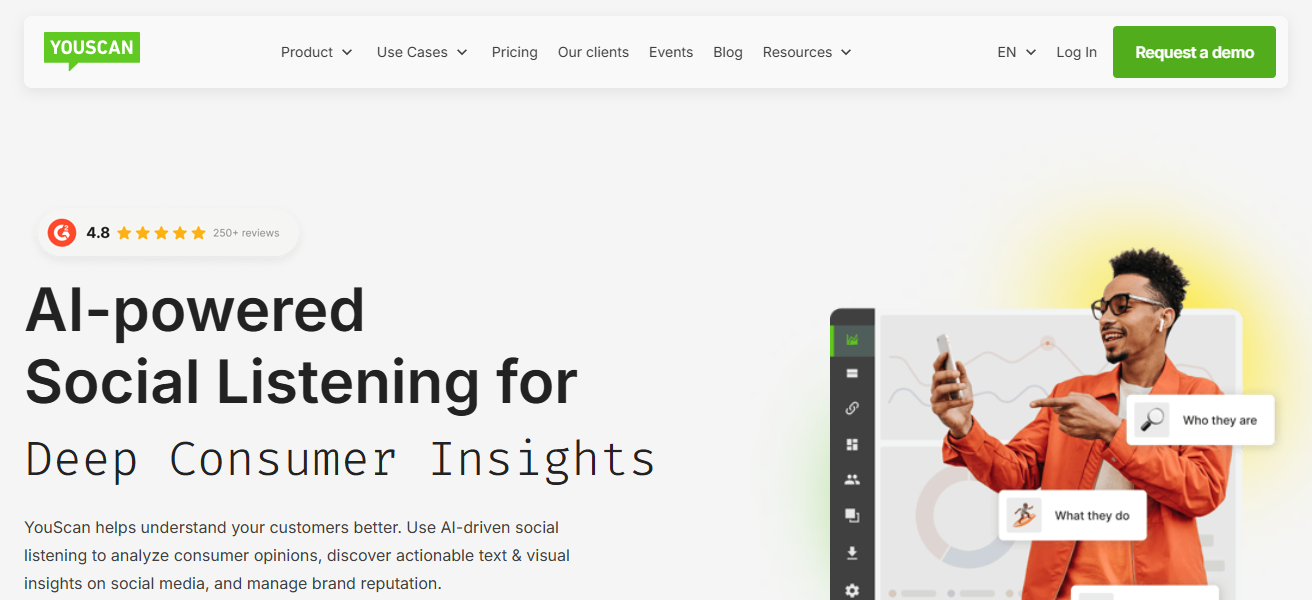
YouScan’s real-time dashboards give companies the tools to rapidly identify the adverse risks and negative perceptions that the brand is on the verge of.
It is the combination of visual analysis, sentiment analysis, and its AI technology that has helped YouScan to create a product that is vital to maintaining a brand perception digitally to its consumers worldwide.
YouScan – Pros & Cons
| Pros | Cons |
|---|---|
| Powerful visual listening and image recognition technology included. | Smaller user community compared with larger competitors globally. |
| Tracks logos, visuals, and emotional customer reactions accurately. | Advanced analytics features require higher-tier pricing plans. |
| Excellent real-time monitoring for social media conversations worldwide. | Limited third-party integrations in certain enterprise environments. |
7. NetBase Quid
NetBase Quid merges AI with consumer data to refine online brand perception analytics. Their platform processes millions of user interactions, reviews, and digital conversations to help understand LLMs (Large Language Models) and their training environments.
NetBase Quid recently helped automate pattern analysis to identify brand-related emotions and narratives faster. It also uses predictive analysis to help refine audience-focused digital communication.
NetBase Quid is one of a kind today because of its ability to analyze vast amounts of data to provide real-time, useful perspective and reputation analysis for enterprises.
NetBase Quid – Pros & Cons
| Pros | Cons |
|---|---|
| Processes massive datasets with strong AI narrative analysis. | Premium pricing may challenge smaller business budgets significantly. |
| Advanced predictive analytics improve digital communication strategies effectively. | Complex analytics dashboards require experienced users for optimization. |
| Detects misinformation and emotional trends rapidly online. | Initial setup process may take considerable implementation time. |
8. Lexalytics
Lexalytics has a global footprint in brand reputation analysis via its language processing and AI sentiment analysis.
Lexalytics recently enhanced its language processing to provide more accurate sentiment analysis for numerous content and online discussions.
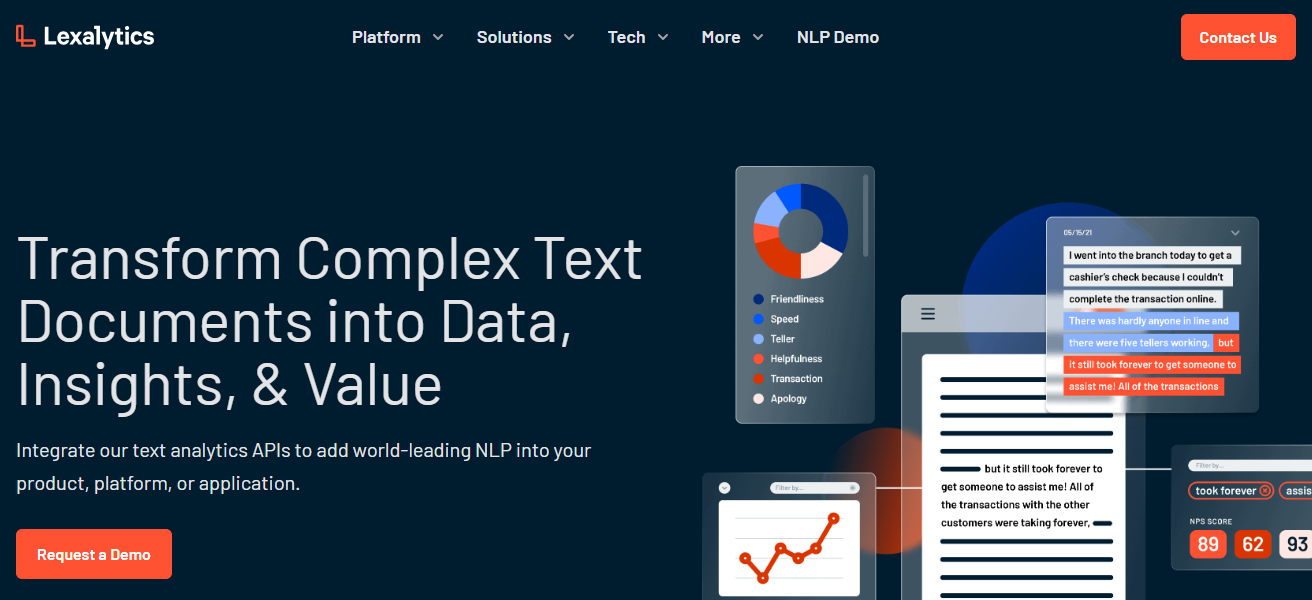
Companies using Lexalytics gain real-time analysis and the ability to customize the platform to provide AI-based emotion detection.
The NLP (Natural Language Processing) also helps understand the language used to discuss the brand in digital conversations, as well as LLMs, in order to create value for the end-user.
Lexalytics – Pros & Cons
| Pros | Cons |
|---|---|
| Strong natural language processing and customizable AI models available. | Interface design feels less modern than newer competitors. |
| Accurate multilingual sentiment classification for global businesses. | Advanced features may require technical configuration knowledge. |
| Flexible API integrations support scalable enterprise deployments efficiently. | Smaller businesses may find implementation slightly challenging initially. |
9. Reputation.com
Reputation.com uses AI that helps businesses create digital trust through sentiment and reputation management.
The product observes customer reviews, their social media activity, and their interactions with AI. Their new predictive analytics feature helps companies monitor customer dissatisfaction before it becomes an issue.

Reputation.com allows businesses to manage trust and engagement strategies and monitor emotional responses using convenient dashboards.
Given its emphasis on AI and customer feedback, the product is extremely beneficial to enterprises that wish to increase their digital reputation.
Reputation.com – Pros & Cons
| Pros | Cons |
|---|---|
| Excellent customer trust and online reputation management tools. | Pricing structure may not fit smaller organizations easily. |
| Unified dashboards simplify review and sentiment monitoring processes. | Some analytics reports lack deeper customization flexibility. |
| Predictive analytics identify dissatisfaction trends before escalation happens. | Advanced enterprise features require premium subscription upgrades. |
10. MonkeyLearn
MonkeyLearn offers AI tools that can automate sentiment classification and help businesses understand their digital reputation and manage exposure to training datasets.
The product uses ML models to understand customer feedback, including reviews and social media interactions.
MonkeyLearn recently improved its text analytics automation and helps businesses manage sentiment data at scale with enhanced speed and improved accuracy.

The product also allows companies to create their own sentiment and keyword models with simple integrations for dashboards.
Given its scalable AI, the product is suitable for businesses of any size that wish to manage digital reputation on a global scale.
MonkeyLearn – Pros & Cons
| Pros | Cons |
|---|---|
| User-friendly interface suitable for beginners and growing businesses. | Limited enterprise-scale capabilities compared with advanced competitors. |
| Customizable sentiment models improve text analytics flexibility significantly. | Some automation features require higher pricing tiers. |
| Easy integration with dashboards and business intelligence platforms. | Advanced multilingual analysis remains less powerful than rivals. |
How We Identify Top AI Sentiment Tracking Tools
- AI Accuracy – Assessed the tools’ user-friendliness and capabilities to comprehend and analyze data regarding emotions, views, and sentiments.
- LLM Dataset Monitoring – Assessed the tools’ capabilities to track multiple brand mentions in the context of AI training data.
- Real-Time Analytics – Choose tools that provide alerts, dashboards, and sentiment updates in real time.
- Multilingual Support – Gave priority to tools that could capture and analyze sentiments in multiple languages.
- Predictive Insights – Reviewed AI tools that could generate reputation risks and shifts in the perception of consumers.
- Social Listening Features – Assessed the tools’ abilities to monitor forums, blogs, reviews, news, and social media.
- Customization Options – Cautiously assessed tools that provided flexible dashboards, AI, and reporting with integrations.
- Scalability Performance – Reviewed tools that could cater to startups and large international firms.
- Visual & Text Analysis – Reviewed tools that combined image recognition with natural language processes and emotional intelligence.
- Value & Innovation – Reviewed tools based on the price, innovative AI offerings, and the advanced features they provided.
Final Verdict
To end, sentiment-tracking AI tools are vital for brands gauging perception within LLM training datasets and virtual ecosystems.
Brandwatch, Sprinklr, Meltwater, and Talkwalker provide advanced AI analytics tools that aid businesses in studying the emotional state of individuals, identifying risks that may negatively impact a company’s reputation, and fostering trust with customers.
These tools allow businesses to have instantaneous analytics and AI to anticipate future trends and analyze data in multiple languages.
Selecting the most appropriate sentiment tracker allows brands to bolster their presence online, better manage their reputation, and remain competitive in the quickly changing AI-enhanced business landscape worldwide.
FAQ
What is an AI sentiment tracker?
An AI sentiment tracker analyzes online emotions, opinions, and brand-related customer discussions automatically.
Which industries use AI sentiment monitoring the most?
Technology, eCommerce, finance, healthcare, gaming, and marketing industries use these tools extensively.
Can AI sentiment trackers predict reputation risks?
Yes, advanced platforms identify negative trends before major reputation problems develop online.
Are AI sentiment trackers useful for small businesses?
Yes, they help smaller brands monitor customer opinions and improve online trust efficiently.
Which platform offers strong multilingual sentiment analysis?
Sprinklr, Talkwalker, and Brandwatch provide excellent multilingual AI sentiment monitoring features.