Article write-up on the Best AI Tools for Enterprise Scenario Simulation With these sophisticated tools, organizations can model complex processes, simulate “what-if” scenarios and optimize decision-making across various industries.
- Key Poinst & 10 Best AI Tools for Enterprise Scenario Simulation
- 10 Best AI Tools for Enterprise Scenario Simulation
- 1. AnyLogic
- 2. FlexSim
- 3. Arena Simulation
- 4. Simio
- 5. Microsoft Power Automate
- 6. AWS AI & Machine Learning
- 7. Google Cloud Vertex AI
- 8. IBM watsonx
- 9. ThoughtSpot
- 10. Oracle AI
- How Does AI Improve Enterprise Scenario Planning?
- How To Choose Best AI Tools for Enterprise Scenario Simulation
- Conclsuion
- FAQ
From predictive analytics to workflow automation, platforms such as AnyLogic, FlexSim and IBM watsonx offer scalable, data-driven solutions that can help you work faster by reducing risks while assisting your enterprise-level planning with enhanced intelligence.
Key Poinst & 10 Best AI Tools for Enterprise Scenario Simulation
AnyLogic – Multi-method simulation platform enabling agent, system dynamics, and discrete-event modeling for complex enterprises.
FlexSim – 3D simulation software for visualizing, analyzing, and optimizing manufacturing, logistics, and service processes efficiently.
Arena Simulation – Discrete-event simulation software allowing businesses to model, analyze, and improve operational processes.
Simio – Intelligent simulation tool combining object-oriented design and 3D animation for accurate process modeling.
Microsoft Power Automate – Automates workflows and integrates AI models to simulate enterprise process scenarios efficiently.
AWS AI & Machine Learning – Cloud-based AI services enabling predictive modeling, simulation, and automation across enterprise workflows.
Google Cloud Vertex AI – Unified AI platform for building, deploying, and managing predictive simulations at scale.
IBM watsonx – AI and data platform for scenario simulation, predictive modeling, and enterprise decision-making optimization.
ThoughtSpot – AI-driven analytics platform offering natural language querying and scenario simulations for business insights.
Oracle AI – Enterprise AI suite for predictive modeling, simulations, and process optimization across multiple industries.
10 Best AI Tools for Enterprise Scenario Simulation
1. AnyLogic
AnyLogic is a powerful simulation platform that allows agent-based, discrete-event and system dynamics modeling.
Therefore, putting in an highly realistic and flexible scenario model would help enterprised in any domain be it logistics, manufacturing or healthcare to manage the supply chains.
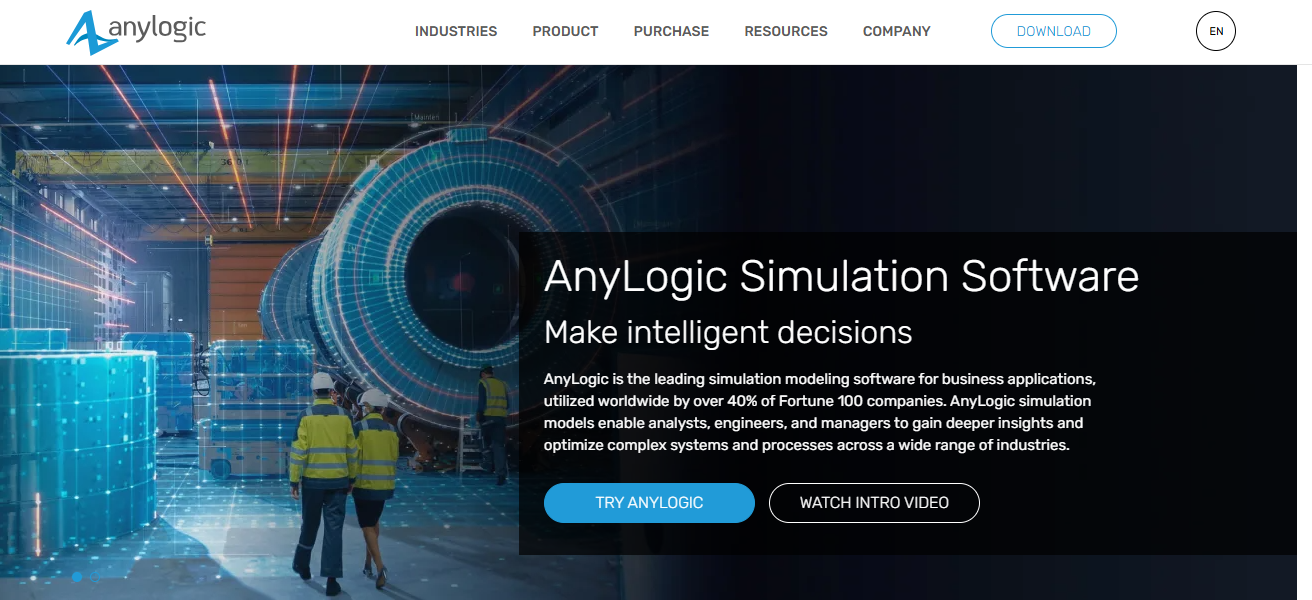
Its multi-method approach allows for modeling complex interactions between different agents and processes, assisting decision-makers in scenario testing, workflow optimization and outcome prediction.
By integrating analytics capabilities and options to deploy in the cloud, AnyLogic speeds up decision-making at an enterprise level while reducing risk and operational costs.
| Pros | Cons |
|---|---|
| Supports agent-based, discrete-event, and system dynamics modeling. | Steep learning curve for beginners. |
| Flexible and accurate scenario simulations across industries. | Requires high computational resources for large simulations. |
| Built-in analytics and cloud deployment options. | Licensing cost can be high for small enterprises. |
| Helps optimize workflows and predict outcomes efficiently. | Advanced features may require programming knowledge. |
2. FlexSim
FlexSim is a 3D simulation software to visualize, analyze, and optimize processes in manufacturing/logistics/healthcare/service sectors.
It also offers a drag-and-drop interface for conditional models and allows instant input data integration.
The Enterprise simulate several scenarios, using resource allocation and predict operational performance.
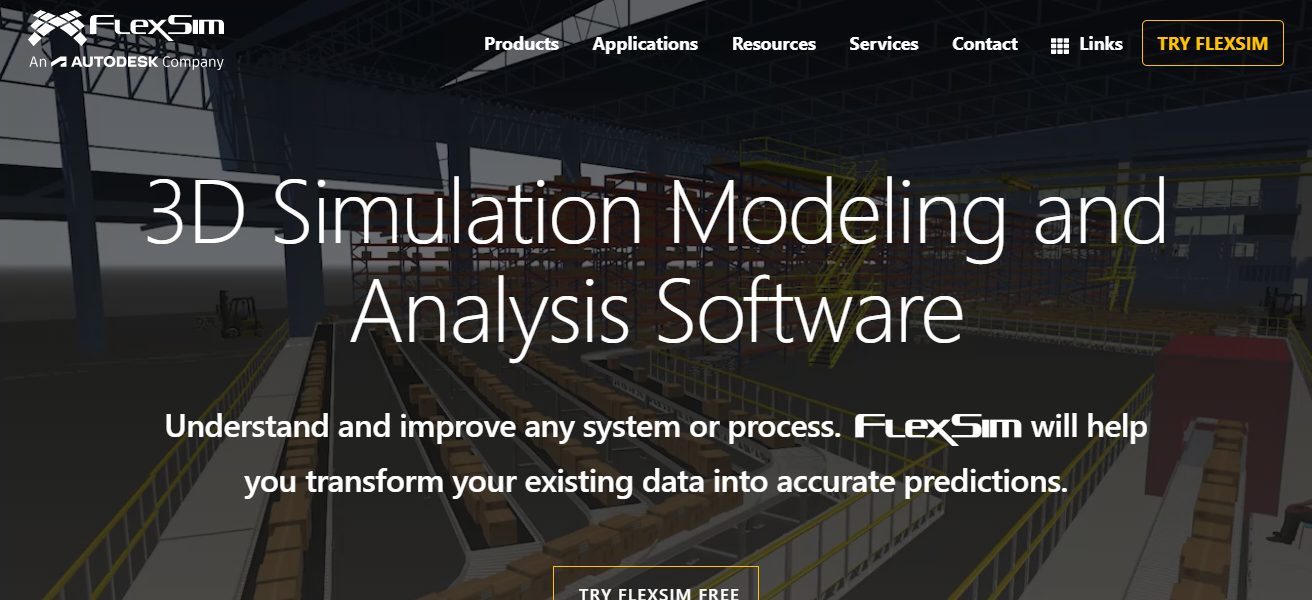
With its visual and interactive approach, FlexSim allows teams to easily discover bottlenecks, experiment with process improvements and improve efficiency, driving down costs that can improve the accuracy of decisions.
| Pros | Cons |
|---|---|
| 3D simulation provides visual and interactive process modeling. | Can be resource-intensive for complex models. |
| Drag-and-drop interface simplifies model creation. | Limited flexibility compared to multi-method platforms. |
| Real-time data integration supports accurate scenario simulation. | Advanced analytics may require additional modules. |
| Helps identify bottlenecks and improve operational efficiency. | Steeper learning curve for non-technical users. |
3. Arena Simulation
Arena Simulation is the discrete-event modeling application that enables organizations to model, analyze, and optimize their operational processes.
It enables enterprises to build virtual representations of workflows, supply chains and production systems through which they can simulate different scenarios without impacting live operations.
Arena also provides data-driven simulation support, which allows for predictive analytics and risk assessment.
Its analytical and reporting functions enable management to discover inefficiencies, optimize resources, and make evidence-based decisions that enhance overall operational performance as well as strategic planning.
| Pros | Cons |
|---|---|
| Enables discrete-event modeling of operational processes. | Interface may feel outdated for modern users. |
| Supports data-driven simulations and predictive insights. | Complex models can be challenging to manage. |
| Helps optimize resources and improve decision-making. | Limited 3D visualization capabilities compared to competitors. |
| Allows scenario testing without disrupting real operations. | Training required to fully utilize advanced features. |
4. Simio
Simio An object-oriented simulation application that allows for easy 3D modelling along with animation and intelligent analytics for enterprise scenario simulation.
It enables organizations to replicate their manufacturing systems, supply chains and service operations efficiently to educate themselves about alternative strategies.
Simio’s flexibility allows for predictive modeling, capacity planning, and resource optimization. Its visual interface reduces complexity of the simulation model, thus allowing stakeholders get easy and accurate results.
Enterprise usage of Simio minimizes risks, increases efficiency and facilitates data-driven decisions in various operations domains.
| Pros | Cons |
|---|---|
| Combines 3D modeling, animation, and analytics in one platform. | Initial setup and modeling can be time-consuming. |
| Supports predictive modeling, capacity planning, and resource optimization. | Higher licensing cost for enterprise editions. |
| Visual interface simplifies complex simulations for stakeholders. | Advanced object-oriented modeling may require programming skills. |
| Reduces risks and improves data-driven decision-making. | Can be computationally intensive for large-scale simulations. |
5. Microsoft Power Automate
Microsoft power automate allows enterprises to automate workflows, integrate AI models and simulate business processes.
It enables organizations to visualize scenarios across the organization, analyze operational changes and evaluate process improvements.
Those capabilities in period along with AI-driven decision-making and automation enable enterprises to predict outcomes, automate repetitive tasks, and allow collaboration.
Power Automate bridges many applications on a single platform for scenario simulation, process optimization and predictive analytics, allowing itself to inform faster and more accurate enterprise decision making.
| Pros | Cons |
|---|---|
| Automates workflows and integrates AI models efficiently. | Less specialized for detailed simulation modeling. |
| Connects multiple applications for unified scenario analysis. | Some advanced features require Microsoft ecosystem integration. |
| Enables process optimization and predictive analytics. | Limited flexibility for complex enterprise-level simulations. |
| Reduces repetitive tasks and enhances collaboration. | May require subscription for full enterprise functionality. |
6. AWS AI & Machine Learning
AWS AI & Machine Learning offers cloud-hosted systems and structures that enable predictive modeling, scenario testing, and automation.
Amazon SageMaker, Forecast, and other services can be utilized in enterprises to develop, train, and deploy AI models to handle different functionality. This suite enables supply chain optimization, risk analysis, and customer behavior prediction.
Their scalable, inter-operational infrastructure gives organizations the ability to model complex scenarios on an enterprise scale, enabling faster and more accurate decision-making and operational efficiency while lowering costs and reducing exposure to risk.
| Pros | Cons |
|---|---|
| Cloud-based, scalable platform for predictive modeling. | Can be complex for teams without cloud experience. |
| Supports multiple AI services like SageMaker and Forecast. | Cost can increase with extensive usage. |
| Enables simulation, risk analysis, and customer behavior prediction. | Requires understanding of AWS ecosystem and configurations. |
| Improves decision-making speed and operational efficiency. | Integration with on-premise systems can be challenging. |
7. Google Cloud Vertex AI
Google Cloud Vertex AI is the one unified platform for building, deploying and managing AI and machine learning models at scale.
It allows organizations to quickly do scenario simulations, predictive modeling, and data-driven decision making.
Vertex AI For Enterprise Data Systems — Testing multiple operational strategies and predicting outcomes Its automated machine learning, model monitoring and MLOps capabilities enable
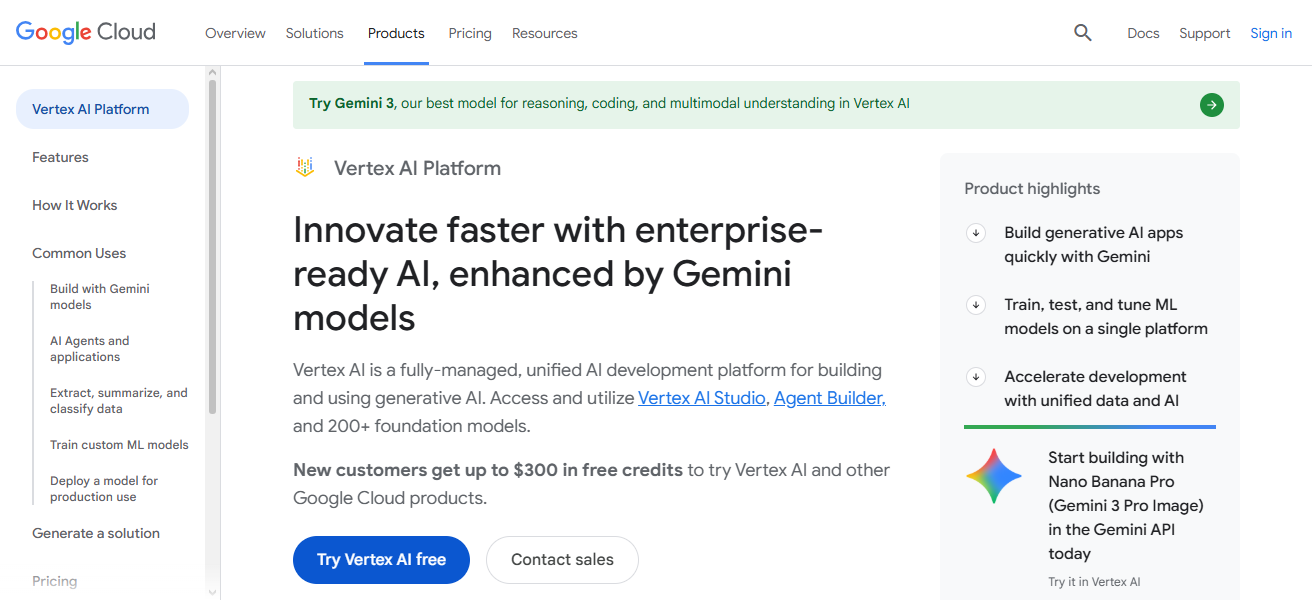
Organizations to automate processes, reduce uncertainty and boost productivity for smarter enterprise-level strategy formulation and performance management.
| Pros | Cons |
|---|---|
| Unified platform for building, deploying, and managing AI models. | May require technical expertise in AI/ML and cloud. |
| Supports scenario simulations and predictive modeling at scale. | Costs can be high for large-scale simulations. |
| Integrates with enterprise data systems for better forecasting. | Limited offline simulation capabilities. |
| Automated ML and MLOps enhance operational efficiency. | Complexity may overwhelm small teams without dedicated data engineers. |
8. IBM watsonx
IBM watsonx A platform for AI and data that enables scenarios to be simulated, predictive analytics performed, and decisions made inside enterprises.
It employs large language models, machine learning and data management tools to produce accurate digital twins of business operations.
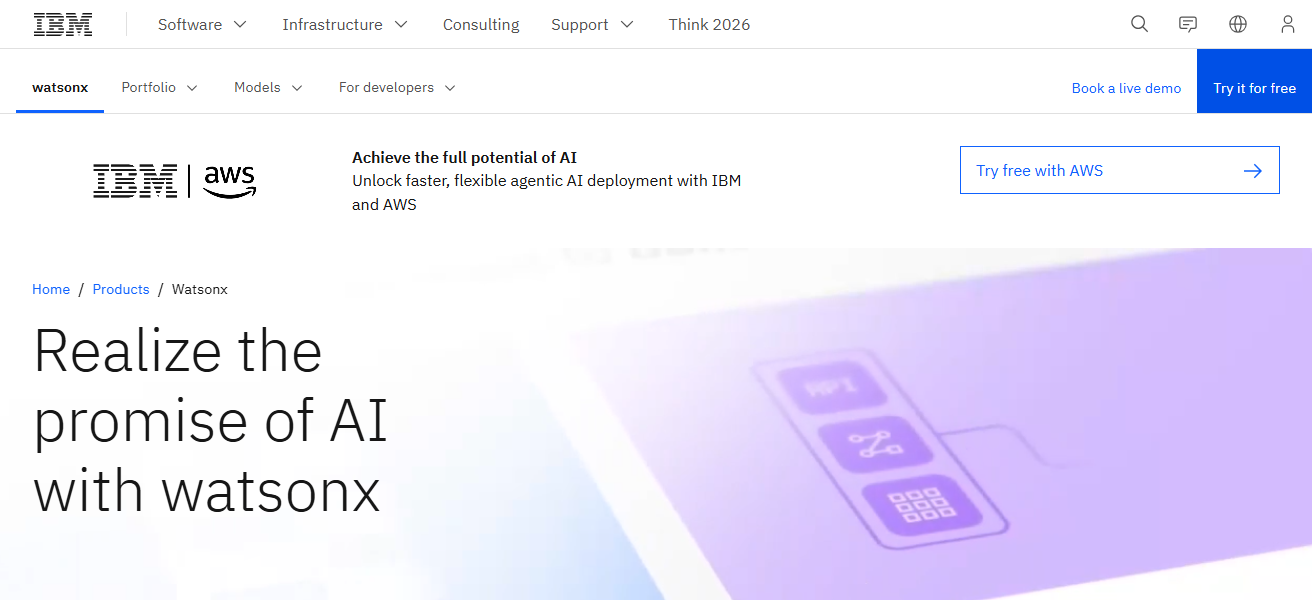
Enterprises can model several what-if modes, evaluate risks, and optimize workflows across business functions.
With capabilities to deliver real-time insights, forecasting and process improvement, organizations can make data-backed decisions using watsonx, driving operational efficiencies across the enterprise and increasing agility in fast-changing market environments.
| Pros | Cons |
|---|---|
| Combines large language models, ML, and data management. | Implementation can be complex for smaller enterprises. |
| Supports real-time scenario simulation and predictive analytics. | Higher cost for enterprise-grade functionality. |
| Enables risk assessment and workflow optimization. | Requires skilled personnel to maximize features. |
| Enhances operational efficiency and decision-making agility. | Some features may need additional integration with existing tools. |
9. ThoughtSpot
ThoughtSpot is an AI-driven analytics platform that enables enterprises to conduct scenario simulations using natural language queries.
It allows decision-makers to interact with data, gain insights and experiment with operational strategies in real time.
Organizations can measure risk, predict outcomes and optimize core business processes by simulating “what-if” scenarios.
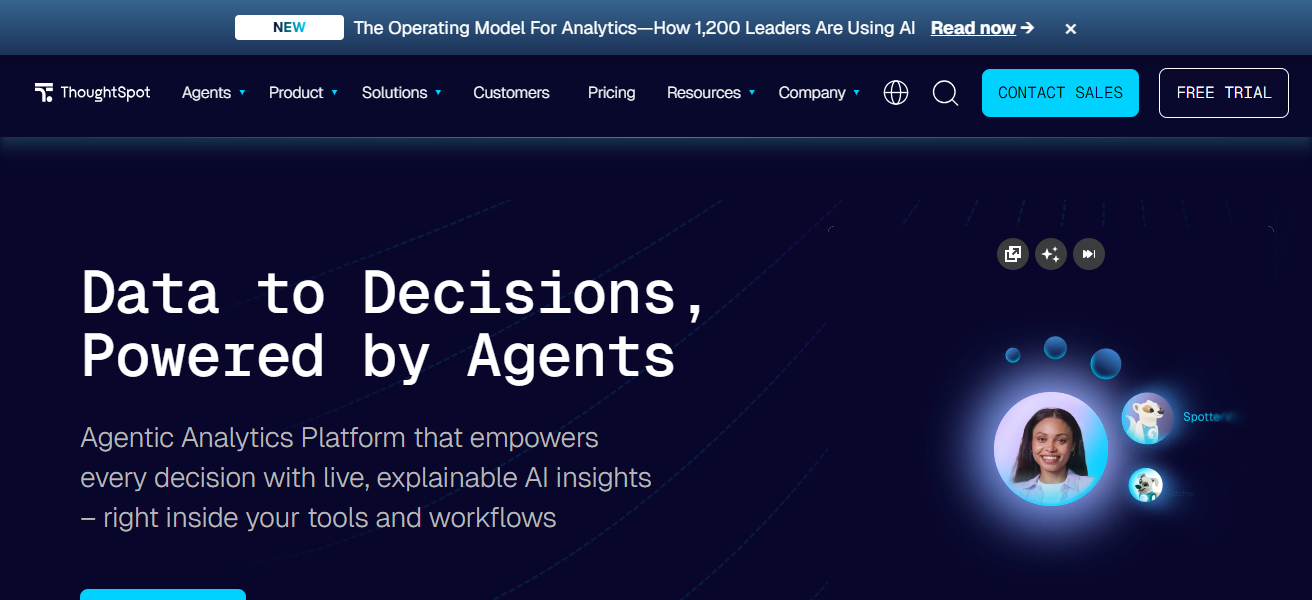
With ThoughtSpot’s intuitive interface and AI-powered analytics, complex data interpretation becomes simpler, enabling faster and smarter decision-making.
For enterprises, it streamlines operational efficiency, resource allocation and strategic planning with data-enabled insights.
| Pros | Cons |
|---|---|
| AI-driven analytics platform with natural language querying. | Less advanced for detailed discrete-event or agent-based simulation. |
| Supports “what-if” scenario analysis for operational insights. | May require additional training for advanced queries. |
| Simplifies complex data interpretation for decision-makers. | Limited customization for highly specific enterprise processes. |
| Improves resource allocation and strategic planning. | Dependent on quality and availability of integrated data sources. |
10. Oracle AI
Oracle AI is an enterprise-class AI engine that aids predictive modeling, scenario simulations and process optimization.
It embeds artificial intelligence and machine learning in a company’s workflows, allowing organizations to test different strategies, predict financial results and detect operational bottlenecks.
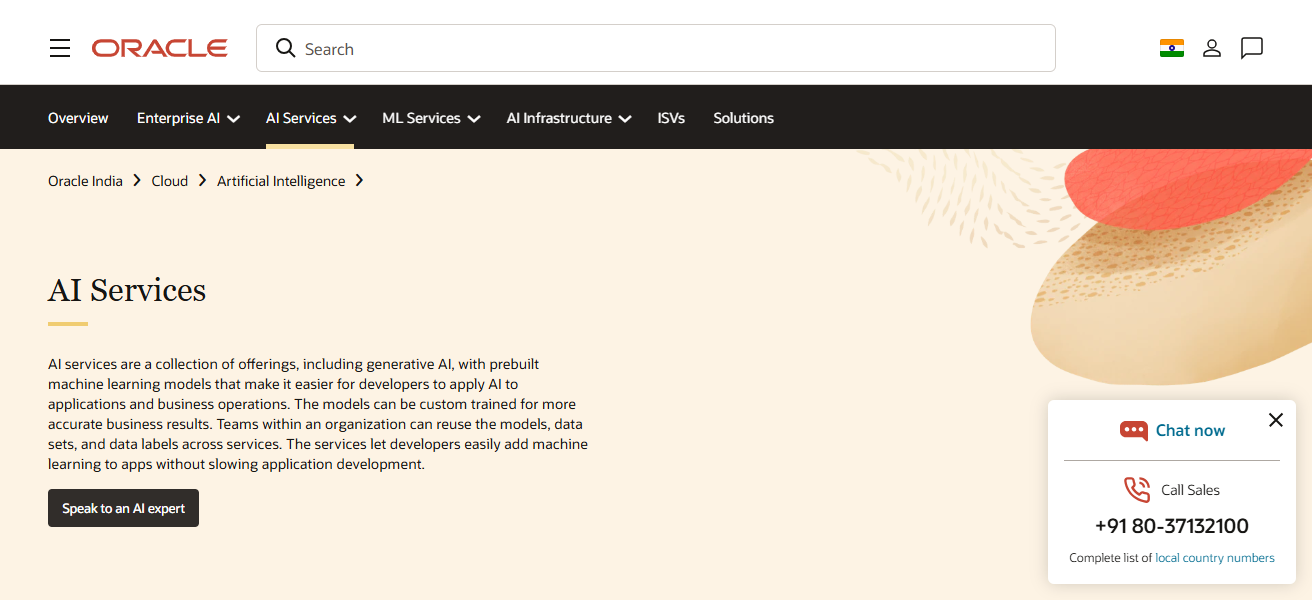
The suite comprises analytics, automation, and data management tools in Oracle AI, providing real-time insights for evidence-driven decision-making.
This framework has proven effective across various business sectors as enterprises utilize it to improve efficiency, decrease costs, and optimize resource allocation while also positively impacting risk management and strategic operational planning.
| Pros | Cons |
|---|---|
| Enterprise-grade AI platform for predictive modeling and scenario simulation. | Can be expensive for small and medium businesses. |
| Integrates AI/ML into workflows and process optimization. | Steeper learning curve for non-technical users. |
| Provides real-time insights and evidence-based decision-making. | Complex deployment and integration with legacy systems. |
| Helps reduce costs and optimize resource utilization. | Requires skilled personnel for effective implementation. |
How Does AI Improve Enterprise Scenario Planning?
Forecasting — AI predicts future events from past and real-time data.
Risk Assessment – Describes potential risks and assesses methods for mitigation.
Process Optimization – Recommends changes to workflows, resources and operations.
Rapid Decision-Making — Automates analysis for faster scenario assessment.
Data Integration – Integrates multiple data sources for precise modeling.
Operational Efficiency – Cuts costs and increases productivity with optimized planning.
Scalability – Efficiently manages intricate enterprise tasks and extensive data records.
How To Choose Best AI Tools for Enterprise Scenario Simulation
- Simulation Type – Choose tools supporting agent-based, discrete-event, or system dynamics modeling.
- Scalability – Ensure the tool can handle large datasets and complex enterprise operations.
- Integration – Check compatibility with existing ERP, CRM, or data systems.
- Ease of Use – Consider user interface, drag-and-drop features, and learning curve.
- Analytics & Reporting – Evaluate built-in predictive analytics and visualization capabilities.
- Cost & Licensing – Compare pricing, subscription models, and enterprise packages.
- Support & Community – Look for vendor support, documentation, and active user communities.
- Customization – Ensure flexibility for industry-specific workflows or advanced modeling.
Conclsuion
Conclusion AI tools are a invaluable resource for organizations to simulate enterprise scenarios, resulting in improved decision-making and bottom-line success. advanced analytics, such as
AnyLogic, FlexSim and IBM watsonx—Flexible, scalable platforms like Microsoft Power Automate and ThoughtSpot enrich automation and insight tooling
These solutions optimize efficiency, lower risks, and facilitate more informed strategic planning across emerging systems.
FAQ
AnyLogic models complex systems using agent-based, discrete-event, and system dynamics simulation.
Manufacturing, logistics, healthcare, and service sectors gain efficiency and predictive insights.
It’s beginner-friendly for basic modeling but advanced features need training.
Through 3D modeling, predictive analytics, and resource optimization across operations.